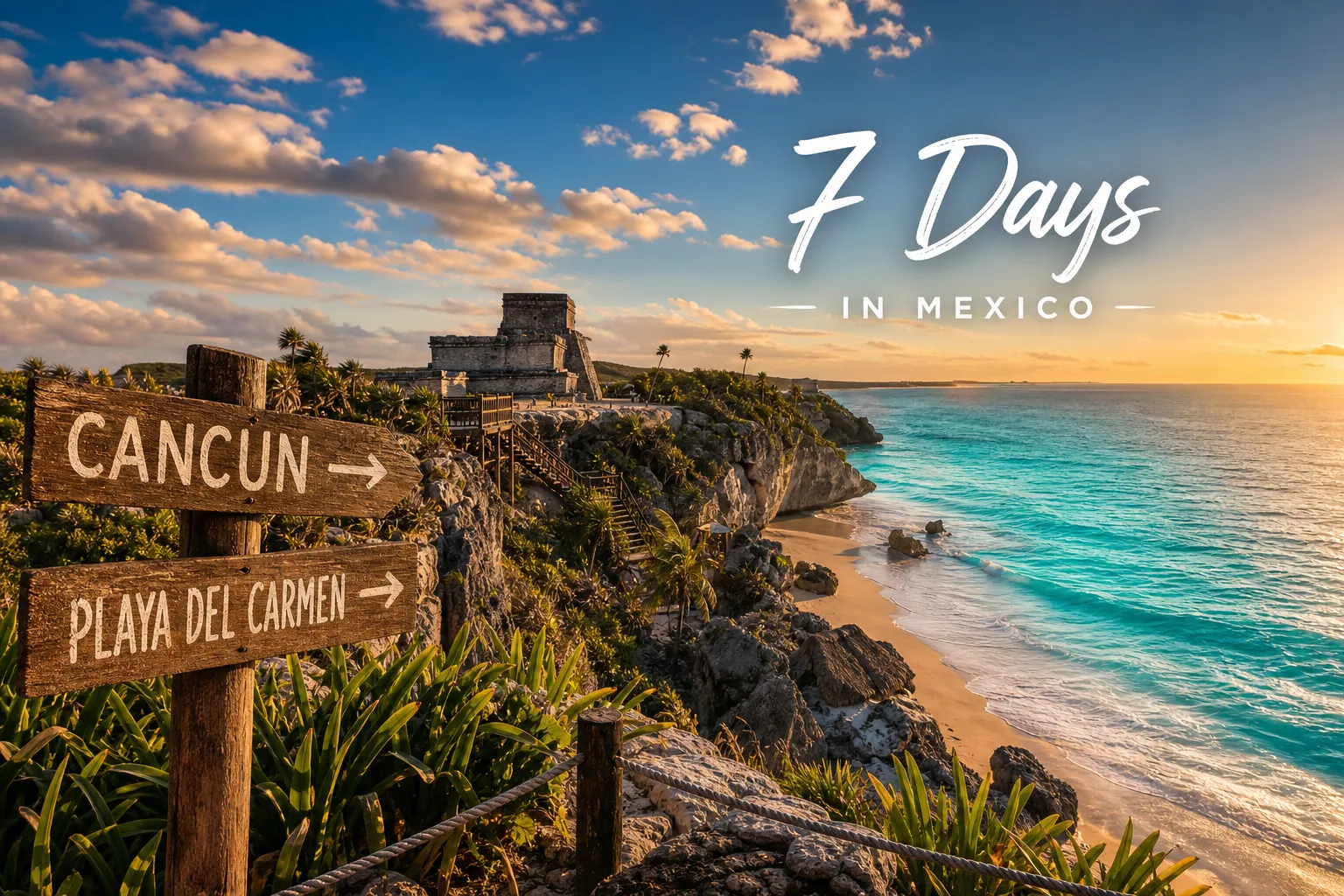
This 7-day Mexico itinerary is built for the traveler who flies into Cancun and keeps going. Most visitors who land here stay close to their resort, buffets, swim-up bars, wristbands, and go home sunburned and vaguely unsatisfied, convinced they’ve seen Mexico. They haven’t. They’ve seen a rendering of it, filtered through imported amenities and all-inclusive packaging. This Mexico 7 day itinerary shows you something different.
The route runs like this: two days exploring Cancun beyond the hotel zone, two full days in Tulum for ruins and cenotes, one unforgettable day on the lagoon in Bacalar, then two final days in Playa del Carmen before catching your flight home. It’s a near-perfect loop. You never double back on yourself, and every stop earns its place on the map.
Each section below links to deeper destination guides when you’re ready to plan further. What follows is a day-by-day plan built around real transport logistics and honest CAD budget estimates.
7-Day Mexico Itinerary: Yucatán Loop Overview
The geographic logic of this route is what makes it work. Cancun is the obvious entry point: direct flights from Toronto (Pearson), Montreal, Calgary, and Ottawa run year-round, with return fares typically falling between $350 and $650 CAD in shoulder season. You land somewhere familiar enough to orient yourself, then move progressively south and deeper into the peninsula before looping back north to your departure point. No chaotic backtracking, no wasted travel days.
Ground transport along this 7-day Mexico trip is handled almost entirely by ADO buses, Mexico’s clean and reliable long-distance coach network. Note that service availability on some legs, particularly the Tulum-to-Bacalar stretch, can vary by season, so it’s worth confirming current schedules with ADO or checking alternative operators like Maya Bus or Tulum Bus before you travel. The Cancun-to-Tulum leg takes roughly two hours and fifty minutes and costs around $20, 25 CAD. Tulum to Bacalar runs approximately three hours for $28, 35 CAD, though you may find this leg operated by a regional carrier depending on the season. Bacalar to Playa del Carmen is four to four-and-a-half hours at $30, 40 CAD. Playa del Carmen back to Cancun airport takes one hour for $12, 18 CAD. Confirm exact operators and fares at the terminal or on the ADO website before departure, schedules shift seasonally and prices fluctuate with the exchange rate.
On timing: high season runs December through April, when the weather is dry and breezy but crowds and prices peak. June through October brings afternoon rain, thicker humidity, and noticeably lower rates across all four destinations. If you travel in the rainy season, plan outdoor activities for mornings and treat the afternoon showers as a reason to sit in a café. One critical note for Canadian travelers: hurricane season runs June through November. Travel insurance is not optional on this trip. Check the current travel advisory for Mexico and your insurance policy before you book.
Days 1-2: Cancun arrival and life outside the hotel zone
Skip the shuttle desk at the airport. The ADO bus from Cancun International to the downtown bus terminal (El Centro) costs around $8, 10 CAD and drops you in the part of the city where actual Cancunenses live. If you’re staying near Parque de las Palapas, you can walk to your guesthouse from the terminal. Budget hostels in El Centro run approximately $28, 40 CAD per night; small guesthouses with private rooms start around $75, 110 CAD. Prices vary by season, check current listings before you book. Stay in El Centro, not the Zona Hotelera.
Day 1 is intentionally slow: settle in, walk the neighborhood, eat. Mercado 28 is a five-minute walk from most El Centro accommodation and serves the kind of lunch tourists rarely find. Sopa de lima and cochinita pibil tacos will often cost you under $10 CAD and will immediately recalibrate your expectations for the week ahead. Dinner on a rooftop with al pastor spit-carved fresh is the right way to end your first night.
On Day 2, spend one hour in the Zona Hotelera. Walk the strip, observe the phenomenon, then leave. The ruins of El Rey sit inside the hotel zone and charge roughly $5 CAD entry; they’re genuinely interesting, rarely crowded, and surrounded by iguanas. From there, take a colectivo to Playa Delfines for a free beach afternoon with a view that costs the resort guests next door several hundred dollars a night. That evening, La Habichuela in El Centro is worth the sit-down meal for traditional Yucatecan cooking done right. Take the ADO south to Tulum that evening or catch an early bus on Day 3.
Days 3-4: Tulum’s ruins, cenotes, and slower rhythms
Tulum divides itself into two entirely different worlds. The archaeological zone sits on a cliff above the Caribbean and opens at 8 AM; entry is approximately $7 CAD (verify current fees at the INAH ticket window on arrival). Get there by 7:30 AM and you’ll have the site nearly to yourself. By 9 AM the tour buses have arrived and the magic dissipates. Go early, stay an hour and a half, then leave before the crowds make the cliffside views feel like a theme park.
The town center, Tulum Pueblo, is where budget-conscious independent travelers actually base themselves. Guesthouses here run approximately $45, 80 CAD per night, a fraction of what the beach clubs charge, and you’re minutes from everything by bicycle or colectivo. Eat where the taxi drivers eat: the taco corridor along Avenida Satelite serves some of the best cochinita and poc chuc in the Yucatan for under $8 CAD a sitting. The beach is a colectivo ride away when you want it.
Day 4 belongs to the cenotes. Gran Cenote and Cenote Calavera are both within cycling distance of the town; bike rentals run $8, 12 CAD for the full day. Entry fees range from $5, 20 CAD per cenote depending on the site. Bring cash and a reusable water bottle. On sunscreen: many cenotes ban conventional sunscreen entirely to protect the ecosystem, while others permit biodegradable products only, check the rules at each site before you arrive and plan accordingly. The Curious Atlas guide to the best cenotes near Tulum covers crowd timing and specific site rules to help you plan.
Also consider visiting nearby Cenote Las Tortugas, and if you have extra days a coastal detour to Las Coloradas is a memorable addition to the Yucatán experience.
Pack your bag that afternoon and take the bus southeast to Bacalar, roughly three hours. Confirm the current operator and fare at Tulum’s bus terminal, as service on this leg is sometimes handled by regional carriers rather than ADO directly.
Day 5: Bacalar and the lake that earns every superlative
Bacalar’s lagoon shifts through seven distinct shades of blue and green depending on depth and the angle of the afternoon light. Photographs don’t prepare you for it. The town is small and unhurried, prices are noticeably cheaper than Tulum, and the main competition for a lakeside chair isn’t influencers with ring lights but local families and slow travelers who’ve been keeping this place quietly to themselves. Arrive by late morning, check into a lakeside hostel or small posada (approximately $30, 60 CAD per night, based on 2026 listings), and be in the water by noon.
How to spend your one day here: rent a kayak for roughly $10, 15 CAD per hour and paddle south to Cenote Azul at the lagoon’s southern tip. No guide required, no tour booking needed. In the afternoon, the sailboat tours departing from the dock near Fort San Felipe run about $25, 40 CAD per person, and there’s a particular quality to the light on that water at 4 PM, the kind of slow golden stillness that makes you understand immediately why slow travelers extend a single planned day into a week. The 18th-century fort itself is free to enter and takes twenty minutes to walk through. Dinner at one of the simple comedores on the main square: fresh fish, black beans, handmade tortillas, change back from a $15 CAD note.
Days 6-7: Playa del Carmen and the trip home
Take a morning departure from Bacalar on Day 6; the ride to Playa del Carmen takes four to four-and-a-half hours. Confirm the operator at Bacalar’s bus stop, service on this leg has historically varied between ADO and regional carriers, and budget approximately $30, 40 CAD for the fare. Arriving by midday leaves the afternoon wide open. Playa del Carmen sits 68 km south of Cancun, which makes it the ideal final base: close enough to the airport for an easy Day 7 exit, lively enough to hold your attention for a full day, and diverse enough to reward the kind of curious wandering this whole week has been training you for.
Stay near the town center rather than the beachfront hotels; comfortable mid-range rooms run approximately $80, 140 CAD per night here. Fifth Avenue (Quinta Avenida) is genuinely fun for a single hour of people-watching, but the restaurants along it charge two to three times what you’ll pay one block east for the same food. Day 6 highlights: Playa Mamitas for a free beach morning, Mercado Municipal for lunch, and a colectivo to Akumal Bay in the afternoon to snorkel with sea turtles. Entry fees and access rules at Akumal change periodically as the protected area is managed more closely, check current regulations before you go, as guided entry has sometimes been required. The Curious Atlas Playa del Carmen guide maps the best street food spots and off-strip experiences for anyone who wants to extend this stop beyond the itinerary.
Day 7 is departure. ADO buses run directly from Playa del Carmen’s main terminal to Cancun airport roughly every hour; the ride takes one hour and costs $12, 18 CAD. Allow at least three hours before your flight for the ride and check-in. Cancun airport gets genuinely busy on weekend mornings. Before you board the bus, find a local café near the terminal and order huevos motuleños one last time. It’s the right way to close the week.
What this Mexico week itinerary costs in CAD
Budget travelers staying in hostel dorms and eating street food can realistically expect to spend $70, 110 CAD per day across all four destinations, the lower end of that range is achievable if you’re disciplined about accommodation and food. Mid-range travelers preferring private guesthouses, sit-down restaurant meals, and the occasional paid tour will land closer to $150, 200 CAD per day. Total seven-day trip cost, excluding flights: approximately $900, 1,400 CAD on a tight budget, $2,100, 2,800 CAD mid-range. All figures are estimates based on 2026 pricing and a CAD/USD rate of approximately 1.36, check the current rate before you travel as it affects every number here.
Key one-off costs to factor in separately:
- Flights from Toronto or Montreal: $350, 650 CAD return in shoulder season
- Cenote entries near Tulum: $5, 20 CAD each
- Archaeological site entry fees: $5, 10 CAD each
- Bacalar sailboat tour: $25, 40 CAD per person
- Bus transport for the full loop: approximately $100, 130 CAD total
Where to spend more: accommodation in Bacalar (the lake view is the experience), and one genuinely good traditional restaurant meal per destination. Where to save: transport (ADO and regional buses are safe, comfortable, and a fraction of private shuttle prices), breakfast (corner bakeries and fresh juice stalls are better than any hotel buffet), and cenote visits (most are fully self-guided with a bike rental and a basic map).
One practical note on cash: carry pesos and a no-foreign-fee card. Scotiabank Passport Visa and Wise are both widely used by Canadian travelers in Mexico. ATMs in Bacalar can run dry on busy weekends, withdraw what you need in Tulum before heading southeast.
The week that changes how you travel
This 7-day Mexico itinerary works because it moves at a pace that lets each place actually settle. Two days in Cancun is enough to understand the city and leave it behind. Two days in Tulum covers the ruins, the cenotes, and the morning light over the jungle. One day in Bacalar, with a kayak, a sailboat, and dinner on the square, leaves you understanding exactly why some travelers book a return flight before they’ve left. Two days in Playa del Carmen closes the loop with energy and options, not exhaustion.
The route is Cancun in, Cancun out, with Tulum, Bacalar, and Playa del Carmen filling the middle with variety: ruins on a cliff, jungle swimming holes, a seven-shaded lake, and a beachside town that rewards curiosity over comfort. Every stop is connected by affordable bus services, primarily ADO along the main corridor, with regional operators covering some legs, that any first-time independent traveler can navigate with a phone, a downloaded schedule, and fifteen minutes of planning.
It’s a more accessible 7-day Mexico travel guide than most people expect, and far more rewarding than anything inside the resort fence. When you’re ready to go deeper on any single stop, The Curious Atlas destination guides for Tulum, Bacalar, and Playa del Carmen are the place to start.
Mexico 7 day itinerary: quick answers
Is this a good Mexico 7 day itinerary for first-timers?
Yes. The Cancun, Tulum, Bacalar, Playa del Carmen loop is one of the most forgiving routes in Mexico for independent travelers. Bus connections are straightforward, accommodation is easy to find across all budgets, and the stops build logically on each other in terms of pace and complexity.
How do I get between stops on this 7-day Mexico trip?
ADO operates the primary long-distance routes on this loop, with regional carriers covering some legs, particularly around Bacalar. Check schedules directly with ADO or at the local terminal. Colectivos (shared vans) are useful for shorter hops within each destination.
Can I do this Mexico 1 week itinerary on a tight budget?
Comfortably. Budget $70, 110 CAD per day for accommodation, food, and activities, plus around $100, 130 CAD for all ground transport. The biggest variables are cenote entry fees and whether you opt for any paid tours.
What’s the best time of year for this route?
November and early December offer a sweet spot: the rainy season has tapered off, temperatures are comfortable, and prices haven’t yet climbed to high-season peaks. February and March are peak months, beautiful weather, but busier and pricier across all four stops.
Leave a Reply