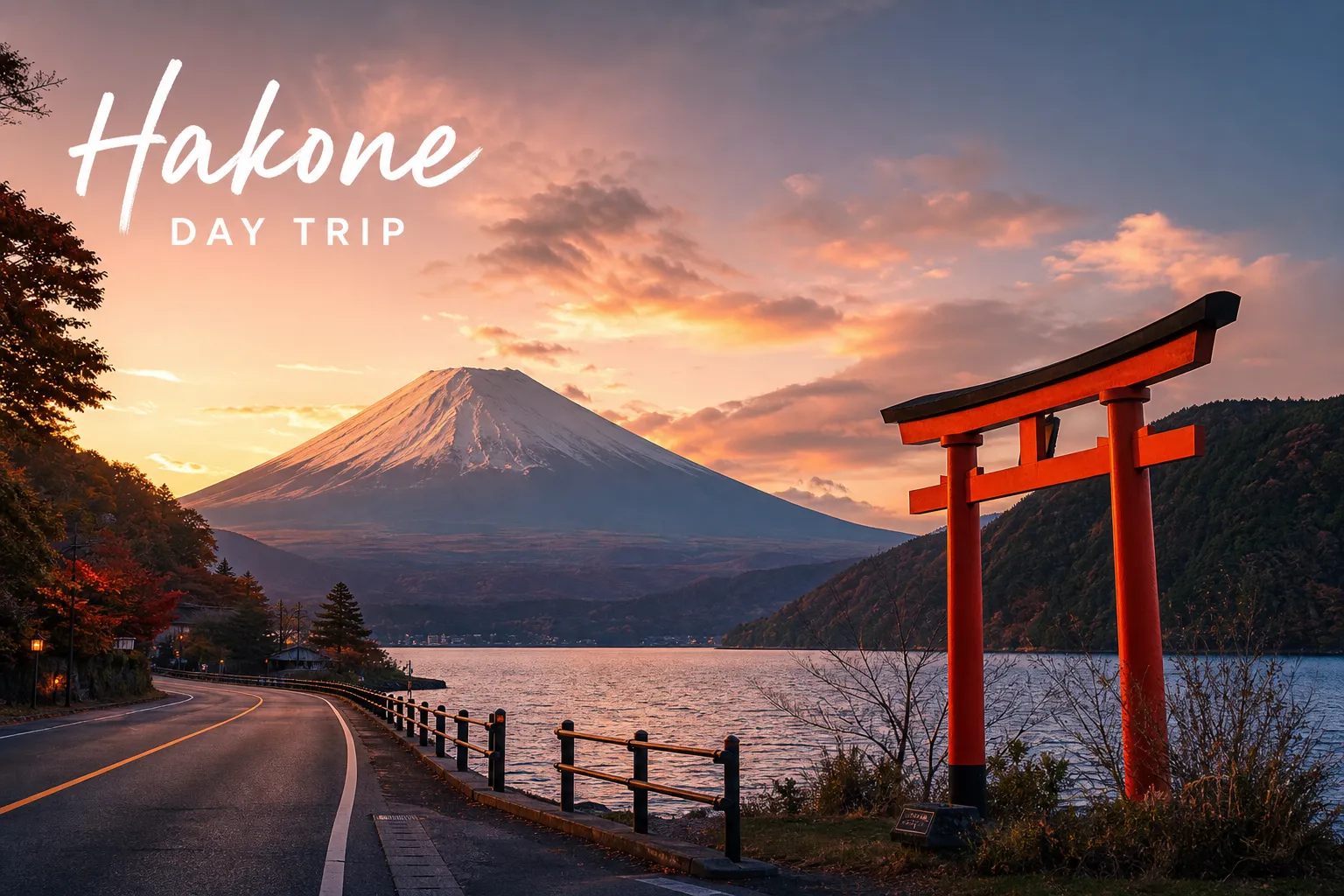
Two hours from the center of Tokyo, there’s a place where volcanic steam curls out of the earth, a century-old mountain railway switchbacks through cedar forest, and on a clear morning, Mount Fuji hangs above a glassy lake like something from a scroll painting. Hakone is not a compromise day trip. It’s one of the most genuinely rewarding single-day escapes in the world if you plan it right. This Hakone day trip guide exists precisely for that planning moment, before you leave Tokyo, when a clear route makes all the difference.
The question most independent travelers ask is whether one day is actually enough. The honest answer: yes, with the right timing and a clear route. Hakone rewards slow travelers who linger for two or three days, but a well-structured single day gets you the volcanic crater, the ropeway, the lake cruise, and a shot at that Fuji view without the frantic checklist energy. At The Curious Atlas, we plan travel around one rule: clarity before departure beats improvisation on the ground. This guide is built exactly around that principle.
What follows covers everything you need to execute a confident solo day trip: transport options, the Free Pass decision, a timed route from 9:30 AM to 5:30 PM, Fuji visibility realities, and where to squeeze in an onsen before the train home.
Hakone Day Trip Guide: Getting to Hakone from Tokyo
The two main options from Shinjuku are the Odakyu Romancecar limited express and the slower local train. The Romancecar runs directly to Hakone-Yumoto in roughly 85 minutes with reserved seating and large scenic windows. It carries a surcharge of ¥1,200 per adult on top of the base fare, but for a single-day window, that surcharge buys you something irreplaceable: time. The local train costs less but takes about two hours with a transfer at Odawara, which adds stress to an already tight schedule.
For a day trip, take the Romancecar. The first departure from Shinjuku leaves at 7:37 AM, putting you at Hakone-Yumoto by around 9:00 to 9:15 AM. That timing is not arbitrary. The Hakone Ropeway opens at 9:00 AM, morning light gives you the best chance at a clear Fuji sighting before clouds build, and an early arrival means you beat the queues at Owakudani. Aim for that first or second Romancecar. Leaving Shinjuku by 8:00 AM gives you roughly eight solid hours of sightseeing before your return window opens.
The Hakone Free Pass: Is It Worth It for One Day?
The Free Pass is sold as a two-day ticket, but nothing stops you from using it entirely within a single day. From Shinjuku, it costs ¥7,100 for adults. If you’re already at Odawara or inside the Hakone area, the local version runs ¥6,000. Both are available at Odakyu ticket counters at Shinjuku Station or at Odawara Station.
The pass covers unlimited rides on the Hakone Tozan Railway, the cable car, the Hakone Ropeway, the Lake Ashi sightseeing cruise (the famous “pirate ship”), and Hakone Tozan and Odakyu buses within the free zone. If you ride all those segments individually, the total can exceed ¥8,000. One 2026 cost breakdown puts a ropeway-plus-cruise-plus-bus loop at approximately ¥8,172 on individual tickets, which already clears the pass price. For the full classic loop, Hakone-Yumoto through Gora, up the ropeway, across Lake Ashi, and back by bus, the Hakone Free Pass pays for itself before you reach the lake. Note that it does not include the Romancecar surcharge; budget that ¥1,200 separately.
Hakone Attractions List: What You’ll See on the Classic Loop
Before diving into the timed itinerary, here’s a quick look at the main Hakone attractions this guide covers, useful for setting expectations and deciding what to prioritize if time gets tight:
- Hakone Ropeway and Owakudani, volcanic valley, fumaroles, and the best early-morning Fuji views
- Lake Ashi cruise, the iconic “pirate ship” crossing with open-water mountain perspectives
- Hakone Shrine, the lakeside torii gate and cedar forest approach
- Hakone Open-Air Museum , world-class sculpture park on the Tozan Railway line
- Hakone onsen (day use), Hakone Yuryo, Tenzan Tohji-kyo, or Yunessun for a pre-departure soak
- Hakone Tozan Railway, the switchback mountain rail section worth watching from the window
Hakone Day Trip Guide: Timed One-Day Itinerary (9:30 AM, 5:30 PM)
Morning: Hakone Ropeway and Owakudani (9:30 AM, 12:30 PM)
From Hakone-Yumoto, board the Hakone Tozan Railway toward Gora. The ride takes about 35 minutes and the switchback sections alone make it worth the trip. From Gora, transfer to the cable car to Sounzan, then the ropeway toward Owakudani. The ropeway operates from 9:00 AM to 4:45 PM between February and November, with slightly shorter hours in December and January.
Get to Owakudani as early in the morning as possible, this is where the day’s queues concentrate fastest. The stop sits inside an active volcanic valley filled with sulfurous fumaroles, and on clear mornings, Mount Fuji frames itself directly behind the crater landscape. The black eggs (kuro-tamago), boiled in the volcanic springs and said to add seven years to your life, are worth trying at the stand near the viewpoint. Allow 45 to 60 minutes here before continuing on the ropeway toward Togendai.
One critical note: the ropeway closes during high winds or volcanic gas alerts. Check the official Hakone Ropeway status page the morning of your trip before leaving Tokyo. If it’s suspended, the Hakone Tozan bus covers the same route as an alternative, though you lose the aerial views.
Midday: Lake Ashi Cruise and Hakone Shrine (12:30 PM, 3:00 PM)
Continue on the ropeway to its final stop at Togendai Station, then board the Lake Ashi sightseeing cruise. Boats depart every 30 to 40 minutes from around 9:00 AM to 5:00 PM. The ride to Moto-Hakone takes about 30 minutes and, if Fuji is showing, the view from the water back toward the mountain is the strongest composition of the day.
At Moto-Hakone, walk roughly 10 minutes from the pier to Hakone Shrine. The torii gate standing directly in the lake is the region’s most iconic photograph, and the approach through cedar trees is worth taking slowly. For lunch, Bakery & Table near the lakeside is a reliable, low-fuss option with a terrace view. Grab something here before or after the shrine walk to keep the afternoon moving.
Afternoon: Open-Air Museum or Onsen (3:00 PM, 5:30 PM)
Your afternoon splits based on preference. The Hakone Open-Air Museum sits on the Tozan Railway line and is open daily from 9:00 AM to 5:00 PM, with last admission at 4:30 PM. It’s a world-class sculpture park set into the mountain landscape, genuinely worth 90 minutes even for non-museum visitors. Alternatively, use the afternoon for an onsen stop before heading home, that option is covered in detail below. Either way, board your return train by 5:30 PM for a comfortable arrival back in Shinjuku around 7:30 to 8:00 PM.
Mount Fuji from Hakone: Managing Expectations Honestly
Fuji is visible from Hakone on a minority of days across the year, not the majority. December through February offers the clearest, most consistent views, historically, December and January see roughly 20 to 25 unobstructed days per month based on regional visibility patterns. October and November are also strong windows as the air cools and dries out. The worst stretch runs from June through September, when summer humidity and haze reduce full visibility to roughly 20 percent of days.
Time of day matters as much as season. Aim to be at Owakudani or the Lake Ashi viewpoint between 6:00 and 9:00 AM. Clouds build reliably by mid-morning on most days of the year, even clear ones. The Motohakone shoreline near Hakone Shrine is the strongest photographic position on the lake, placing the torii gate in the foreground with open water between you and the mountain.
If Fuji is hidden by 9:00 AM and visibility shows no sign of clearing, don’t redesign your entire day around it. The Owakudani volcanic landscape, the Lake Ashi cruise, and the shrine walk are compelling regardless of weather. If a Fuji sighting is your single priority and conditions are already poor, consider rerouting to Lake Kawaguchiko in the Fuji Five Lakes area instead, which offers closer, lower-elevation views on clearing days. Otherwise, lean into the onsen afternoon and treat a Fuji sighting as a gift rather than a guarantee.
Fitting in a Quick Onsen Before Heading Back
An onsen stop is one of the best ways to decompress before the return train, and three day-use options sit conveniently along the classic sightseeing route.
- Hakone Yuryo (near Hakone-Yumoto): A short three-minute shuttle from the station brings you to one of Hakone’s more elegant day-use facilities. Public baths are open weekdays from 10:00 AM to 8:00 PM. Private bath rooms are available by reservation for roughly ¥4,900 per hour. For visitors with tattoos, the public baths require coverage; private rooms are tattoo-friendly.
- Tenzan Tohji-kyo (Tonosawa side): Cash only, open from 9:00 AM to 11:00 PM, at approximately ¥1,450 per adult. The most affordable option on this list and well suited to solo travelers. One tattooed visitor is accepted at a time, but groups with tattoos are not permitted together.
- Hakone Kowakien Yunessun (Kowakudani area): A swimsuit-friendly outdoor thermal park with a livelier, more relaxed atmosphere. Tattoos are permitted with coverage. Entry starts from around ¥2,500 for adults, a better fit if you want a longer soak and don’t mind the water-park energy.
The easiest integration into the timed itinerary is a stop at Hakone Yuryo around 3:30 PM, after Hakone Shrine. It sits back near Hakone-Yumoto, which is where you’ll board your return train anyway, so there’s no backtracking involved. Allow 60 to 90 minutes and you’ll still make the 5:30 PM departure window comfortably.
For a deeper primer on local baths and what to expect from Hakone’s onsen culture, see our Hakone Onsen Guide: Best Hot Springs, Tips & What to Expect. If you’re considering staying overnight in a traditional ryokan instead of a day-use bath, our Hakone Japan Ryokan Experience: A Complete First-Timer’s Guide walks through expectations, etiquette, and how to pick the right property for your trip.
Putting It All Together
This Hakone day trip guide covers everything that makes the classic loop work: an early Romancecar departure, the Free Pass decision, timed stops from the volcanic heights of Owakudani down to the lake level at Hakone Shrine, and a pre-departure onsen to close it out. A Hakone day trip from Tokyo earns its reputation when you leave early, buy the Free Pass, and follow the loop with intention. You can’t control the clouds, but you can control your timing and your backup plan.
Go in winter for the best Fuji odds, go early regardless of season, and treat every part of the loop as worth your full attention rather than a frame for a potential mountain sighting. The volcanic landscape and the lake are extraordinary on their own terms. Use this Hakone day trip guide as your anchor point, and the day tends to take care of itself.
If this kind of curious, independent travel is your mode, you’ll find plenty more of it here at The Curious Atlas, detailed guides built for people who want to understand a place, not just pass through it. For practical solo-travel planning and budgeting tips related to trips like this one, see our guide on How to Plan a Solo Japan Trip on Any Budget.
Leave a Reply