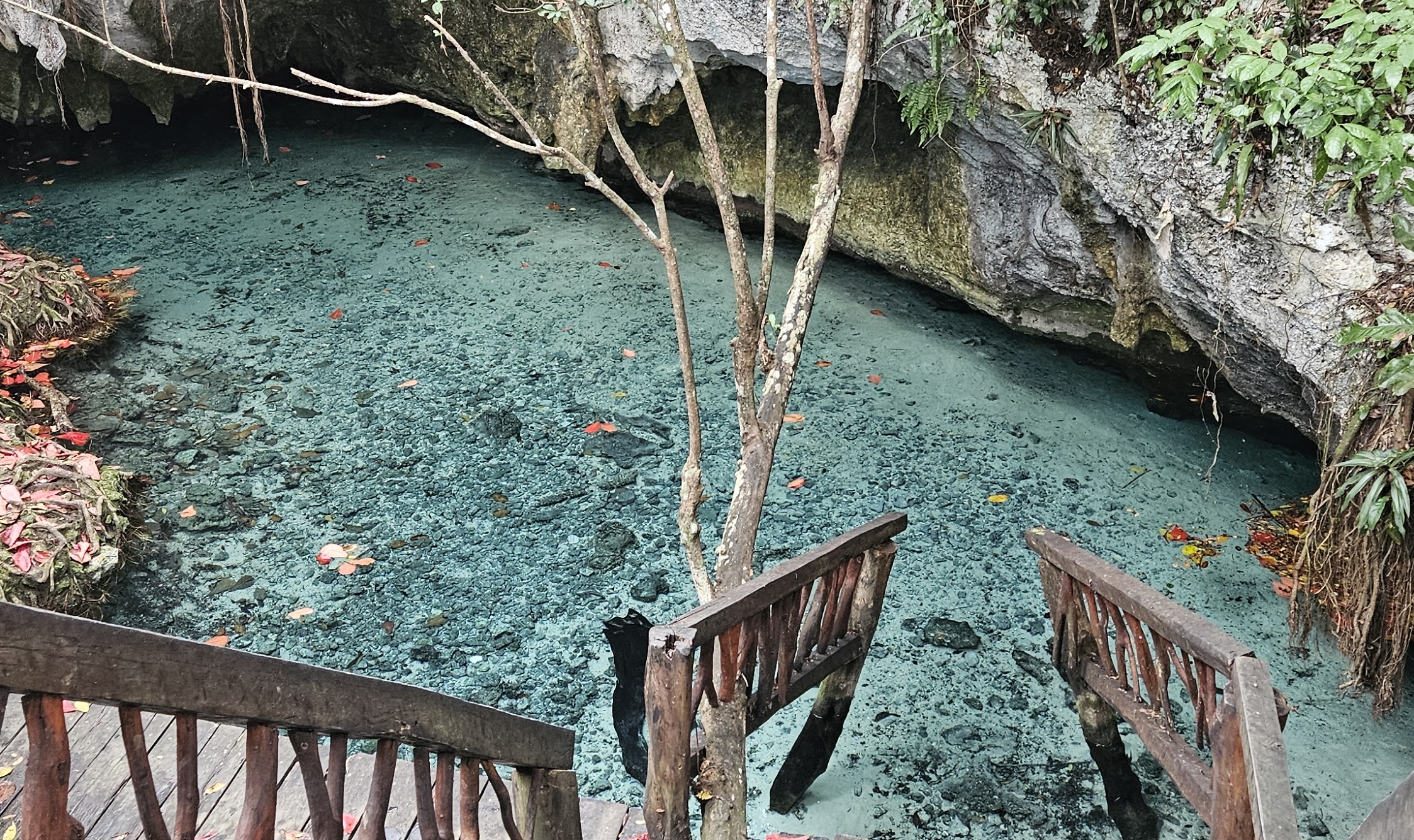
The ancient Maya didn’t build temples beside cenotes by accident. Many scholars and archaeological accounts describe Maya beliefs that associated these circular openings in the earth with sacred realms, portals to Xibalba, the underworld, where the gods of water and death held court beneath the limestone. Visiting this remarkable sinkhole just outside Tulum makes that belief feel less like mythology and more like lived experience. The moment you enter the water and look up at stalactites hanging above a turquoise void, with freshwater turtles drifting past in shafts of jungle light, something shifts in your perception of what a swimming hole can be.
Gran Cenote is a highly accessible and visually remarkable cenote near Tulum, consistently praised by travelers and guides exploring the Yucatán Peninsula. It sits roughly 4.8 km from Tulum’s town center, operates daily with reasonable entry fees, and requires no special training for snorkelers. None of that makes it simple to visit without preparation. This guide covers the exact logistics: how to get there, what to pay, when to arrive, what to bring, and how to move through the water in a way that actually does justice to one of Mexico’s great natural sites. At The Curious Atlas, slow, intentional travel in the Yucatán is what we do, and this guide is built for exactly that kind of visit.
Getting to Gran Cenote from Tulum town or the ruins
The site sits about 3 to 4 km from Tulum Ruins and under 5 km from the town center, close enough that you have real transport options, and the right one depends entirely on your pace and budget. No direct public bus route connects the town to the cenote, so you’re choosing between taxi, bike, colectivo, or your own car. For an overview of route and transfer choices, consult the Tulum, Gran Cenote transport options before you pick a plan: Tulum to Gran Cenote transport options.
By taxi, bike, or colectivo: which option actually works
A taxi is the fastest and most reliable option. From Tulum town center, the ride takes 5 to 10 minutes and costs MX$160 to 190. From the ruins, expect 3 to 5 minutes for a similar fare. Taxis are available at the ADO bus station or anywhere in town. If you’re arriving early (and you should be), a taxi removes all timing uncertainty.
Biking is the slow traveler’s choice, and it works beautifully. The road between Tulum and the cenote is flat and reasonably straight, with bike rentals available throughout town for around MX$100 per day. The ride takes 20 to 30 minutes from town, 15 to 20 from the ruins, and bike racks wait for you at the entrance. Avoid riding in midday heat; the road gets truck traffic and the sun is relentless.
Colectivos (shared vans) run from the ADO station and main road for MX$15 to 30. They’re budget-friendly but inconsistent for tourists. Flag assertively, confirm with the driver that they’ll drop near the cenote, and expect a short walk at the end. If the colectivo passes you without stopping, switch to a taxi without hesitation.
Parking, arrival, and the walk to the entrance
Visitors driving from Playa del Carmen or Cancún will find ample on-site parking at no additional charge. The entrance itself is straightforward: a ticket booth, a locker station, showers (mandatory before entry), and a gear rental counter. Give yourself 10 minutes from arrival to get through this process before you touch the water. And regardless of how you arrive, get there before 10:30 AM.
Gran Cenote entry fees, opening hours, and what to bring
As of early 2025, the entrance fee is MX$500 (roughly USD $25). The site accepts cash only, with US dollars also accepted. Hours are reported as 8:00 AM to 4:45 PM daily, with last entry at 4:15 PM, though some recent sources suggest the opening time may shift to 10:00 AM depending on the season. Verify current hours directly before visiting, as the schedule has changed across seasons and the discrepancy is real enough to matter if you’re planning an early arrival.
Gear rentals on-site and what they cost
Snorkel sets (mask, snorkel, fins) and life vests are available to rent at the cenote. Life vests are commonly mandatory here, and at many tourist cenotes across the region, in part because freshwater genuinely reduces buoyancy compared to saltwater, meaning you fatigue faster than expected. Folding in the rental cost from the start saves any friction at the counter. Lockers are also available on-site for storing valuables while you swim.
What to pack in your day bag
Pack with specificity. The items that actually matter: reef-safe sunscreen applied before you arrive (application near the water is prohibited on-site), a rash guard for the 24 to 26°C water, water shoes for the algae-slicked limestone entry points, MX cash for the ticket and any rentals, a reusable water bottle, and a waterproof phone case or compact action camera. At this cenote, what protects you and the ecosystem matters more than what looks good poolside.
When to go for crystal-clear water and open pools
Timing a visit is the single decision that separates a transcendent morning from a crowded, noisy one. The water clarity stays exceptional year-round, visibility often exceeds 30 meters, but what changes dramatically is the human volume churning through the site between 10:30 AM and 3:00 PM.
The early morning window that changes the cenote entirely
Arriving at or before opening (around 8:00 AM, depending on current hours) gives you access to still water, no tour groups, and soft ambient light filtering through the jungle canopy. These are the conditions that produce the photographs you’ve seen shared online: turquoise pools with stalactites reflected in glass-flat water, a turtle drifting through a column of light. By 10:30 AM, tour groups arrive in waves and that stillness is gone. A secondary quiet window opens around 3:00 to 4:00 PM as groups depart before closing, making late afternoon a solid fallback if an early start isn’t possible.
Best and worst months for a visit
Dry season, running November through April, delivers optimal weather and light but peak tourist volumes. May and late October represent a compelling middle ground: warm, mostly dry, with noticeably thinner crowds and the same quality water. Low season (June through October) offers the fewest visitors and lowest prices, with the trade-off of higher humidity, occasional rain, and the softer overcast light that affects photography inside the cavern. Weekdays across all seasons are noticeably quieter than weekends. If you can visit on a Tuesday in early November before 9:00 AM, you’ll experience the site at something close to its best.
Gran Cenote snorkeling routes and what the water holds
The site divides into two primary areas: an open-air sinkhole with a sandy floor descending to depths of 10 meters and beyond, and a partially open cavern section where stalactites descend close enough to the water’s surface that you can trace their outlines from below. Snorkeling here requires no certification, no strong currents to fight, and almost no technical skill beyond the ability to float. Freshwater turtles drift through the open pool, utterly unbothered by snorkelers, they’ve clearly decided humans are not worth worrying about.
Navigating the open sinkhole and cavern passages
Enter the open pool through the designated wooden platform and float toward the cavern opening. Natural light from the jungle above creates a turquoise luminescence where the two sections meet, and this is where the photography instinct kicks in. Drift slowly along the cavern perimeter, keeping stalactites in your sightline above. The depth drops sharply in the open area: enter slowly and give your eyes time to adjust to the remarkable clarity, which can make shallow sections appear deeper than they are and deep sections appear closer. The second, quieter sinkhole connected to the main area offers cleaner photography angles and noticeably less foot traffic.
Regarding scuba diving: cenote diving here has faced operational restrictions, and multiple sources indicate that only snorkeling has been permitted since 2017. If you’re a certified diver hoping to explore below snorkeling depth, confirm current dive access with local operators before booking any gear.
Wildlife and photography inside the cenote
Gran Cenote is one of the few places where ancient geology, freshwater turtles, and tropical fish share the same frame. Knowing where the light falls and where the animals tend to gather makes the difference between a blurry snapshot and something genuinely worth keeping.
What you’ll encounter in the water
Freshwater turtles are the cenote’s most iconic residents, present throughout the open pool and entirely unbothered by snorkelers floating nearby. Small fish move along the cavern walls, and bats roost in the upper cavern ceiling. Visitors are asked not to touch wildlife or formations, the oils from human skin damage the limestone structures that took millennia to develop, and staff enforce these expectations actively.
Getting the best shots without a dedicated camera rig
A waterproof phone case or entry-level action camera handles the open sinkhole well. For the cavern section, turn off your flash entirely: it destroys the ambient light quality that makes cenote photography remarkable. Instead, position yourself so the natural light shaft from the opening falls into your frame from behind the subject. Keep movements slow and deliberate to avoid stirring sediment, which can cloud visibility in minutes. The second sinkhole consistently offers cleaner angles with far fewer people in the background. Professional cameras and tripods are not permitted on-site, but phones and compact waterproof cameras are explicitly allowed.
Safety rules, on-site etiquette, and making the visit effortless
Gran Cenote has non-negotiable rules that exist to protect both visitors and one of Mexico’s most ecologically sensitive environments. Lifeguards enforce them actively, and violations result in removal from the site. Understanding them before arrival removes any friction on the day.
Rules that protect the cenote and your safety
Apply sunscreen before arriving and allow it to absorb fully. No sunscreen, even reef-safe formulations, can be applied inside or near the water. Shower before entering. Enter the water feet-first only: headfirst diving is banned because the site’s exceptional clarity distorts depth perception, making rocky shallows invisible until impact. Life vests are mandatory. Water shoes protect against algae-covered rock edges at entry points. Solo swimming is discouraged; visitors are strongly advised to use the buddy system and follow lifeguard instructions at all times.
Beyond safety, a few etiquette points make the experience better for everyone: float slowly in the cavern section to avoid disturbing sediment, give turtles space rather than chasing them, and stay on designated platforms and walkways rather than climbing the natural limestone edges. These aren’t suggestions. They’re what keeps this place in the condition that makes it worth visiting.
A place that existed before the roads arrived
Gran Cenote rewards visitors who plan intelligently. Arrive early, bring cash, apply your sunscreen at the hotel, and give yourself unhurried time in both the open sinkhole and the cavern section. Whether you’re snorkeling for the first time or an experienced diver verifying current dive access, the site offers something that Tulum’s hotel zone and beach clubs simply cannot: the feeling of swimming inside a place that existed long before the roads and resorts arrived.
The Maya called these waters sacred for reasons that didn’t require explanation. Visitors who experience the cenote quietly, without rushing to the next stop on a packed itinerary, tend to leave understanding exactly why. That unhurried quality is worth protecting, and worth planning for.
Leave a Reply