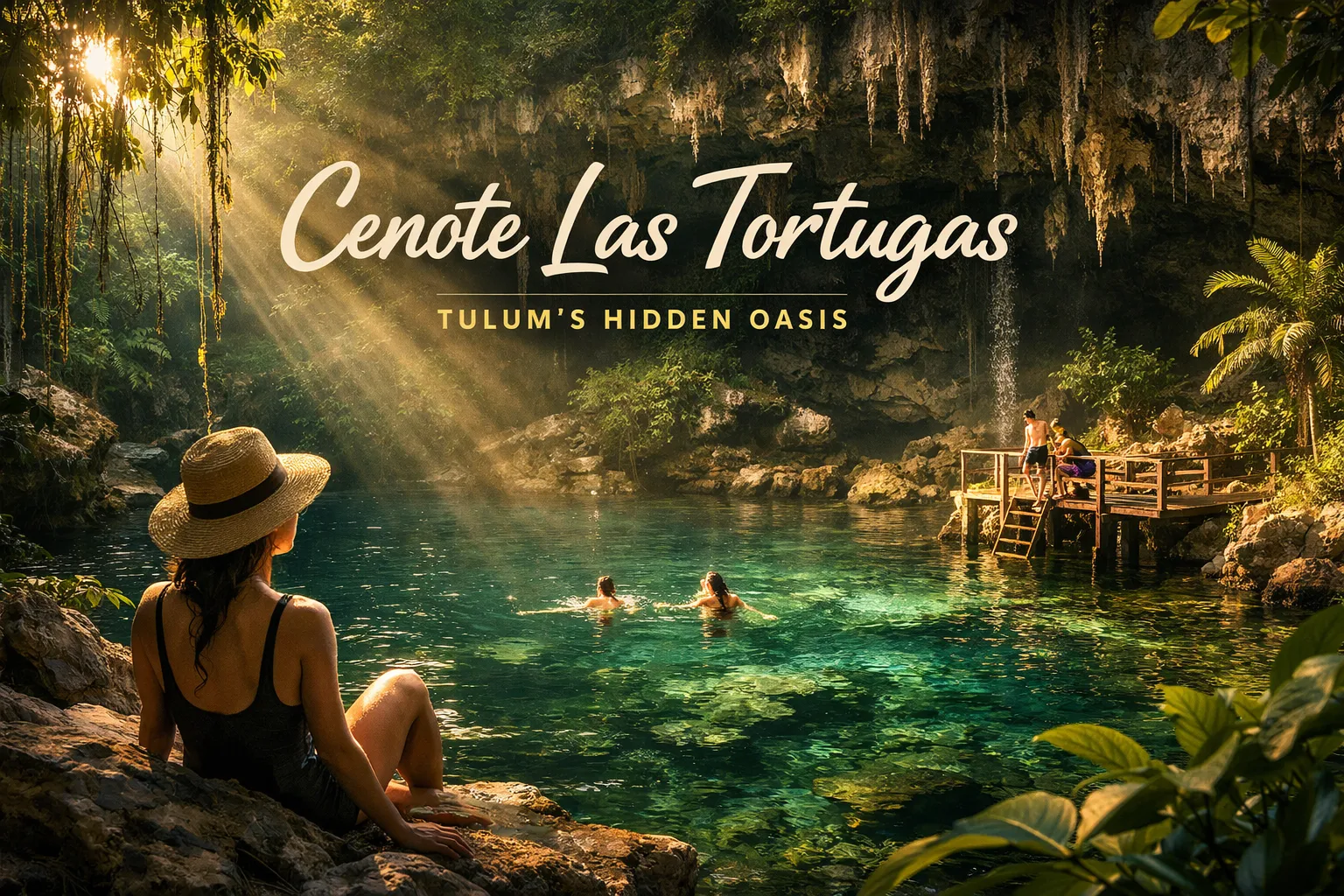
By 10 AM on any given morning, the most famous cenotes near Tulum are already crowded. Tour buses line the parking areas, guides shout over each other, and the crystal-clear water you came for fills up with sunscreen and noise. The Riviera Maya’s cenote circuit is genuinely beautiful, but it rewards the traveler who looks a little further down Highway 307 rather than following the herd to the same three stops. Nine kilometers north of Tulum’s center, through the kind of roadside signage most tourists drive past without slowing down, sits one of the Yucatán Peninsula’s most rewarding cenote complexes: Cenote Las Tortugas.
Also known as Cenotes Casa Tortuga, this four-cenote park combines two underground cave chambers with two open-air swimming pools, all on a single ticket. What follows is the ground-level detail that separates a good cenote morning from a frustrating one: how to get there from Tulum, Playa del Carmen, and Cancun; what each ticket tier actually includes; what to pack; the best window to arrive; and how to turn the morning into a genuinely full Yucatán day.
How to find Cenote Las Tortugas without the guesswork
Cenotes Casa Tortuga sits directly on Highway 307, roughly 9 km north of Tulum town center. The drive from Tulum takes about ten minutes by car, and the entrance is clearly signposted from the main road. Free parking is available on-site, so if you’re arriving by rental car or private transfer, there’s no scramble once you get there.
Getting there from Tulum, Playa del Carmen, and Cancun
From Tulum, the cheapest and most local option is a colectivo, the shared white vans that run continuously along Highway 307 toward Cobá. Catch one on the highway in Tulum Centro, tell the driver “Casa Tortuga,” and you’ll be dropped at the entrance road. The fare runs 20 to 50 pesos per person, paid in cash directly to the driver. A taxi takes the same ten minutes and costs roughly 150 to 180 MXN, a reasonable trade if you’re traveling with bags or a group.
From Playa del Carmen, the drive covers about 52 to 72 km depending on your starting point and takes under an hour by rental car. From Cancun, budget around two hours by private transfer, which is the most practical choice given the distance. Guided tours from both cities typically include hotel pickup, air-conditioned transport, and a bundled itinerary that makes the logistics straightforward.
Why the colectivo is worth trying
The colectivo isn’t just the budget option. It’s a small adventure before the main one. You flag down a white van on a Yucatán highway, pay a handful of pesos, and ride alongside locals heading to work, school, or market. It costs a fraction of a taxi and runs frequently all day long. For a site built around authentic, immersive experience, arriving this way fits the spirit of the visit perfectly.
What actually waits for you inside Casa Tortuga
The base ticket covers four cenotes, and each one feels genuinely different from the last. Understanding the layout before you arrive helps you set the right expectations and choose the right package, because the gap between a disappointing visit and a memorable one often comes down to preparation rather than the site itself.
The two cave cenotes: darkness, stalactites, and filtered light
The cave cenotes are where most visitors find their lasting memory of the place. These are underground limestone chambers with stalactite formations overhead, water that stays noticeably cooler than the surface pools, and shafts of natural light that filter down in ways photographs struggle to capture honestly. A bilingual guide leads every group through both cave cenotes, and the tour typically runs 90 minutes to two hours. The water visibility inside is exceptional, you can see clearly to the bottom, and the geological formations reward slow looking rather than a quick swim-through.
The two open-air cenotes: swimming, jumping, and relaxing
The open cenotes function more like natural swimming holes with a beach-club atmosphere layered on top. There are jump platforms, lounging areas, and space to float and recover between the more structured parts of the tour. After the guided session ends, free return visits to the open cenotes are included, so you can spend as long as you like in the water. Zipline access and ATV rides to a fifth cenote are available as paid add-ons for visitors who want more activity after the main tour wraps up.
Ticket prices and what you’ll actually spend
The base entry runs between 450 and 600 MXN per adult, roughly 23 to 31 USD, depending on the package and where you book. Children four and under enter free. Where visitors consistently get caught off guard is the additional fees that don’t always appear in the headline price, so it’s worth understanding the full picture before you walk up to the gate.
The three main packages explained
- Standard (450 MXN): Guided tour of all four cenotes, life jacket included, free swim time in open cenotes after the tour
- Adventure (750 MXN): Everything in Standard, plus zipline, bike rental, and a taco buffet
- Full Experience (950 MXN): Everything in Adventure, plus tequila tasting and digital photos
Hidden extras to budget for before you arrive
Locker rental adds 50 to 100 MXN, and you’ll want a locker. If you’re booking through a third-party platform, read the fee breakdown carefully: some listings add a mandatory 250 MXN tour fee and a 500 MXN conservation fee collected at the gate, which can push the total well above the advertised price. Booking directly through the official Casa Tortuga site or a trusted tour operator eliminates the most confusing fee structures. Advance booking also unlocks a 15% discount on the base rate at certain resellers, paid partially online with the balance settled in cash on arrival. Bring pesos for on-site extras; card readers aren’t available at every counter.
The best time to visit and what to pack
Arrive between 9:00 AM and 11:00 AM. The site opens at 9:00 AM, and that first two-hour window is when water visibility is at its clearest in the open cenotes and the tour groups traveling from Cancun and Playa del Carmen haven’t yet arrived in volume.
Weekday mornings are noticeably quieter than weekends. If you have any flexibility in your schedule, a Tuesday or Wednesday morning will give you a materially better experience than a Saturday at noon.
Essential gear for a cenote visit
- Biodegradable, mineral-based sunscreen only (chemical sunscreens are banned in cenotes throughout Yucatán)
- Water shoes or sandals with a back strap for the rocky walkways between cenotes
- A rash guard or light swim shirt for the cave sections, which stay cool year-round
- A dry bag for your phone and valuables
- A small towel, as rentals are not reliably available on-site
The mandatory shower rule
Every visitor showers before entering any cenote. This is enforced at the gate, not suggested. Budget five minutes for this on arrival, and don’t apply sunscreen after you’ve showered. The rule exists to protect the freshwater ecosystem inside the cenotes, and it applies regardless of how recently you showered at your hotel.
Turning the cenote into a full-day Tulum excursion
A morning at the Cenote Tortuga Tulum complex takes two to three hours from entry to exit. That leaves a full afternoon for the kind of slow exploration that makes Tulum genuinely memorable, rather than a collection of locations ticked off a list. The most satisfying combination pairs the cenote with Tulum’s archaeological zone, located just 15 minutes south by taxi, followed by a late lunch at one of the local comedores in Tulum town that most tourists walk past entirely.
Cultural stops worth planning around
The Tulum Ruins sit on a clifftop above the Caribbean and are best visited in the early afternoon, once the morning rush has thinned and the light is favorable. The structures include El Castillo, a Mayan temple with a documented solar observatory function, and the whole site offers an unusual combination of archaeology and coastal scenery. Back in Tulum town, the artisan markets, mezcal bars, and taco stands operate at local pricing far removed from the hotel zone’s numbers. A comedor lunch of regional fish or chicken dishes runs 80 to 150 MXN and tends to be significantly better than anything priced in USD for tourists.
Honest verdict: is Cenote Las Tortugas worth it?
The answer depends entirely on how you visit. The version that generates frustrated reviews is the one where visitors arrive at 11:30 AM on a Saturday, discover unexpected fees at the gate, wait in crowded holding areas, and find murky water in the open pools. That version exists. It’s avoidable. The version where you arrive at 9:15 AM on a weekday, join a small guided group through two cave cenotes before lunch, and leave by noon is a genuinely excellent morning. The cave cenotes are the real reason to come, the atmosphere, the water clarity, and the bilingual guides who are attentive, knowledgeable, and worth engaging make them worth the ticket price alone.
Common complaints and how to sidestep them
The most common complaints involve murky afternoon water in the open cenotes, the poolside areas feeling more resort than wild, and hard-sell tactics at the entrance. All three are manageable. Arriving early addresses the water clarity and the crowd pressure. Booking the Adventure or Full Experience package in advance eliminates most fee surprises at the gate, since the bundled price is transparent and the add-ons you want are already paid for. Construction noise is occasionally mentioned in visitor feedback; there’s no reliable way to predict it, but arriving early reduces the chance that a large group’s activity around you amplifies it. For real visitor reports and recent reviews, check the Tripadvisor attraction page for Cenotes Casa Tortuga.
Your next step before the trip
The cenotes of Yucatán are extraordinary by any honest measure, but the ones worth remembering are the ones you arrive at prepared. Cenote Las Tortugas rewards the traveler who books early, packs right, and treats the visit as the beginning of the day rather than the whole day.
Whether you navigate there on a colectivo with a dry bag and biodegradable sunscreen, or arrive as part of a guided eco-tour that handles every logistical detail, the experience of stepping into a limestone cave cenote for the first time stays with you long after the tan fades. The filtered light through the water, the stillness underground, the formations that took tens of thousands of years to build, these things are not easily replicated anywhere else on the planet. If the cenotes are your entry point into the region, the Sian Ka’an Biosphere Reserve and the colonial streets of Valladolid are the natural next stops in the sequence.
Cenote Las Tortugas is an invitation to slow down and connect with Yucatán’s natural beauty on your own terms. Arrive prepared, linger in each cavern and pool, and let the stillness of these limestone waters become one of the most enduring memories of your journey.
Leave a Reply