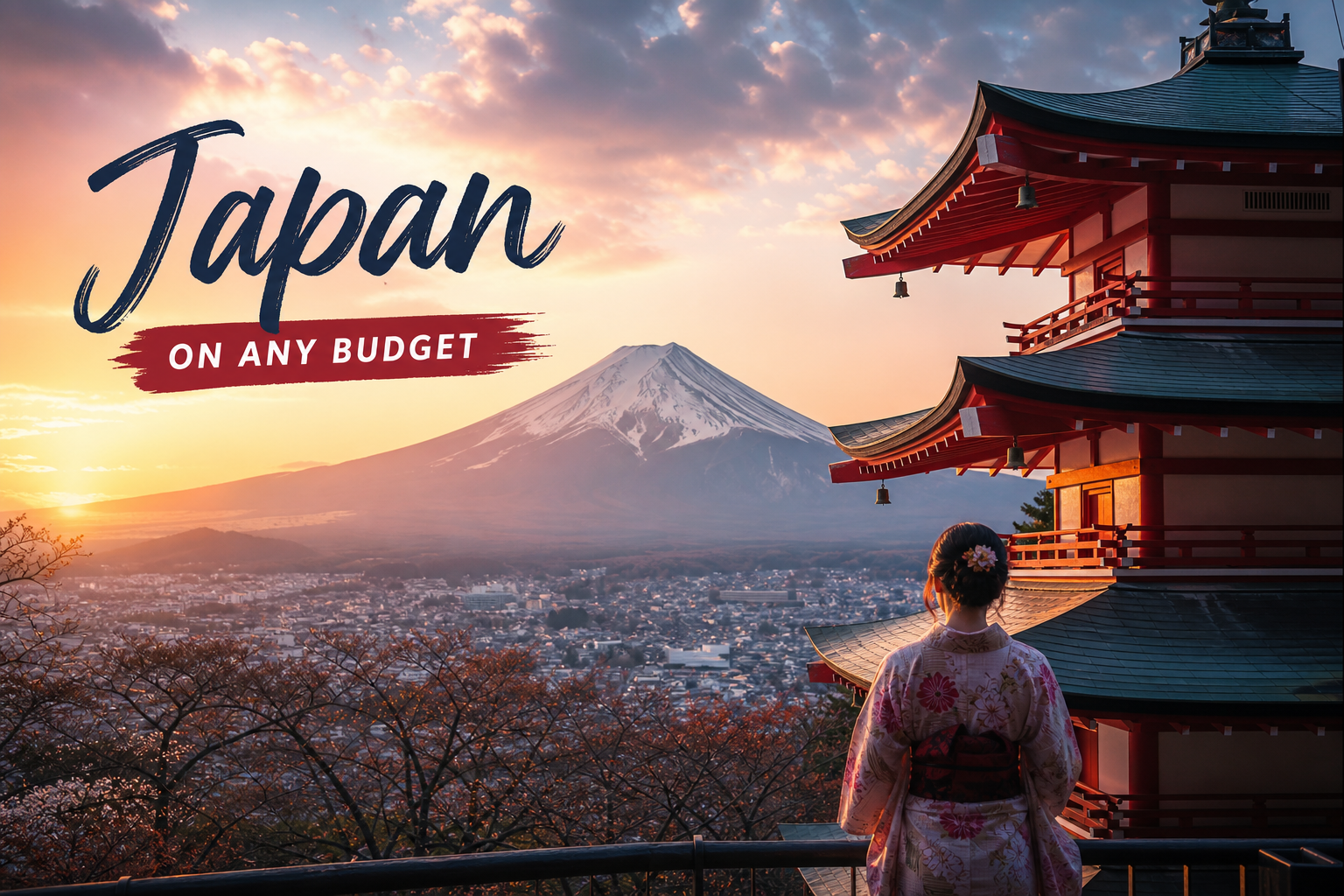
The travelers who see the most of Japan are rarely the ones who move the fastest. Most first-timers build their Japan itinerary around speed: Tokyo to Kyoto to Osaka in seven days, every highlight ticked off, no breathing room. They come back with great photos and a vague sense that they missed something. That feeling is not a flaw in the destination. It is a flaw in the plan.
The real Japan, the one that lingers, lives in the unhurried hours. The breakfast eaten on a temple step. The regional train that takes twice as long and rewards you with coastline you never knew existed. The market stall where the woman selling jakoten has been there since before you were born. This guide is for the traveler who wants to plan Japan travel trips with intention, whether that means ten days in Tohoku, a week walking Shikoku’s pilgrimage trails, or simply choosing the overnight bus over the shinkansen.
The Case for Slow Japan Travel Trips
The Golden Route, that well-worn Tokyo to Hakone to Kyoto to Osaka corridor, is well-engineered for first-timers. It delivers efficiency. It delivers the hits. But a common thread in returned-traveler conversations and travel forums is the sense that Japan felt “too polished” or “too crowded” after following it. They are not wrong about what they experienced. They are describing the surface.
Japan is one of the world’s most rewarding slow travel destinations precisely because it has so much depth beneath its famous surface. The country rewards curiosity in a way that few places do. When you stay three nights in a town instead of one, you stop being a visitor passing through and start being someone the place has time to reveal itself to. You discover the neighborhood izakaya where no one speaks English and the menu is handwritten on the wall. You notice the quiet rituals: the shopkeeper who arranges her window display the same way every morning, the elderly couple who walk the same path through the temple garden at dusk. None of that appears on an influencer feed. All of it is the point.
Japan Travel Trips: Itineraries Built Around Depth, Not Distance
The most useful thing you can do before booking any Japan travel is to resist the instinct to cover ground. Choose a region and go deep into it. The travelers who leave Japan feeling like they finally understood the place are almost always the ones who made that choice early, and stuck with it even when the shinkansen schedule made somewhere else feel temptingly close.
Tohoku: Japan’s Quiet North for 7 or 10 Days
Tohoku is the region most first-timers skip, and it is the one most likely to make you want to come back. A 7-day slow Japan trip here works beautifully with Sendai as your anchor, making day trips or short overnight journeys to Yamadera temple, Matsushima Bay, and the Hiraizumi UNESCO site. For 10 days, extend north through Kakunodate’s samurai streets, across to the Shirakami Sanchi beech forests via the Gono Line, and into Aomori City for its Nebuta culture and extraordinary seafood. The Aomori Furukawa Fish Market alone, where you build your own nokke-don by choosing fresh toppings from different vendors, is worth the journey north.
One practical advantage that does not get enough attention: Tohoku’s cherry blossom season runs later than Tokyo’s. While Tokyo reaches full bloom around March 28, 2026, Sendai hits its peak around April 4 and Aomori not until mid-April. That staggered timeline means fewer tourists competing for accommodation, quieter temple grounds, and a more atmospheric experience overall. If your trip timing is flexible, this is a significant advantage.
Shikoku: The Pilgrimage Route for 10 or 14 Days
Shikoku is one of Asia’s great slow travel destinations, and it is almost entirely absent from standard Japan vacation planning. The 88-temple pilgrimage circuit takes eight weeks to walk in full, but for a first-time visitor, a curated 10-to-14-day section delivers the experience that matters: the meditative rhythm of temple to temple, the rural food culture, the uncrowded coastal roads. A manageable first section takes about 5 to 10 days on foot, centered in Tokushima prefecture, with Hashikura Temple offering overnight stays and the Iya Valley providing some of the most dramatic inland scenery in the country.
The regional food alone justifies the detour. Katsuo no tataki in Kochi, seared bonito with citrus and ginger, is the kind of dish that rewires your understanding of a cuisine. Sanuki udon in Kagawa, thick and chewy and served in a dozen different preparations, becomes something you think about for years. The Hirome Market in Kochi, a casual covered food hall where locals eat standing up, is the kind of place a slow traveler finds and never fully leaves behind.
Where to Stay: Temple Lodges, Ryokans, and Capsule Hotels
Accommodation in Japan is where the slow travel philosophy becomes most tangible, and where budget travelers often discover they can afford experiences that sound expensive.
Temple stays, or shukubo, are among the most distinctive overnight options in the country. They include vegetarian meals, access to morning prayers or meditation, and Japanese-style rooms with futon on tatami. They are not exclusively for the spiritually inclined. They are quiet, grounding, and competitively priced, typically running between ¥8,000 and ¥25,000 per person per night with meals included. Mount Koya remains the most famous and accessible option, with an English-friendly booking system through the official Koyasan Shukubo site. On the Shikoku pilgrimage route, temples like Hashikura and Anrakuji in Tokushima offer stays bookable through Japanese-language directories, with some English resources available through the Japan National Tourism Organization.
For capsule hotels, budget travelers can find well-maintained options in major cities for roughly ¥3,000 to ¥5,000 per night, though prices vary by city and season. Mid-range ryokans in Tohoku and Shikoku tend to run ¥15,000 to ¥25,000 with dinner and breakfast, meaningfully lower than equivalent options in Kyoto or Tokyo, where the same experience often costs 20 to 30% more. The ryokan experience, kaiseki dinner, communal onsen bath, futon rolled out on tatami, is worth building at least one night around.
Getting Around Without the Bullet Train
The shinkansen is fast, efficient, and the first thing most Japan travel guides recommend. This guide recommends something different: the slower alternatives are often more interesting, sometimes cheaper, and almost always underrated.
In Tohoku, the Gono Line runs along the Sea of Japan coast between Aomori and Akita with the kind of unobstructed ocean views that make you stop looking at your phone. In Shikoku, the Dosan Line cuts through the Oboke and Koboke Gorges along the Yoshino River, a journey that genuinely earns the word scenic. The Yosan Line along Shikoku’s northwest coast provides both practical city-to-city transport and continuous views of the Seto Inland Sea. These are not tourist experiences bolted onto a real infrastructure. They are the actual infrastructure of rural Japan, used daily by people who live there.
Japan’s highway bus network is the budget traveler’s most underused tool. An overnight bus from Tokyo to Sendai or from Osaka to Matsuyama on Shikoku costs roughly ¥3,000 to ¥7,000, compared to shinkansen prices that can run three to four times higher. You save on a night’s accommodation and arrive by morning. The booking process is straightforward through operators like Willer Express or JR Bus.
On the JR Pass question: the nationwide 7-day pass costs ¥50,000 in 2026, and it only earns its keep if your trip involves frequent long-distance shinkansen rides across multiple regions. For a Tohoku-focused slow trip, the JR East regional pass at around ¥30,000 for five days is the smarter calculation. For a Shikoku-and-Kansai itinerary, a pay-as-you-go approach combined with a JR West regional pass usually beats the nationwide option.
Japan Travel Costs: What a Trip Actually Runs in 2026
The numbers are more approachable than most people expect, and in lesser-known regions they are significantly better than Tokyo pricing suggests.
- Budget travelers spending ¥10,000 to ¥18,000 per day (roughly $50 to $120 CAD): capsule hotels or guesthouses, meals at local teishoku restaurants and convenience stores, local transport by IC card.
- Mid-range travelers at ¥20,000 to ¥40,000 per day (roughly $150 to $270 CAD): one or two ryokan nights, mix of local and mid-range dining, occasional reserved-seat trains.
- Comfort-level travelers at ¥60,000 or more per day ($400+ CAD): luxury ryokans, kaiseki dinners, private transport options.
In Tohoku and Shikoku specifically, accommodation and food costs run 20 to 30% lower than in Tokyo or Kyoto. A mid-range ryokan with two meals that would cost ¥30,000 per person in Kyoto might run ¥18,000 in Yamagata. That compression makes slow travel in less-visited regions not just experientially richer but financially logical.
For package tours, budget small-group options start around US$1,800 to US$3,500 for 7 to 9 days, with luxury packages reaching US$8,000 to US$15,000 or more. A fully independent 10-day Japan trip through Tohoku or Shikoku, booked directly, often lands well below the budget tour floor while offering complete flexibility on pace and routing.
How to Plan Your Japan Trip: Timing, Booking, and the Right Philosophy
For cherry blossom season, Tokyo’s full bloom lands around March 28, 2026, and Kyoto follows on March 30. Book accommodation in these cities at least three to four months ahead, or skip the most famous spots entirely and follow the blossoms north to Tohoku, where the crowds thin and the atmosphere deepens. For autumn foliage, Tohoku typically peaks earlier, around late October through mid-November, while Kyoto’s color runs from mid-November into early December, making both regions a quieter, equally beautiful alternative to spring. Golden Week, running from late April through May 5, is the one window to actively avoid: accommodation prices spike, trains fill, and the solitude that makes rural Japan worth visiting disappears entirely.
At The Curious Atlas, the philosophy behind every itinerary we build is the same one described throughout this guide: go deeper into one place rather than sprinting through many, find the food market instead of the restaurant with the English menu, ask what a destination actually feels like rather than just what to photograph. The blog is built specifically for travelers who want curiosity-led, unhurried discovery, and while our home territory is the Yucatan Peninsula, the slow travel mindset translates anywhere in the world, including the quiet north of Japan. The itinerary frameworks, regional guides, and packing philosophy on the site are written for the kind of traveler this article is for.
Frequently Asked Questions About Japan Travel Trips
How much do Japan travel trips cost for independent travelers?
Independent Japan trips run roughly ¥10,000 to ¥18,000 per day at the budget end, ¥20,000 to ¥40,000 at mid-range, and ¥60,000 or more for comfort-level travel. In Tohoku and Shikoku, expect to spend 20 to 30% less than the equivalent experience in Tokyo or Kyoto.
What are the best slow Japan travel trips for first-timers?
Tohoku for 7 to 10 days or Shikoku for 10 to 14 days are the two regions most likely to change how you think about Japan travel. Both are accessible by regional rail, both have strong food cultures and accommodation variety, and neither suffers from the overcrowding that can flatten the experience in the Golden Route cities.
Is a JR Pass worth it for a Japan trip in 2026?
Only if your itinerary involves multiple long-distance shinkansen journeys across different regions. For a Tohoku-focused trip, the JR East regional pass offers better value. For Shikoku and Kansai, a combination of pay-as-you-go fares and a JR West regional pass usually comes out ahead of the nationwide option.
The Travelers Who Remember Japan Most Vividly
They are rarely the ones who rode every shinkansen. They are the ones who ate breakfast at the temple, took the slow train through Tohoku, and stayed an extra day because the town was too good to leave. The practical tools are all here: Japan itinerary frameworks for 7, 10, and 14-day trips, real cost breakdowns, accommodation options from capsule hotels to shukubo, and regional rail alternatives that outperform the bullet train on experience if not on speed.
What you add is the willingness to move at a human pace. Whether you are planning your first Japan trip or returning for a deeper look at a country you thought you already knew, Japan rewards that patience more than almost anywhere else on earth. The country does not reveal itself to the tourist in a hurry. It opens slowly, deliberately, and only to those patient enough to wait. Start planning your Japan travel trip with our Tohoku and Shikoku itinerary guides on The Curious Atlas.
Leave a Reply