Japan has a reputation for being expensive. That reputation is half true and half myth, and the difference comes down entirely to how you travel rather than where you are. A solo traveler who eats convenience store onigiri and sleeps in a capsule hotel will spend a fraction of what someone staying in a boutique ryokan with kaiseki dinners spends. Both are doing Japan right. They’re just doing different versions of it.
The typical daily budget for a solo traveler in Japan isn’t a single number. It’s a range shaped by three things: where you sleep, how you eat, and how many paid activities you pack into each day. Get those three categories right and every other expense falls into place around them. The best trips are built on intention rather than Instagram, and understanding your daily spend before you land is one of the highest-leverage decisions you’ll make in the entire planning process.
By the end of this article, you’ll have real yen figures for every spending category, a working daily total for three distinct travel styles, and a clear method for building your one- to two-week cost estimate from the ground up.
Typical daily budget tiers for a solo traveler in Japan
Before breaking down individual categories, here are the headline numbers so you can immediately place yourself in the right tier. These are starting points shaped by real travel patterns, not theoretical minimums.
Budget tier: ¥7,000, ¥10,000 per day (roughly $45, $65 USD). This covers a hostel dorm or capsule hotel, convenience store and chain restaurant meals, IC card transport for city days, and free or low-cost temples and parks. It works best for travelers who prioritize accumulating experiences over comfort and genuinely don’t mind shared spaces.
Mid-range tier: ¥15,000, ¥20,000 per day (roughly $95, $125 USD). This covers a business hotel private room, casual restaurant dining, full daily transport, and one or two paid attractions. Most independent solo travelers land here. You get real comfort without luxury pricing, and the food options open up considerably.
Splurge tier: ¥30,000, ¥50,000+ per day (roughly $190, $315+ USD). This covers boutique or upper-business hotels, restaurant meals with drinks, theme parks or premium experiences, and flexible transport including taxis. Japan absolutely delivers at this level, but most solo travelers don’t need to spend here to have an exceptional trip.
Japan daily budget breakdown: accommodation, food, and transport
Accommodation: the single variable that shapes everything else
Accommodation is the largest budget lever you control, and the difference between tiers is dramatic. A hostel dorm in Tokyo runs ¥3,500, ¥8,000 per night; a business hotel private room runs ¥10,000, ¥18,000. That gap sets the tone for your entire daily budget before you’ve eaten a single meal or taken a single train.
Capsule hotels deserve more credit than they typically get. Many modern capsule properties offer private lockable pods, luggage storage, communal bath facilities, and common areas that are genuinely comfortable for solo travelers. They’re not a compromise you settle for in exchange for the novelty. For a solo traveler on a budget tier, a well-chosen capsule hotel in Shinjuku or Namba delivers privacy and cleanliness at hostel pricing.
At mid-range, business hotels from chains like APA, Toyoko Inn, and Dormy Inn run ¥8,000, ¥22,000 per night across Tokyo, Kyoto, and Osaka. For solo travelers, these are the best value on the market: private rooms, reliable Wi-Fi, often a breakfast option, and a location that’s almost always within walking distance of a train station. Osaka consistently comes in 10, 20% cheaper than Tokyo for equivalent properties, which matters if you’re planning a multi-city itinerary and want to balance costs across destinations.
There are moments when paying more for accommodation makes obvious sense: arrival nights after long-haul flights when you need reliable rest, or nights in smaller towns where the mid-range inventory is thin. Outside those situations, defaulting to business hotels at the mid-range tier is almost always the right call.
Food costs: eating well on every budget
Food in Japan is one of the great solo travel surprises. The quality at the bottom of the price range is genuinely exceptional, and a daily food budget of ¥2,000, ¥3,000 is achievable without suffering through mediocre meals. Convenience stores (7-Eleven, Lawson, FamilyMart) offer onigiri, sandwiches, hot foods, and fresh meals at ¥200, ¥600 per item. A bowl of chain ramen runs ¥600, ¥1,200. Budget eating in Japan is a feature of the food culture, not a compromise you make because you can’t afford better.
At the mid-range level, ¥4,000, ¥6,000 per day opens up a full and satisfying daily food rhythm. A convenience store breakfast, a teishoku set lunch (typically ¥1,000 for rice, protein, miso soup, and sides), and a casual ramen or gyudon dinner covers you well. Conveyor-belt sushi is one of the best mid-range food experiences in the country, delivering a proper meal for ¥1,000, ¥2,500 with zero pretension and maximum satisfaction.
A higher-end food day, at ¥7,000, ¥12,000, includes proper restaurant dinners, izakaya rounds with drinks, or a single high-quality sushi experience. An izakaya evening for a solo traveler typically runs ¥2,000, ¥5,000 depending on how much you order and drink. These nights are worth budgeting for. They’re some of the most memorable parts of any Japan trip.
Transport: what daily movement actually costs and when passes make sense
Transport in Japan is predictable once you understand the system. On a standard city sightseeing day, budget ¥1,000, ¥2,000 for subway and bus rides. Single metro trips cost ¥100, ¥200 each; buses often run flat fares around ¥200. The IC card (Suica or ICOCA) is your default tool for all city movement. Load it once, tap in and out, and it works across metro lines, JR local trains, and buses in every major city without any additional planning.
City day passes (usually ¥800, ¥900) only save money if you’re making five or more rides in a single day. In Tokyo, for example, the 24-hour metro pass makes sense on a packed museum-and-shrine day but rarely pays off on a slow neighborhood wander. On lighter sightseeing days, topping up your IC card is almost always cheaper. Do the math for each day rather than defaulting to a pass automatically.
The JR Pass deserves an honest assessment. After the 2023 price increase, the 7-day ordinary pass costs ¥50,000 and the 14-day costs ¥80,000. For a standard Tokyo, Kyoto, Osaka route, the pass often doesn’t cover its own cost. It becomes worthwhile only when your itinerary includes significant long-distance ground, such as adding Hiroshima to a Tokyo, Kyoto, Osaka circuit, which can push your standalone shinkansen total to around ¥50,000 or above. Run the math against your specific itinerary before purchasing. Many two-week travelers are better served buying individual tickets.
Activities and the extras that quietly inflate your daily spend
Activities are the most variable budget category, and they’re also the one most travelers underestimate. Many of Japan’s most memorable cultural experiences cost nothing. Fushimi Inari in Kyoto is free. Many castle grounds and Shinto shrines charge no entry fee. A day built around walking, shrines, and neighborhood exploration can keep activity spend under ¥500 while still being one of the richest days of your trip.
Paid museum entry averages ¥1,500, ¥3,000 per attraction. A typical paid sightseeing day including transport and two admissions realistically runs ¥5,000, ¥10,000. Theme parks are a different conversation entirely: a single-day Disney or Universal Japan ticket runs ¥10,000, ¥15,000 before food, which means those days need their own budget line rather than being absorbed into your daily average.
The extras most Japan budgets forget to include are the ones that add up slowly and then all at once. An eSIM or pocket Wi-Fi averages ¥500, ¥1,000 per day when spread across a multi-day plan. Coin laundry runs ¥300, ¥800 per load. Souvenirs and snack shopping add ¥500, ¥2,000 per day for moderate buyers. Nightlife, even a modest izakaya evening, adds ¥1,000, ¥4,000. These extras combined can add ¥2,000, ¥5,000 to your daily total if you’re not tracking them, which is exactly why most travelers who say Japan “cost more than expected” were under-budgeting for incidentals rather than the headline categories.
Putting it all together: your real Japan daily and weekly total
When you add all categories honestly, here’s where solo travelers actually land. Budget travelers spending intentionally come in at ¥7,000, ¥10,000 per day all-in. Mid-range travelers, accounting for a private room, casual restaurant meals, full daily transport, one or two paid attractions, and modest extras, land at ¥15,000, ¥20,000, with most people at this tier spending closer to ¥17,000, ¥18,000 per day once everything is counted. Splurge-tier travelers should plan for ¥30,000, ¥50,000+.
For a 10-day trip, that translates to roughly ¥70,000, ¥100,000 at budget, ¥150,000, ¥200,000 at mid-range, and ¥300,000, ¥500,000+ at the splurge tier, before flights and travel insurance. Add a buffer of 10, 15% for unexpected expenses, because something always comes up. If you’re traveling from Canada, see How to Plan a Japan Trip from Canada in 2026.
Three practical rules for hitting your target spend:
- Choose your accommodation tier first.
- Eat at least one meal per day from a convenience store or chain restaurant regardless of tier. It keeps food costs in check without sacrificing quality or experience.
- Build one free-activity day into every three paid-activity days to balance out the cumulative cost of attractions and transport.
The only thing left to do is decide your tier
Japan’s reputation as an expensive destination is earned in some categories and completely overblown in others. The country is expensive if you drift into it without a plan. It’s remarkably accessible if you understand the cost structure before you arrive. Budget travelers can do Japan extraordinarily well. Mid-range travelers will eat remarkably, sleep comfortably, and see nearly everything on their list. Splurge travelers will find Japan delivers on every yen spent.
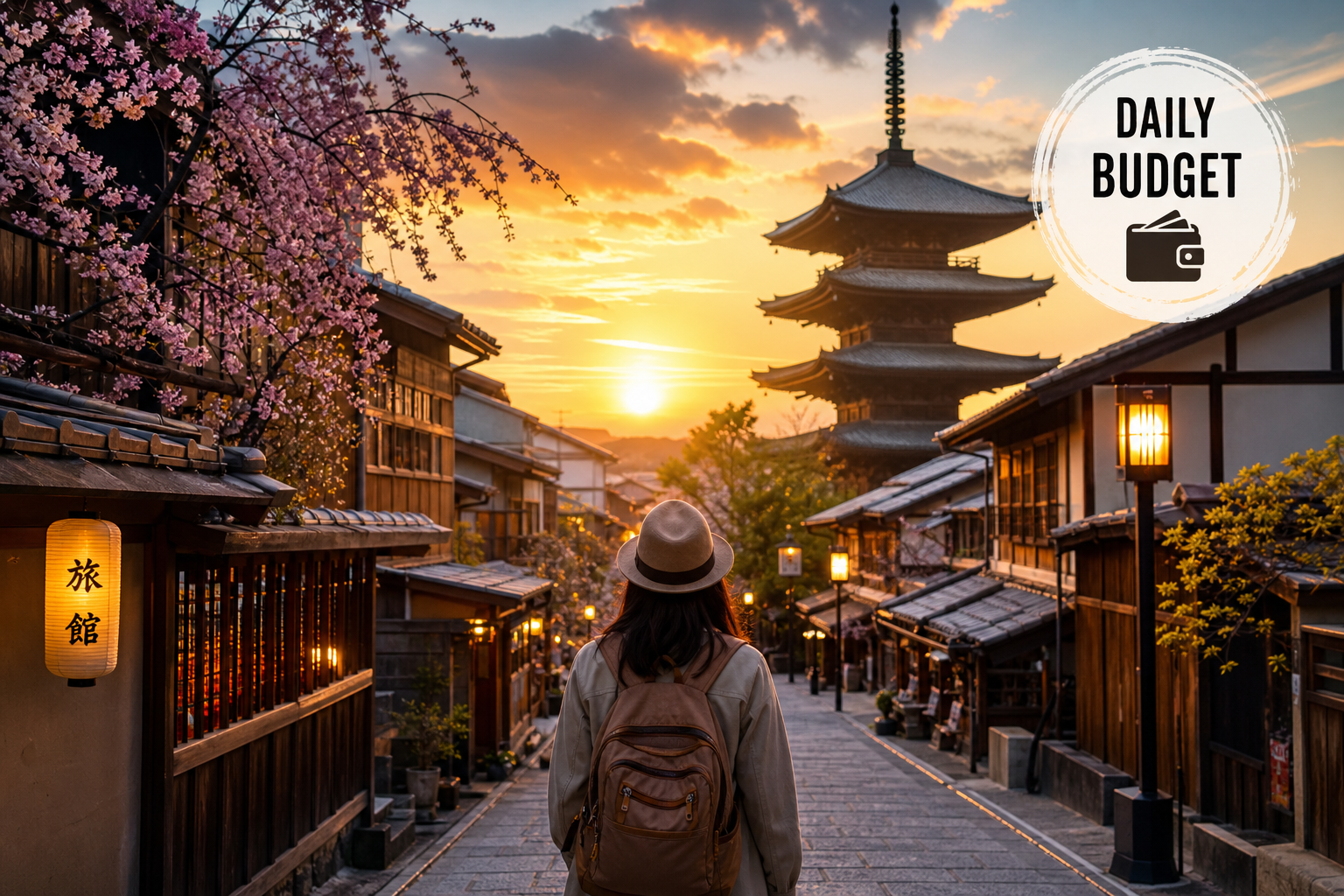
The move now is straightforward: decide your tier, work backwards through the categories covered in this article, and build your total before you book anything. Understanding the typical daily budget for a solo traveler in Japan before you land means that when you’re finally standing on a Kyoto street at dusk watching the lanterns come on, you can be fully present, quietly absorbing the moment rather than tallying up the day’s receipts.
Leave a Reply