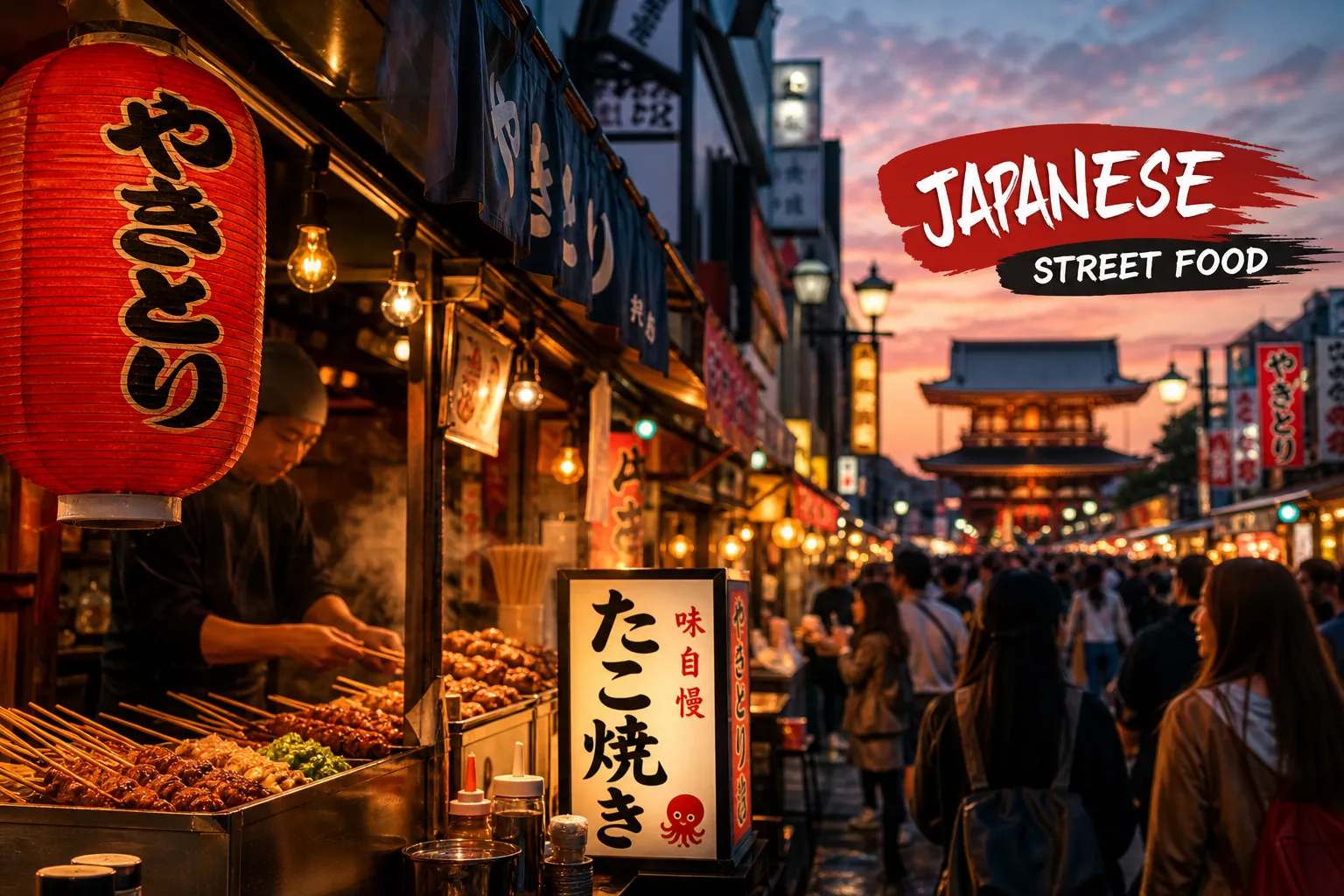
The best way to understand any place is to eat what its people eat while standing on a sidewalk. Japan may be the most rewarding country on earth for testing it. If you’re looking for the top Japanese street foods to sample in Japan, this guide organizes the essential bites by region so you can build a food itinerary worth following, not just a checklist to tick off. Japanese street food isn’t a category of snacks, it’s a compressed cultural statement, centuries of craft packed into a paper cone or a bamboo skewer.
Expect specific city and neighborhood recommendations, typical prices in JPY and USD, honest notes on vegetarian traps, and practical tips for ordering without hesitation. Whether you’re planning a two-week loop or a focused, neighborhood-by-neighborhood slow travel approach, this is the framework you need before you land.
Top Japanese street foods to sample in Japan, Osaka and Tokyo
Osaka has earned its reputation as the nation’s kitchen, and the streets of Dotonbori back that claim up immediately. The density of Japanese food stalls, the smell of charcoal and batter, and the theatrical noise of vendors flipping griddle pans all signal that eating here is a serious civic activity. Tokyo layers the same intensity across dozens of distinct neighborhoods, each with its own personality and its own signature bites.
Takoyaki: Osaka’s most iconic bite
Takoyaki are savory octopus balls cooked in a cast-iron mold with dozens of circular wells, each one producing a sphere with a crisp outer shell and a molten, custardy center. The finished product gets topped with takoyaki sauce, Japanese mayo, dancing bonito flakes, and chopped green onion. Dotonbori is ground zero: Takoyaki Doraku Wanaka is the consensus pick for a classic, high-value experience, while Takoyaki Juhachiban draws consistent praise for its distinctive style. A serving of 6 to 8 pieces runs ¥500 to ¥750, or roughly $3.50 to $5.00. One practical note worth knowing: takoyaki contains octopus (a mollusk) and bonito flakes, so it’s not suitable for vegetarians and may trigger seafood or mollusk allergies. Anyone with shellfish, mollusk, or fish sensitivities should skip it despite how simple the snack looks from the outside.
Yakitori and karaage in Tokyo’s food alleys
Beneath the train tracks in Yurakucho and tucked into the narrow alleyways of Shinjuku’s Memory Lane, charcoal smoke is the constant. Yakitori, grilled chicken skewers seasoned with either salt or tare sauce, are the anchor of these corridors. The salt version lets the char and the meat speak; tare adds a sweet, caramelized glaze. Individual skewers run ¥225 to ¥450 each, about $1.50 to $3.00, making it easy to try four or five varieties without committing to a full meal.
Karaage, bite-sized fried chicken marinated in soy, ginger, and garlic, appears at festival stalls and convenience store counters alike. It’s one of the most portable must-try street foods in Japan, crisp outside, deeply savory all the way through. Both dishes are built on chicken, so they’re not vegetarian, but they’re among the safest options for travelers avoiding fish-based ingredients. If you’re building a Tokyo-focused plan around these late-night alleys, our guide on How to Spend 5 Days in Tokyo Like a Local highlights neighborhoods and evening options that pair well with yakitori crawls.
Taiyaki and street crepes in Harajuku
Harajuku’s Takeshita Street runs a parallel track between tradition and maximalism. Taiyaki, fish-shaped cakes filled with red bean paste, custard, or chocolate, are the traditional anchor, typically priced around ¥225 to ¥375. The crepe stalls represent the maximalist end: soft crepes wrapped into cones and loaded with strawberries, Nutella, whipped cream, and any combination of the above, usually running ¥500 to ¥750. Both are ideal grab-and-walk foods for a neighborhood designed around exactly that impulse.
Kyoto and Nara: skewers, rice balls, and centuries of flavor
Kyoto’s street food scene is quieter and more deliberate than Osaka’s, but the quality ceiling is just as high. The city’s deep relationship with tofu, seasonal vegetables, and refined sweets shows up even in its most casual Japanese food stalls. Two corridors deserve your full attention: Nishiki Market and Ninenzaka street, both walkable and both dense with flavor.
Mitarashi dango along the temple streets
Mitarashi dango are skewered rice dumplings, grilled over charcoal until slightly charred, then coated in a glossy sweet soy glaze. They’ve been sold near Kyoto’s shrines for centuries, and the combination of smoky char, chewy dumpling, and caramelized sauce makes for one of the most satisfying single bites in the country. A stick runs ¥225 to ¥450. Seasonal variations are worth tracking: sakura mochi appears in spring, and yomogi dango, made with mugwort, turns up in summer with a grassy, herbaceous flavor that pairs perfectly with the heat.
Nishiki Market: Kyoto’s indoor street food corridor
Nishiki is five blocks of covered stalls selling pickled vegetables, seafood skewers, tamagoyaki, soy milk donuts, sashimi, and matcha sweets. It’s open daily, sheltered from rain, and compact enough to walk end to end in 20 minutes while sampling six or seven things. Konna Moja is the go-to stall for soy-based items including the market’s beloved soymilk donuts, and several counters sell tako-tamago, a small octopus stuffed with a quail egg, which has become one of the most photographed Japanese street snacks in the country. For a deeper look at navigating markets at a relaxed pace, see How to Explore Japan Markets Like a Slow Traveler.
Onigiri, seaweed-wrapped rice balls stuffed with tuna mayo, salmon, or pickled plum, are ideal for temple-hopping lunches and appear at both market stalls and every convenience store in the country. The pickled plum (umeboshi) version is typically fish-free and one of the safer bets for vegetarians at around ¥150 to ¥225 per piece.
Hiroshima and Fukuoka: regional specialties worth a detour
These two cities are routinely skipped in favor of the Kyoto-Tokyo circuit. That’s a mistake worth correcting. Each one has a defining street food experience that simply can’t be replicated elsewhere, and both cities reward a slower pace with a genuinely different side of Japanese food culture.
Hiroshima-style okonomiyaki: layered, not mixed
Osaka’s okonomiyaki blends its ingredients together into a thick pancake. Hiroshima’s version does something structurally different: it layers batter, cabbage, bean sprouts, yakisoba noodles, and egg into a distinct savory stack, each component cooked separately and assembled on the griddle. The result is denser, more complex, and filling enough to serve as a full meal. Okonomimura, or Okonomiyaki Village, houses over 25 stalls across three floors in central Hiroshima and is widely regarded as the most concentrated place to explore the style. Expect to pay ¥900 to ¥1,200 per portion, roughly $6 to $8. For vegetarians, a heads-up: okonomiyaki batter typically contains dashi (fish stock) and the dish is usually topped with bonito flakes, so ask specifically about the batter if fish is a concern.
Fukuoka’s yatai stalls: ramen and yakisoba after dark
Fukuoka’s yatai culture is unlike anything else in Japan. Roughly 100 small wooden stalls set up nightly along the Naka River in Nakasu and throughout the Tenjin district, serving ramen, yakisoba, gyoza, and grilled skewers under paper lanterns. The communal, elbow-to-elbow seating is as much the point as the food itself. In Nakasu, Yatai Kenzo and Genkai are the most consistently recommended names; in Tenjin, look for Yatai Tomochan and Mamichan. A bowl of ramen from a yatai runs ¥800 to ¥1,000, or about $5.50 to $7.00. For a practical primer on yatai etiquette and how these stalls operate, consult a short guide to yatai etiquette.
What it actually costs to eat your way through Japan’s food stalls
Street food in Japan is genuinely affordable, and the price range matters for trip budgeting. Most individual items land between ¥150 and ¥750, which translates to roughly $1 to $5. That range makes it easy to sample widely without approaching restaurant-level spending. The practical approach is to graze in three or four stops throughout the day: a morning market snack, a midday stall cluster, an afternoon sweet, and an evening yatai stop. This covers more ground and avoids the fatigue that comes with committing to large servings at every stop.
Convenience stores (7-Eleven, Lawson, FamilyMart) stock many of the same items, including onigiri, nikuman, and karaage, at the lower end of the price range. Festival stalls tend to run higher than standard street stalls, reflecting the temporary setup and higher foot traffic. Carry ¥2,000 to ¥3,000 in small bills daily for street food spending, that figure aligns comfortably with three to five items per day across the ¥150 to ¥750 per-item range. Cash is still the preferred payment method at most stalls, and trying to pay by card at a yatai will slow down the whole queue.
Vegetarian options and allergens to know before you eat
Japan’s food culture is deeply fish-based, including in dishes that look vegetarian at first glance. Dashi stock, made from dried bonito flakes or anchovies, appears in broths, batters, marinades, and sauces across nearly every savory category. A bowl of plain vegetable ramen can still contain fish dashi. Okonomiyaki batter, yakisoba sauce, and oden broth all commonly include it.
The naturally safer street-food choices for vegetarians include kakigori (shaved ice), dango (check the glaze), imagawayaki with sweet red bean filling, melon pan, yaki-imo (roasted sweet potato), and amazake (sweet fermented rice drink). Taiyaki with red bean or custard filling is generally safe if you confirm the batter doesn’t contain dashi. Oyaki stuffed with vegetables rather than meat is another reliable option.
For serious allergies, the key allergens to track are wheat (in okonomiyaki batter, yakisoba, and nikuman dough), shellfish and mollusks (core ingredients in takoyaki), sesame (appears in sauces and coatings across many savory dishes), and soy, which is nearly universal. Carry a printed Japanese-language allergy card; stall staff generally don’t speak conversational English but will redirect you if they understand the risk.
How to order, eat, and behave at a Japanese food stall
The mechanics of ordering at a yatai or festival stall are simple once you know the social cues. Point at what you want, hold up fingers to indicate quantity, and have cash ready. A basic kore wo hitotsu (“one of these, please”) works at virtually any stall. Most setups have visual menus or plastic food displays, so language isn’t a significant barrier. Payment happens before or immediately upon receiving your food. Tipping is not practiced in Japan, and attempting it creates confusion rather than goodwill.
At yatai specifically, the etiquette tightens slightly: order at least one dish and one drink per person, keep your visit to a reasonable duration so others can be seated, and travel light since the stalls have no room for luggage. Arrive having already used the restroom, as yatai have no facilities. If you arrive as a larger group, ask the owner before sitting, the seating is designed for small parties and strangers sitting side by side.
Japanese festivals, or matsuri, offer the highest concentration of classic Japanese festival food in one place. Many summer and autumn festivals attract large food-stall lineups, with some of the most lively ones falling between July and October. Major matsuri in Osaka, Tokyo, and Kyoto draw enormous crowds but also the full spectrum of street eats: kakigori, takoyaki, yakisoba, and choco-banana on a stick. Check local festival calendars before you finalize your itinerary, and plan at least one evening around a festival if your dates overlap. It’s one of those experiences that requires almost no planning to deliver an outsized payoff.
Where to go from here
Eating street food in Japan isn’t a compromise between comfort and adventure. It’s the most direct line between you and a place. These are the top Japanese street foods to sample in Japan, and the specific stalls, neighborhoods, and regional bites that make each city worth slowing down for. The best picks vary by region, by season, and by the stall you happen to pause in front of, and that unpredictability is exactly what makes it worth planning around.
Start in Osaka for the loudest flavors. Slow down in Kyoto for the most refined bites. End a night in Fukuoka at a yatai with a bowl of ramen and no agenda. That combination alone is reason enough to book the trip. If this is your first trip, a practical primer is available in Japan Trip Advice Every First-Time Visitor Needs.
Leave a Reply