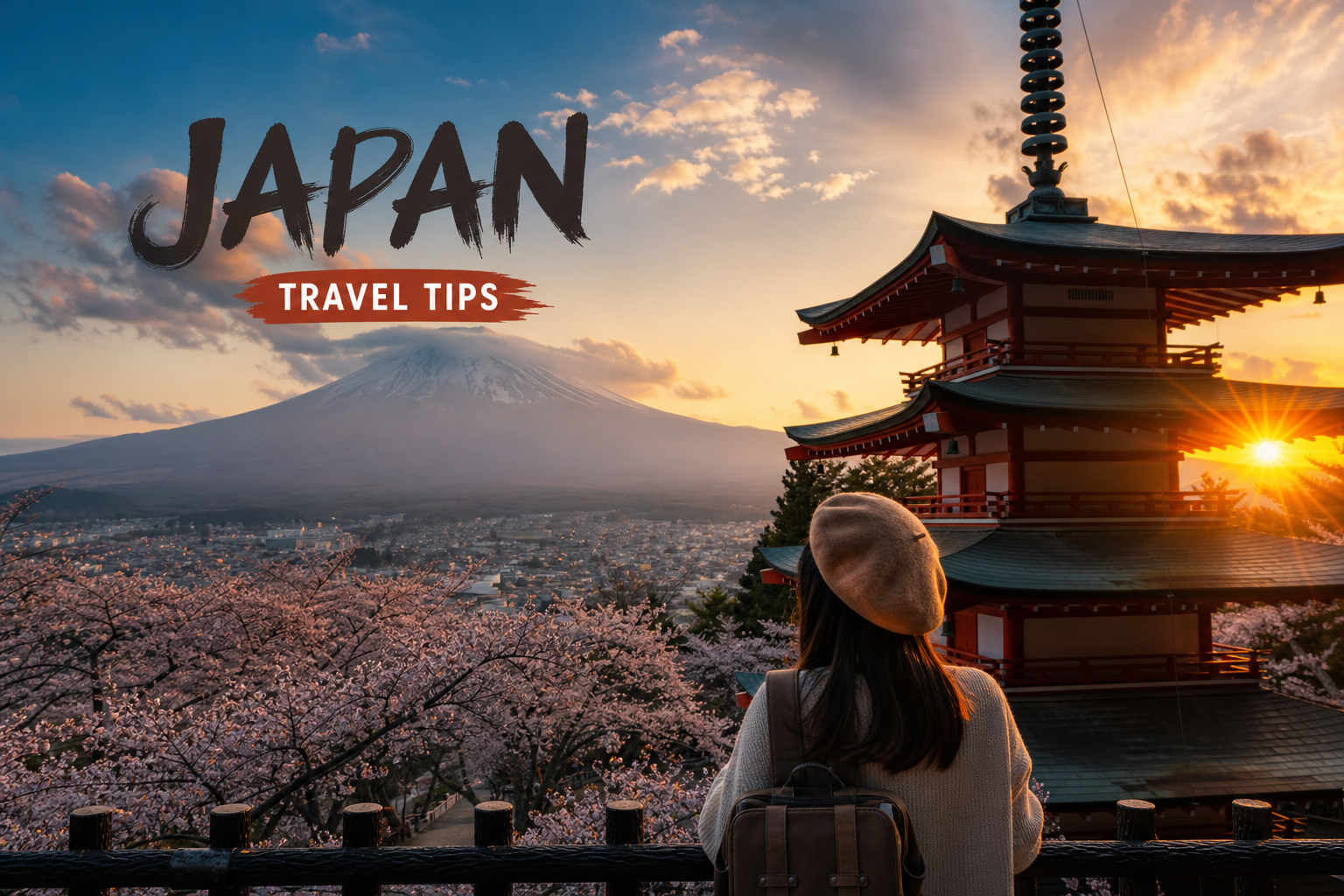
If you’re looking for practical japan trip advice, start here: Japan has a reputation for being so efficient, so impeccably organized, that first-time visitors often arrive paralyzed by the sheer volume of options. The train maps look like circuit boards. The neighborhood names are unfamiliar. The planning forums offer 40 competing opinions on every decision. Somewhere in the noise, a genuinely remarkable trip gets buried under anxiety.
The most useful Japan travel advice isn’t a master list of hacks. It’s a reframe: Japan rewards the curious and the unhurried far more than it rewards the itinerary-sprinter. Travelers who try to cover the most ground tend to see the least of it. Keep that idea close as you read through what follows, because it shapes everything from how you plan your transport to how you approach a meal.
This guide covers six practical pillars: entry requirements, getting around, the case for slowing down, cultural etiquette, what to actually pack, and how to eat well. Work through them in order, and you’ll land in Japan with a plan that actually fits the country.
What to sort out before your flight lands
There’s a specific kind of relief that comes from clearing immigration without drama. You have your documents, you know what to expect, and you walk out into arrivals already thinking about where you’re eating dinner. That ease is entirely within reach, and it starts with getting the basics right before you leave home.
Visa requirements and who qualifies for visa-free entry
Many Western nationalities, including Canadian, U.S., UK, and Australian passport holders, are visa-exempt for stays of up to 90 days, though the exact exemption period and conditions vary by country. You’ll need a valid passport and proof of onward travel, and having your accommodation details ready in case a border officer asks is wise. For nationalities that do require a visa, Japan’s eVISA system handles tourism applications online, though required documents (bank statements, itineraries, host invitations) vary depending on your embassy of application. The essential first step is checking the Japanese Ministry of Foreign Affairs visa-exemption table or the specific embassy website for your country of residence, since requirements differ by both nationality and where you’re applying from.
Choosing when to go: the strategic read on seasons
Cherry blossom season (late March to early April) and autumn foliage (late October to late November) are Japan at its most visually stunning and its most crowded and expensive. Hotels book out months in advance. Popular temple spots can feel more like queues than cultural experiences. If you have flexibility, early to mid-December or mid-April onward offer significantly calmer conditions and better accommodation rates without sacrificing Japan’s beauty. One period to avoid unless you’ve planned well in advance: Golden Week (late April to early May), when domestic travel peaks and prices follow. Make sure to check out our season by season guide of when to travel to Tokyo.
Japan trip advice: getting around without the confusion
Japan’s train network is a masterpiece of logistics that intimidates nearly every first-time visitor, and then becomes second nature within a day or two. The good news is that two tools cover almost everything you’ll need, and both are straightforward to set up on arrival.
JR Pass: when it pays off and when to skip it
The Japan Rail Pass is a prepaid pass for unlimited travel across the JR network, sold in 7-, 14-, and 21-day increments. It covers most shinkansen bullet trains, with one important exception: the Nozomi and Mizuho services, the fastest trains on the Tokaido and Sanyo Shinkansen lines, are not included, and you’ll need to pay separately or take a slightly slower Hikari or Sakura service instead. You purchase the pass before arriving in Japan, receive an exchange voucher, then activate it at a JR office after landing. The pass earns its price when you’re crossing multiple regions: a Tokyo, Kyoto, Hiroshima itinerary makes the math work easily. A week split mostly between Tokyo and Kyoto alone may not justify the cost. Before buying, calculate your actual route using individual ticket prices as a comparison, and if you need a practical example of how that math plays out, a sample 14-day Japan itinerary can help you estimate distances and savings. For a step-by-step explanation of pass activation and rules, see this guide on how to use the Japan Rail Pass.
IC cards for daily movement
Suica and Pasmo are rechargeable tap-to-pay cards that work on subways, local buses, and even purchases at convenience stores. They’re the everyday workhorse of getting around, and picking one up at the airport should be a day-one priority. Tourist versions like the Welcome Suica are available at Narita and Haneda, are valid for 28 days, and require no deposit. If your phone supports mobile wallets, a digital Suica is even simpler. Pair your IC card with a pocket Wi-Fi rental or a local SIM card, and you have everything you need to navigate independently from your first hour in the country.
Why slowing down is the most valuable Japan trip planning tip
Here’s the counterintuitive truth about Japan: the more you try to see, the less you actually experience. A traveler who rushes Kyoto, Osaka, Nara, and Tokyo in five days will come home with a camera roll and very little else. The traveler who spends three days in a single Kyoto neighborhood, finds a ramen shop with no English menu by following a smell around a corner, and wanders into a temple garden at 7 a.m. before the crowds arrive will come home changed.
The trap of the highlight-reel itinerary
Japan’s richness is granular. It lives in the backstreets, the standing bars, the old shotengai shopping arcades where local vendors have operated for decades. You don’t discover any of that by checking attractions off a list. Neighborhoods like Yanaka in Tokyo or the Higashiyama backstreets in Kyoto reward wandering far more than they reward scheduled visits. The slow-travel approach isn’t about doing less: it’s about choosing depth over breadth, letting a place reveal itself on its own terms rather than on a timetable.
How this philosophy travels across cultures
At The Curious Atlas, this is the same lens applied to every destination: linger in Bacalar instead of passing through, find a local market in Playa del Carmen instead of defaulting to the tourist strip, ask a question that doesn’t have a guidebook answer. The methodology travels. A curiosity-driven traveler in the Yucatán and a curiosity-driven traveler in Kyoto are doing fundamentally the same thing, trading the itinerary for the experience of actually being somewhere. Japan, like the Yucatán, gives its best to the patient visitor.
The cultural rules that locals won’t explain
Mastering Japanese etiquette isn’t about achieving perfection. It’s about demonstrating that you’re paying attention, which the Japanese notice and quietly appreciate. Most of the rules are straightforward once you understand the logic behind them.
Shoes, trains, and sacred spaces
The shoe-removal custom applies at homes, many traditional accommodations, temples, and some restaurants. Wear footwear that slips on and off easily, and keep your socks in good condition since they become part of what people see. On trains, keep calls silent, voices low, and bags on your lap or in the overhead rack. At shrines and temples, use the purification fountain at the entrance, photograph respectfully, and treat these as active spiritual sites rather than scenic backdrops. One practical note that catches visitors off guard: public bins are rare throughout Japan. Carrying a small bag for your rubbish until you reach a convenience store is standard practice, not unusual.
Cash, tipping, and dining customs
Many small shops, markets, vending machine vendors, and rural businesses across Japan don’t accept cards, so carrying yen, especially outside central urban areas, is strongly advisable. Tipping is not just unnecessary: it can feel uncomfortable to the person receiving it, and you can skip it entirely without hesitation. At the table, slurping noodles is acceptable and often reads as appreciation. Two chopstick habits to avoid: sticking them upright in rice and passing food directly chopstick-to-chopstick, both of which carry funeral associations. Pay at the register when you’re done, not by leaving cash on the table.
Packing for Japan: less than you think, smarter than you’d expect
Japan has one of the world’s most developed convenience store cultures, and that fact fundamentally changes what you need to bring. The 7-Eleven, FamilyMart, and Lawson chains sell quality toiletries, basic medications, snacks, and surprisingly decent hot meals around the clock. Over-packing toiletries is one of the most common first-timer mistakes, and one of the easiest to avoid. See our packing list advice here.
What Japan’s conbini culture means for your bag, essential Japan trip advice
Pack a lightweight daypack, a compact umbrella (convenience stores stock them if you need one on arrival), and a small coin purse since Japan is coin-heavy for everyday transactions. Skip the backup snacks and the full pharmacy kit: the convenience stores have you covered. A practical strategy for multi-city trips is using coin lockers at train stations to store your main luggage while day-tripping, which keeps you mobile without dragging bags through temple districts. If you’re unsure about electronics and adapters, consult the Japan Power Outlet Guide: Adapters, Voltage & What to Pack for specifics on plugs and chargers.
Clothing and footwear essentials
Easy-to-remove shoes are non-negotiable for the reasons covered earlier. Pack layers since temperatures vary sharply between regions and seasons. If you’re visiting during cherry blossom or foliage season, a lightweight waterproof shell is worth the space. Avoid overly revealing clothing at temples and shrines. The core principle is the same one that works for slow travel anywhere: pack light, trust the infrastructure, and buy the incidentals locally. For month-by-month weather and packing ideas specific to the capital, see Tokyo’s weather by season: the slow traveler’s guide.
Street food, standing bars, and eating your way through Japan
Food in Japan is not just sustenance. It is the primary way you interact with local culture, and rushing through meals to reach the next attraction is the single biggest missed opportunity on any first Japan trip. Eating well here requires very little money and a willingness to follow your nose.
Must-try street foods by region
In Osaka, takoyaki (octopus balls cooked fresh at street stalls in Dotonbori) and kushikatsu (deep-fried skewers) are essential. Osaka takes its food identity seriously, and rightly so. In Kyoto, go to Nishiki Market early in the morning for tamagoyaki, matcha sweets, and tofu-based snacks before the crowds arrive. In Tokyo, Yanaka Ginza and the Tsukiji Outer Market offer excellent street-level eating. Convenience store onigiri also deserves a mention: it’s a quick, satisfying, and deeply local meal available at any hour, and it costs less than ¥200.
Standing bars, depachika, and the best food floors in Japan
The depachika, the basement food halls found in Japanese department stores, are among the most underappreciated spots in the country for travelers. They carry high-quality prepared foods, regional specialties, and artisan sweets; prices for individual items vary widely, but a prepared bento or a selection of small dishes often compares favorably to a casual restaurant meal. Standing ramen and soba bars are another slow-travel-friendly option: fast, local, and deeply satisfying, usually costing between ¥600 and ¥1,000 a bowl. These are the kinds of places you find by walking one street away from the main tourist strip, which is exactly where the best experiences in Japan tend to live.
Arriving with the right mindset changes everything
The best japan trip advice ultimately comes down to this: do the logistics early, then get out of your own way. Get your entry documents sorted, choose transport tools that match your actual itinerary rather than the most popular option, understand the cultural contract the country runs on, pack light and trust the infrastructure, and eat everything that looks interesting. These Japan travel tips aren’t about optimizing a trip, they’re about making space for the trip to surprise you.
On the budget question: Japan is more manageable than its reputation suggests, especially outside peak seasons. Based on 2026 conditions, mid-range daily costs in Osaka run around ¥14,500 to ¥21,500 per person including accommodation, food, transport, and attractions. Tokyo runs higher; Kyoto sits between the two. Traveling shoulder season and eating where locals eat keeps costs reasonable without sacrificing experience.
Whether this is your Japan trip planning checklist or a final read before you board, the same principle applies across every destination covered at The Curious Atlas: arrive with curiosity rather than a quota. Wander down the alley with no English sign, order the dish you can’t identify, and let the place set the pace. That’s where the real trip begins, and it’s the kind of japan trip advice no itinerary can give you.
Leave a Reply