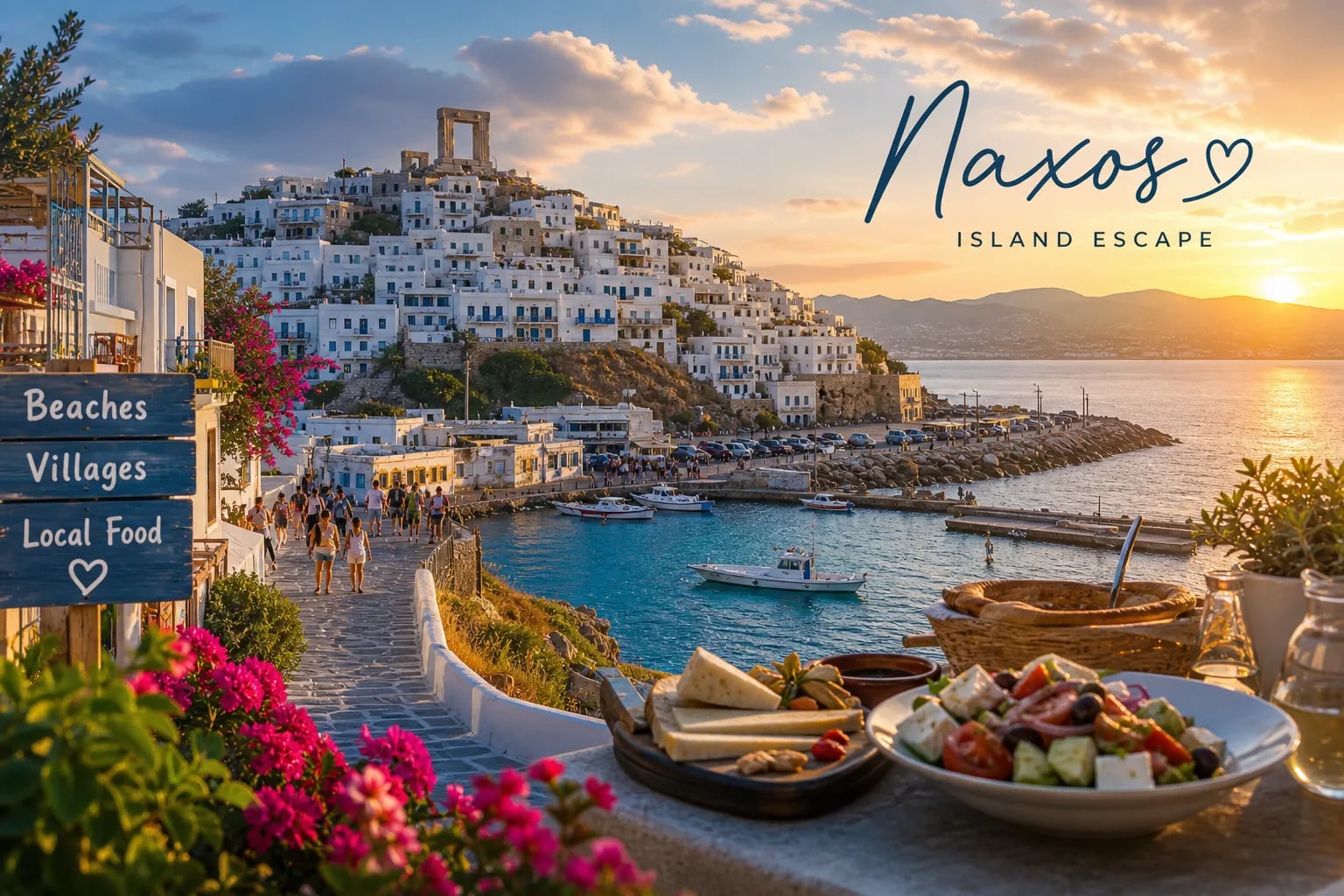
Most people arrive on Naxos Island chasing the beaches they saw on Instagram. A few of them accidentally wander into a village market, order a plate of graviera with local honey, and realize they’ve been approaching Greek island travel all wrong. That moment of accidental discovery is what Naxos is actually built on.
Naxos Island isn’t just another Cyclades stop with white walls and blue domes. It’s the largest island in the Cyclades, which means it has an interior: real mountain villages, olive groves, cheese cooperatives, and citrus orchards that most day-trippers never reach. The slow traveler who gives this place a week instead of a day will leave knowing an actual place. The beach is the reward at the end of a long morning of eating well.
Why Naxos stands apart from the rest of the Cyclades
Santorini sells sunsets. Mykonos sells parties. Naxos sells food, farming, and a pace that rewards people who actually want to understand a place. This distinction matters when you’re choosing where to spend a limited number of days in Greece, and it matters even more when you factor in what the island produces on its own soil.
Naxos has been feeding the Aegean for centuries. Its fertile plains and mountain terrain produce ingredients that most Greek islands import, including PDO-certified potatoes, estate-pressed olive oil, and multiple varieties of hand-crafted cheese. The farm-to-table culture here isn’t a restaurant marketing term; it’s the actual supply chain. Every taverna pulling from a chalkboard menu is working from the same island-grown larder, and that foundation shapes every meal you’ll eat here.
The slow traveler’s advantage on Naxos is real and cumulative. The more you linger, the more the island opens up, a roadside stand selling xynotyro, a kafeneion that doesn’t appear on any map, a swim at a beach that the crowds somehow missed. That kind of return isn’t guaranteed everywhere.
The Naxian foods worth building your whole trip around
Two cheeses define the Naxos Island food experience before anything else. Graviera is aged, nutty, and holds PDO status, meaning the name legally belongs to the island. Arseniko is sharper and more pungent, the kind of cheese that makes you want a glass of local wine immediately. Both are made at cooperatives you can visit directly. The EAS Naxos cooperative has a shop on the Chora seafront; the small shop Amorginos in Apiranthos sells arseniko, graviera, and xynotyro directly from local production. Skip the tourist-branded jars on the main strip and find these instead.
The seafood deserves equal attention. Naxos’s coastline means daily catches, and the tavernas sitting closest to the water are usually the ones worth trusting. The island’s signature dish is gouna: fish that’s been sun-dried, then grilled, with a concentrated flavor that has no equivalent elsewhere in Greece. Gavros marinatos (marinated anchovies) and grilled octopus round out the table. The best seafood meals on Naxos happen at lunch, not dinner, when the day’s catch is still fresh and the prices are lower. Patatosporos at Agia Anna beach and the port-side ouzeries in Chora are the most reliable places to eat this way.
Kitron is the one bottle worth putting in your bag before you leave. It’s a citrus liqueur made from the leaves of the citron tree, a fruit grown almost exclusively on Naxos. It comes in three styles: green (sweeter), clear (medium), and yellow (driest and strongest), ranging from roughly 30% to 36% ABV. The Vallindras Distillery in Halki is one of the oldest operating distilleries in the Cyclades. You can taste it where it’s made, which is the only honest way to understand what you’re buying.
Village markets and the mountain interior you shouldn’t skip
The mountain villages of Naxos aren’t a detour from the food experience. They are the food experience. Halki sits at the center of the island’s olive oil and citron production. The Vallindras Distillery is here, and so are small shops selling estate olive oil and locally made sweets. Filoti, the largest mountain village, has tavernas serving slow-cooked lamb and local greens that city restaurants would charge triple for. Apiranthos, perched higher and carved from marble, feels like a village that time forgot, complete with older women selling cheese from their doorways and a quiet kafeneion where you’ll want to sit longer than you planned.
The Chora market strip along the old town’s main lane is where locals buy produce, cheese, and dried herbs alongside tourists buying ceramics. Knowing which stalls source from island farms versus packaging mainland products in Naxos-branded jars makes all the difference. Look for the cooperative cheese shops, ask which olive oil is estate-pressed, and skip the honey jars without origin labels. The Saturday morning harbor market in Chora is the most direct-from-producer option on the island, and it’s worth arranging your schedule around.
A rented car makes the inland loop through Halki, Filoti, and Apiranthos possible in a single day. The bus covers Filoti at minimum if you’d rather not drive, but the car gives you the freedom to stop when something looks worth stopping for, which is the entire point of this circuit.
Naxos Island beaches worth slowing down for
Naxos has some of the best beaches in the Cyclades, and the slow traveler’s advantage is that you don’t need to visit all of them. Read the coastline by mood rather than by rank.
Best beaches for families and easy days
Agios Prokopios is the most organized of the west-coast beaches, with calm, shallow water and good facilities that make it the strongest choice for families or anyone who wants a full beach day with easy access to food and shade. Agia Anna splits the difference: smaller, more intimate, and close enough to Chora to walk back for dinner. Plaka is long, quiet, and fringed with dunes, the beach for people who bring a book and stay until dusk. The sand is soft, the water is clear, and the further south you walk, the fewer people you’ll find.
Beaches for wind sports
Mikri Vigla draws windsurfers and kitesurfers from across Europe. The Meltemi winds run strong in July and August, making it one of the island’s premier wind-sport destinations. On calmer days, its quieter sections have a small taverna scene worth seeking out.
The beach tavernas on Naxos are part of the experience, not just a pit stop. A midday meal of grilled fish, a Greek salad made with local tomatoes and real feta, and a cold Mythos under a shade canopy is one of the most honest pleasures the island offers. Eat on the beach at lunch. It’s fresher, it’s cheaper, and it’s the version of Naxos that stays with you.
Getting to Naxos Island and choosing your base
Naxos has no commercial airport for direct passenger flights, which is part of what keeps it more grounded than its neighbors. From Piraeus in Athens, conventional ferries take roughly five to seven hours and cost between €22 and €88; high-speed options cut that to about three hours at a higher price. From Santorini, the crossing runs about one to three hours. From Mykonos, fast ferries take as little as 25 minutes. Booking ahead in July and August is essential across all routes.
Chora (Naxos Town) is the right base for most food-focused visitors. You can walk from the port to the market, the old-town bakeries, the harbor fish tavernas, and the Portara at sunset without a car. Agios Prokopios works well if you want a beach-first stay with easy day trips inland, since the island is small enough to drive anywhere in under 40 minutes. Plaka suits travelers who want a quieter rhythm and don’t mind driving into town for market shopping. Match your neighborhood to your travel style first; budget considerations come second.
When to visit and how to pace your days
May, June, and September are the strongest months for a food and culture trip to Naxos. The markets are full, the village restaurants are open, the sea is swimmable, and the crowds haven’t hit their August peak. July and August bring the Meltemi winds, which are ideal for kitesurfers but less comfortable for long lunches by the water, and prices rise across the board. October is a quieter, underrated option: the sea is still warm, the island returns to locals, and tavernas start cooking slow-cooked autumn dishes that never appear on the summer tourist menu.
For a four-day Naxos itinerary, the framework looks like this: one day in Chora with a morning market visit and the Portara at sunset, one full beach day on the west coast with a proper taverna lunch, one inland village loop through Halki, Filoti, and Apiranthos with a stop at the Vallindras Distillery, and one slower day for whatever you didn’t get to. For a week, repeat the inland and beach days at a genuinely unhurried pace. The island rewards returning to places you liked the first time.
If this food-first, village-centered approach to slow travel resonates with you, The Curious Atlas applies the same philosophy to destinations beyond the Aegean. Our Yucatan Peninsula guides take the same culinary immersion lens, local market culture, farm-fresh food, slow-travel rhythm, to a region that many North American travelers can reach more easily. A different sea, the same way of seeing.
The kind of place that earns its reputation
Naxos earns its reputation not through spectacle but through substance. The food is real, the villages are lived-in, and the beaches are beautiful without being performative. There’s no single iconic image that sells it, which is precisely why the people who find it tend to stay longer than they planned.
The traveler who spends a week on Naxos Island eating graviera at a village market, lingering over grilled fish by the sea, and watching the Portara go gold at sunset will leave with more than photographs. They’ll leave knowing an actual place, not just a highlight reel. Pack light, eat often, and let Naxos Island set the pace.
Leave a Reply