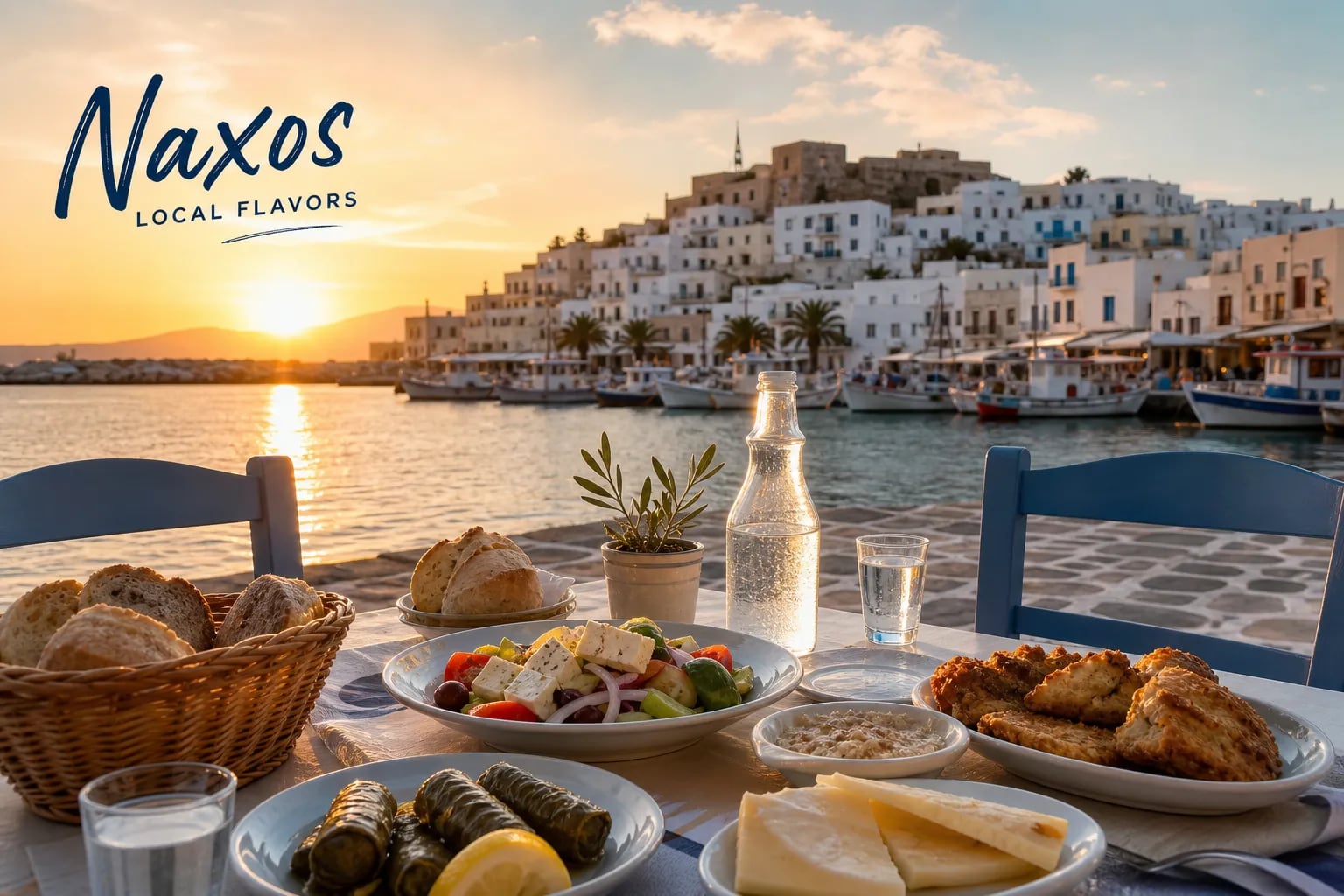
Naxos island food is some of the most honest and generous cooking in the Aegean, yet many visitors who pass through never discover it. They step off the ferry, walk 100 meters along the waterfront, sit down at the first taverna with a laminated picture menu, and leave the island convinced they’ve tasted Greece. In the author’s experience, they’ve missed the best of it.
Naxos is not a fishing island. It’s a farming island, and that single distinction changes everything on your plate. The interior is green and mountainous, filled with goats, pigs, citron trees, and long-established cheese producers that have been crafting the same recipes for generations. The island grows its own wheat, its own potatoes, and a liqueur made from citron leaves traditionally produced only on Naxos. This is a place that has been feeding itself long before it started feeding tourists, and that confidence shows in every kitchen.
The same instinct that sends The Curious Atlas readers down a back alley in Playa del Carmen searching for real cochinita pibil works beautifully on Naxos. The rewards go to people who walk five minutes past the ferry gate. This guide covers the island’s signature dishes, the best restaurants by neighborhood and budget, where to buy local products directly from producers, and the best time of year to visit for peak flavors.
Why Naxian Food Stands Apart from the Rest of the Greek Islands
Most Aegean islands built their economies on fishing and tourism. Naxos built its on fertile soil, livestock, and mountain villages that still produce their own food. The island’s interior stays green and lush compared to the bare, bleached rock of nearby Mykonos or Paros, and that landscape produces potatoes, goats, pigs, wheat, citron trees, olives, and thyme honey at a scale no other Cycladic island comes close to matching.
That agricultural depth is the reason Naxian cooking feels grounded and generous rather than precious. The food comes from an island that feeds itself first. Restaurants here aren’t sourcing ingredients from Athens wholesalers; they’re sourcing them from farmers in the next village.
Naxos Island Food: The Three Products That Define the Cuisine
Three products define Naxos island food specialties more than any others. Naxian potatoes, known as Patates Naxou, are creamy and dense, prized across Greece for their rich, concentrated flavor. They appear in nearly every meat dish on the island. Graviera and arseniko are the island’s signature cheeses: graviera is Naxos’s answer to gruyère, made from sheep’s milk and aged to a firm, slightly sweet finish, while arseniko is sharper, saltier, and more aggressive, closer in character to a pecorino. Finally, kitron is a citron-leaf liqueur traditionally produced only on Naxos, ranging from dry to sweet, and commonly served as a digestif at many tavernas after a proper meal. Xynomizithra (a tangy, yogurt-like soft cheese), local honey, and olive oil complete the supporting cast.
What to Eat in Naxos: The Dishes Worth Ordering Every Time
Rosto
Start with rosto, the island’s signature comfort dish. Pork shoulder is braised low and slow in tomato, wine, garlic, and bay leaves, then served over thick macaroni or Naxian potatoes. It’s the dish most likely to be missing from tourist-facing menus and most likely to appear at the table next to yours in a village taverna. If you see it on the board, order it without hesitation.
Patoudo and Kalogeros
Patoudo is festive food: stuffed lamb or goat, slow-roasted with herbs, fennel, and sometimes rice, served in mountain village tavernas for lunch on weekends. Kalogeros is quieter but equally rewarding, baked veal or beef layered with eggplant and tomato, then topped with melted Naxian cheese. Kokoras krasatos, a rooster braised for hours in red wine and tomato sauce and served over pasta, requires patience from the kitchen; ask the server if it’s available before you sit down, because it’s worth planning your whole meal around.
Graviera Saganaki, Sefoukloti, and Gouna
For starters, order graviera saganaki first and use it to judge the kitchen. A good taverna serves it fried or baked, finished with honey and sesame seeds, and gets the crust right. Sefoukloti is a savory pan-cooked pie of white chard, fennel, herbs, onions, and raisins, made without eggs or phyllo, and it’s the most distinctly local thing you can eat that isn’t a stew. For lunch at a beach taverna, gouna, sun-dried mackerel or bonito grilled with olive oil and oregano, is the move. Finish any proper Naxian meal with a small glass of kitron. It’s not optional.
Where to Eat Naxos Island Food in Chora Without Landing at a Tourist Menu
The practical rule in Chora: walk five minutes away from the port gate in any direction and the menus improve noticeably. Think of it as the author’s standing travel advice rather than a guarantee, but it holds up consistently. The waterfront exists to catch travelers who don’t know better. The old town exists to feed everyone else.
Metaxi Mas is among the most consistently recommended spots for traditional Naxian cooking, known particularly for kalogeros and a gruyère kataifi that earns its own following. It sits in the old town rather than on the port, which is the first good sign. To Elliniko is a family-run taverna with strong saganaki, grilled lamb, and a moussaka made with Naxian ingredients rather than imported shortcuts. Sarris Tavern is a long-running, unpretentious spot where the approach is better suited to grazing through meze plates than ordering a single entrée.
Doukato, slightly more refined, is known for octopus and considered worth booking ahead in peak summer. Lucullus has a long-established, lived-in character, classic home-style Naxian casseroles and baked dishes that feel unchanged for decades, in the best possible way.
For budget eating, gyros pita runs about €3.50 to €6 at takeaway grill houses. Lefto’s Souvlaki and Yasouvlaki Naxos are reliable cheap-eats options based on local reviews. A tiropita or cheese pie from an old town bakery makes for a quick, satisfying breakfast, especially if you’re heading out to the villages early.
The Mountain Villages Serve the Most Honest Food on Naxos
If Chora is where visitors eat, the villages are where Naxos actually eats. The interior villages, Filoti, Chalki, and Apiranthos, produce the ingredients and cook them in ways that haven’t changed much because there’s no reason to change them.
Platanos in Filoti serves inland cooking at its most straightforward. The rosto is made from locally raised animals, and the katsiki lemonato (lemon-braised goat) is the kind of dish that makes you wonder why you ever ate at the port. The village sits in the shadow of Mount Zas, and the food matches its surroundings: simple, filling, and completely honest.
In Chalki, the Yannis Olive Farm doubles as a working farm and taverna, it’s the best place on the island for a graviera cheese plate alongside a guided tasting of local products in a setting that feels nothing like a restaurant. To Lefko in Apiranthos serves wild greens pies, roast goat, and local sausage in a stone-built mountain village that most tourists skip entirely. This is the kind of place that rewards travelers willing to go one village further than the itinerary suggests.
At the beach, Giannoulis Taverna in Agios Prokopios stands out from the resort-adjacent crowd. It’s family-run and legitimately local, serving rosto and rabbit stew alongside the expected beach fare. A full lunch with wine at a casual beach taverna on Naxos lands around €14 to €22 per person, which compares very favorably with equivalent spots on Mykonos or Santorini.
Where to Buy Local Products: Markets, Dairies, and the Kitron Distillery
The Vallindras Distillery sits in the middle of Halki village and is the definitive stop for anyone serious about kitron. Visitors can taste different expressions, from dry to sweet, and buy bottles directly. The distillery is typically open during daytime hours in high season, verify the current schedule locally before planning your afternoon around it, since hours shift between seasons on small Greek island operations. Halki is also the starting point for broader food tours that include olive oil producers in Kaloxilos and the Eggares Olive Press.
The produce market in Chora runs on Saturday mornings, roughly 7:00 AM to 1:00 PM, along the harbor front. It’s where locals shop and where visitors can buy Naxian potatoes, fresh cheeses, thyme honey, and olives directly from producers. Guided food tours departing from near the Sphinx statue at the Town Hall in Ariadnis Square (in Chora) include a stop at Naxos Cheese Koufopoulos and are the most structured way to taste multiple products in a single morning. In Apiranthos, a family taverna setting combines a meal with a cheese and charcuterie tasting, which makes it easy to eat well and shop well in the same stop.
Practical Tips: Budget, Timing, and the Best Months for Naxos Island Food
The pricing on Naxos is straightforward once you know what to expect. Takeaway gyros run €3.50 to €6. A casual taverna main lands between €9 and €13. A full taverna meal with wine costs around €14 to €22 per person, and dinner at a more refined spot runs €22 to €35. The pattern holds across the island: the further you are from the port and the more local-facing the signage, the better value the food. Sarris Tavern and To Souvlaki Tou Maki in Chora are solid family-friendly picks with reasonable pricing.
The richest window for Naxos island food is late August through September. The Potato Festival, held in the Agia Anna area around early September, celebrates the island’s most famous product with tastings and local cooking that pull together producers, residents, and genuinely curious visitors. The Dionysia festival in late August fills Chora’s castle square with food, wine, and traditional performances. September is ideal for food-focused travelers specifically: crowds thin, the sea stays warm, wine and kitron events run through the month, and late-season produce fills the market stalls. Figs, grapes, tomatoes, eggplant, and Naxian potatoes are all at their peak simultaneously. Cheese and kitron are available year-round, so those products don’t require seasonal planning, but the festivals are worth timing your trip around if the calendar allows.
Naxos answers the question that every serious food traveler is actually asking: what do people here actually eat? The answer is rosto braised until it falls apart, graviera fried golden and finished with honey, a glass of kitron that tastes like nowhere else you’ve been, and potatoes that make you question every potato you’ve eaten before. In this author’s view, the cooking isn’t famous the way Santorini sunsets are famous, and it’s better for it. It’s the kind of food that only exists when an island decides to take care of itself first.
Eat at least one meal in a mountain village. Find the Vallindras Distillery in Halki and taste every expression of kitron they’ll pour for you. Order the rosto wherever it appears on a board. That’s the whole point of Naxos island food, and it’s all waiting about five minutes past the last tourist menu.
Leave a Reply