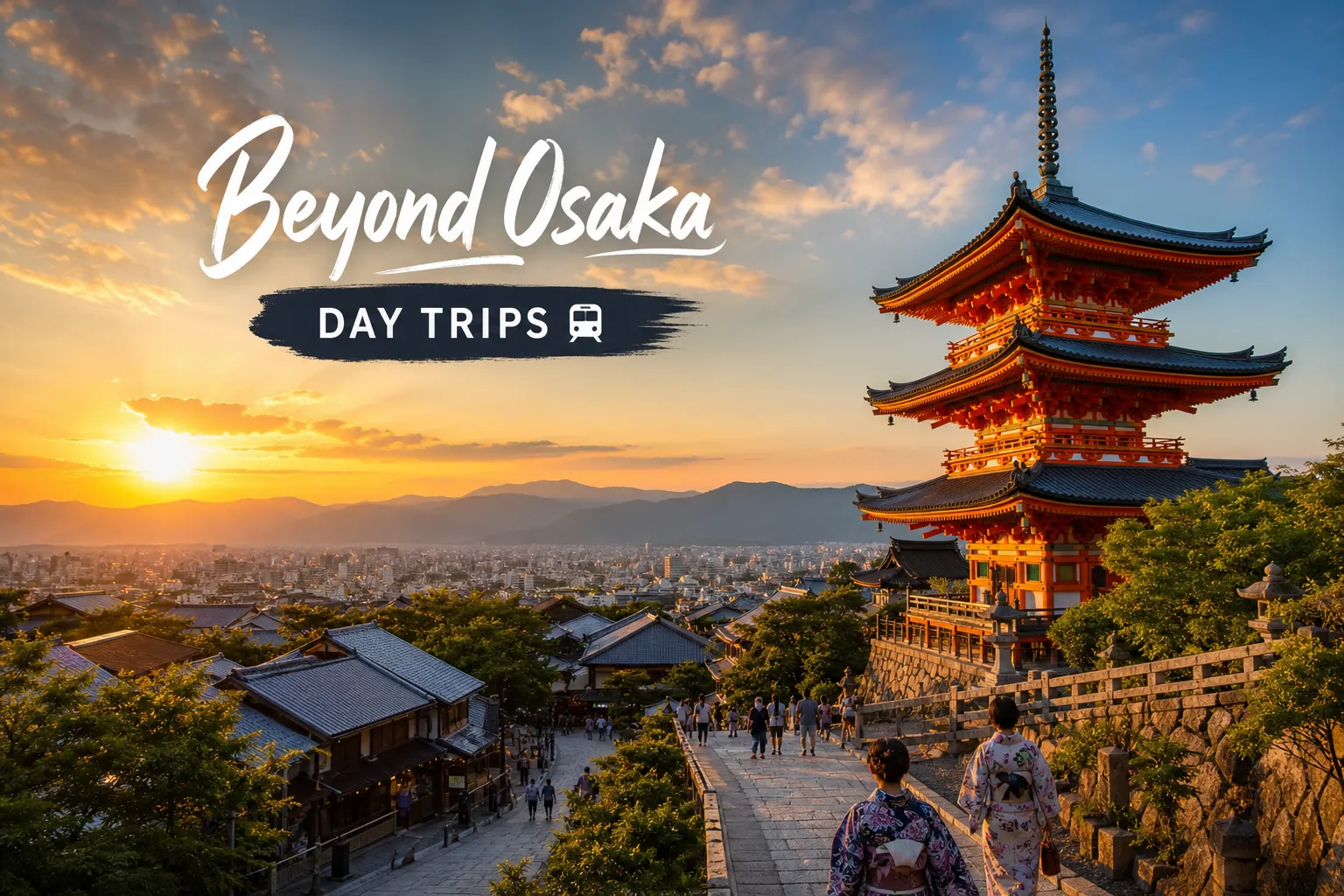
Osaka earns its reputation as one of the best-positioned cities in Japan for independent travelers, and the best day trips from Osaka are a large part of why. Ancient temple towns, feudal castles, sacred mountains, and one of the most historically significant sites in the world all sit within two hours by rail. You don’t need to rush through Japan’s highlights by booking a different hotel every night. You just need a smart base and a good map of what’s reachable.
This is the same base-camp philosophy that drives the way we travel at The Curious Atlas. When we set up in Playa del Carmen and radiate outward through the Yucatan, visiting ruins, cenotes, and colonial towns, the logic is identical: one anchor, many adventures. Osaka works the same way. This article covers the top Osaka day trips worth your time, how to get there by train, what each one costs, and a sample solo itinerary for each destination so you can build your own plan without second-guessing every detail.
Why Osaka is the perfect base for exploring Japan
The base-camp approach to slow travel
The instinct to keep moving, to book a new hotel in every city, is one of the most expensive and exhausting habits in travel. The smarter move is to pick one well-connected city, unpack properly, and let the rail network do the work. You spend less on accommodation, less time dragging luggage through train stations, and more mental energy on actually being present in the places you visit. Japan rewards this approach more than almost any country on Earth.
Osaka is the ideal anchor point because it sits at the center of Japan’s most rail-dense region. From two main departure hubs, Osaka Station in the north and Namba in the south, you can reach world-class destinations within 30 minutes to two hours. The Tokaido Shinkansen runs through Shin-Osaka. Multiple JR Special Rapid lines, Kintetsu trains, and Nankai trains fan out in every direction. Nara, Kyoto, Kobe, Himeji, Koyasan, and even Hiroshima are all realistic day trips from Osaka by train, each doable as a single-day round trip from this one city.
Nara: one of the best day trips from Osaka
Getting there and what it costs
Two train routes connect Osaka to Nara, and they suit different travelers. The JR Yamato-Ji Rapid from Osaka Station takes roughly 50 minutes and costs ¥800 one-way, no reservation required. The Kintetsu Limited Express from Namba runs faster at about 35 minutes and costs ¥1,280 one-way. If you’re staying near Namba, the Kintetsu route is the obvious choice. If you’re coming from Umeda or Osaka Station, JR is the more convenient option. Neither requires a pass or a reserved seat.
A sample Osaka day trip itinerary: Nara
Depart Osaka at 08:00, arrive in Nara by 08:45, 09:00, and head straight for Nara Park before the tour groups arrive. The deer are genuinely free-roaming and surprisingly confident. Todai-ji Temple houses the largest bronze Buddha in Japan, and the building itself is extraordinary. After Todai-ji, walk east to Kasuga Taisha Shrine, which sits at the edge of a cedar forest and feels like it belongs in a different century. Comfortable walking shoes are non-negotiable here.
Budget a full 6, 7 hours on the ground. This is not a place to rush. Lunch near the park runs ¥1,000, 1,500, deer crackers at the gate cost ¥200, and Todai-ji temple entry is around ¥600. Add ¥1,600 for a round-trip JR fare and your total day budget lands around ¥3,500, 4,000, roughly $24, 27 USD. Nara is the right first day trip for almost every solo traveler arriving in Osaka for the first time.
Himeji and Kobe: two cities, two completely different moods
Himeji Castle and the gardens beside it
Himeji is about 62, 64 minutes from Osaka Station on the JR Special Rapid, which costs around ¥1,460, 1,490 one-way and requires no reservation. The Shinkansen from Shin-Osaka gets you there in 30 minutes for around ¥3,220, but for a budget-conscious solo traveler, the Special Rapid is the logical choice. The extra half hour is well worth the ¥1,700 in savings. Himeji Castle is Japan’s finest surviving feudal castle, and it genuinely earns that description.
Plan to spend 2, 3 hours inside the castle complex. Directly next door, Koko-en Garden is a natural extension of the morning. Depart Osaka at 08:00, arrive Himeji around 09:00, 09:10, tour the castle until noon, walk Koko-en until 13:30, grab lunch near the station, and you’re back in Osaka by 15:00, 16:00. It makes for a very manageable, deeply satisfying day.
Kobe as a half-day add-on or a standalone trip
Kobe is only 20, 30 minutes from Osaka on JR or Hankyu lines, with fares ranging from ¥320 to ¥800 depending on your route. It’s the easiest quick trip from Osaka on this list by distance. The Nunobiki Herb Gardens, reached by ropeway, offer a genuinely surprising view over the city. Kobe Port Tower and the Harborland waterfront fill an afternoon without a tight itinerary.
The real reason to go to Kobe is the beef. A proper Kobe beef lunch is one of those travel experiences that justifies the whole trip. Budget-conscious travelers can find set menus at more modest restaurants without paying the full white-tablecloth price. Efficient solo travelers sometimes combine Kobe in the morning and Himeji in the afternoon on the same day, leaving Osaka early and moving between both cities on a single ticket chain.
Hiroshima and Miyajima: best day trips from Osaka with real emotional weight
What the shinkansen costs and why you need an early start
This is the most logistically demanding trip on this list, and also the most significant. The Shinkansen from Shin-Osaka to Hiroshima takes approximately 1 hour 20 minutes to 1 hour 30 minutes on faster Nozomi or Sakura services. The unreserved one-way fare runs around ¥9,700. It’s expensive. If you’re holding a JR Pass, this route is fully covered; for more detail on traveling from Osaka to Hiroshima by shinkansen, see this guide: Osaka to Hiroshima by shinkansen. The Kansai Wide Area Pass does not extend to Hiroshima, so factor that in when comparing pass options.
You must leave by 07:00, 07:30 to fit both Hiroshima and Miyajima into a single day. The ferry to Miyajima runs on a fixed schedule, and the Peace Memorial Museum requires at least two hours to visit properly, there is no flexibility on timing if you want both sites. Leaving at 09:00 means choosing one or the other.
A one-day itinerary for both sites
Arrive Hiroshima around 08:30 and go directly to Peace Memorial Park. Budget 2.5, 3 hours for the park and the museum. The Atomic Bomb Dome is a short walk from the museum. Lunch in Hiroshima means okonomiyaki, the Hiroshima-style version with noodles and cabbage, and there are dedicated multi-floor buildings in the city devoted entirely to it. Take the tram and ferry combination to Miyajima Island in the early afternoon to see Itsukushima Shrine and its famous floating torii gate.
The return ferry and train connection feeds back into the Shinkansen, and you’ll arrive in Osaka around 19:00, 20:00. It’s a long day. Solo travelers handle this trip better than groups because you move at your own pace through a place that deserves space and quiet reflection. If you have the option to stay overnight in Hiroshima, take it. The Peace Park at dusk, with the lanterns on the river, is worth an extra night’s accommodation.
Koyasan and Uji: for travelers who want something different
Koyasan’s sacred forest and overnight temptation
Koyasan is a mountain temple town, a UNESCO World Heritage Site, and unlike anything else within day-trip range of a major Japanese city. Getting there requires a Nankai train from Namba Station to Gokurakubashi (roughly 90 minutes), then a short cable car ride up to the mountain. The Koyasan World Heritage Ticket covers the round-trip train and cable car for around ¥3,500, which makes it simple to budget. Leave Osaka by 07:30 to have a full day on the mountain.
The main draw is Okunoin Cemetery, a long path through ancient cedar trees leading to Kobo Daishi’s mausoleum. The moss-covered stone lanterns and the sound of cedar in the wind make Okunoin feel genuinely otherworldly. Lunch in the village often means shojin ryori, the traditional Buddhist vegetarian cuisine. Koyasan is the one trip on this list where an overnight stay in a temple lodging (shukubo) is genuinely worth considering over returning the same day.
Uji’s matcha culture and quiet beauty
Uji sits about an hour from Osaka on the JR Nara Line or Keihan line and offers one of the most pleasant, low-pressure mornings you can have in the Kansai region. Byodo-in Temple is a UNESCO World Heritage Site and the building pictured on Japan’s 10-yen coin. The main street leading to it is lined with matcha shops, and the whole area takes 2, 4 hours without any rush. Uji works well as a standalone short trip or as an add-on if you’re already heading toward Kyoto during the same day.
Solo traveler logistics: passes, packing, and timing your day right
Which rail pass actually saves you money
The two relevant passes for Osaka-based day trippers are the JR Pass and the Kansai Wide Area Pass. The Kansai Wide Area Pass costs ¥12,000 for five consecutive days and covers JR trains to Himeji, Okayama, Kinosaki Onsen, and Tottori, plus the Haruka airport train. It does not cover Hiroshima. For a deep dive into coverage and best uses, check this JR Kansai Wide Area Pass guide. The full JR Pass covers Hiroshima and all shinkansen routes, but it’s only worth buying if your trip extends well beyond Kansai into other regions of Japan.
A practical rule: if you’re doing three or more JR day trips in a week, including at least one farther destination like Okayama or Himeji plus multiple local rides, a pass usually pays for itself. For one or two trips, individual tickets are cheaper. Load an IC card (Suica or ICOCA) with at least ¥3,000 for all local and rapid train travel outside the shinkansen network. It makes every journey seamless.
What to bring and when to leave
The single most important logistics decision is departure time. Most of these trips require leaving Osaka by 08:00 or earlier. This is where solo travelers have a genuine structural advantage: no group consensus, no one sleeping in, no negotiating over where to have breakfast. You decide the night before, set the alarm, and go. For broader planning tips aimed at solo travelers, see Japan Trip Advice Every First-Time Visitor Needs.
Keep your day kit simple:
- Comfortable walking shoes (not sandals for temple districts)
- A small daypack rather than a full travel bag
- Portable charger and downloaded Google Maps offline for each destination
- IC card loaded and ready
- A light layer, since mountain destinations like Koyasan run cooler than Osaka
For a full season-by-season packing checklist that covers what to bring for both winter and summer day trips, consult What to Pack for Japan: A Season-by-Season Guide.
Once you’ve learned to work a hub city properly, whether it’s Osaka or a beach town on the Yucatan coast, travel stops feeling like a race against time and starts feeling like something you actually designed for yourself.
Choose two or three and go deep
The temptation is to build a list of seven day trips and try to do them all. Resist it. The travelers who remember their time in Japan most vividly are the ones who slowed down at Okunoin rather than checking it off a list, who sat with okonomiyaki in Hiroshima instead of rushing to the ferry, who fed the deer in Nara until the crackers ran out. Two or three well-chosen excursions will give you more than six hurried ones.
Match the trip to what you’re actually looking for. First-timers get the most from Nara. History-driven travelers should prioritize Hiroshima and Miyajima. Anyone seeking a genuinely different kind of travel experience, something that quietly shifts how you move through the world, should make Koyasan the priority. Himeji rewards architecture obsessives and castle enthusiasts. Kobe feeds anyone who wants beauty, a harbor view, and a remarkable lunch in the same afternoon.
If you’re planning a solo route and want a step-by-step framework, this article on How to Plan a Solo Japan Trip on Any Budget will help you structure multi-day travel while relying on a single base city like Osaka.
Use the train times, costs, and itineraries in this article as your framework. The best day trips from Osaka aren’t the ones you squeeze in between other plans. They’re the ones you give enough time to actually matter.
Leave a Reply