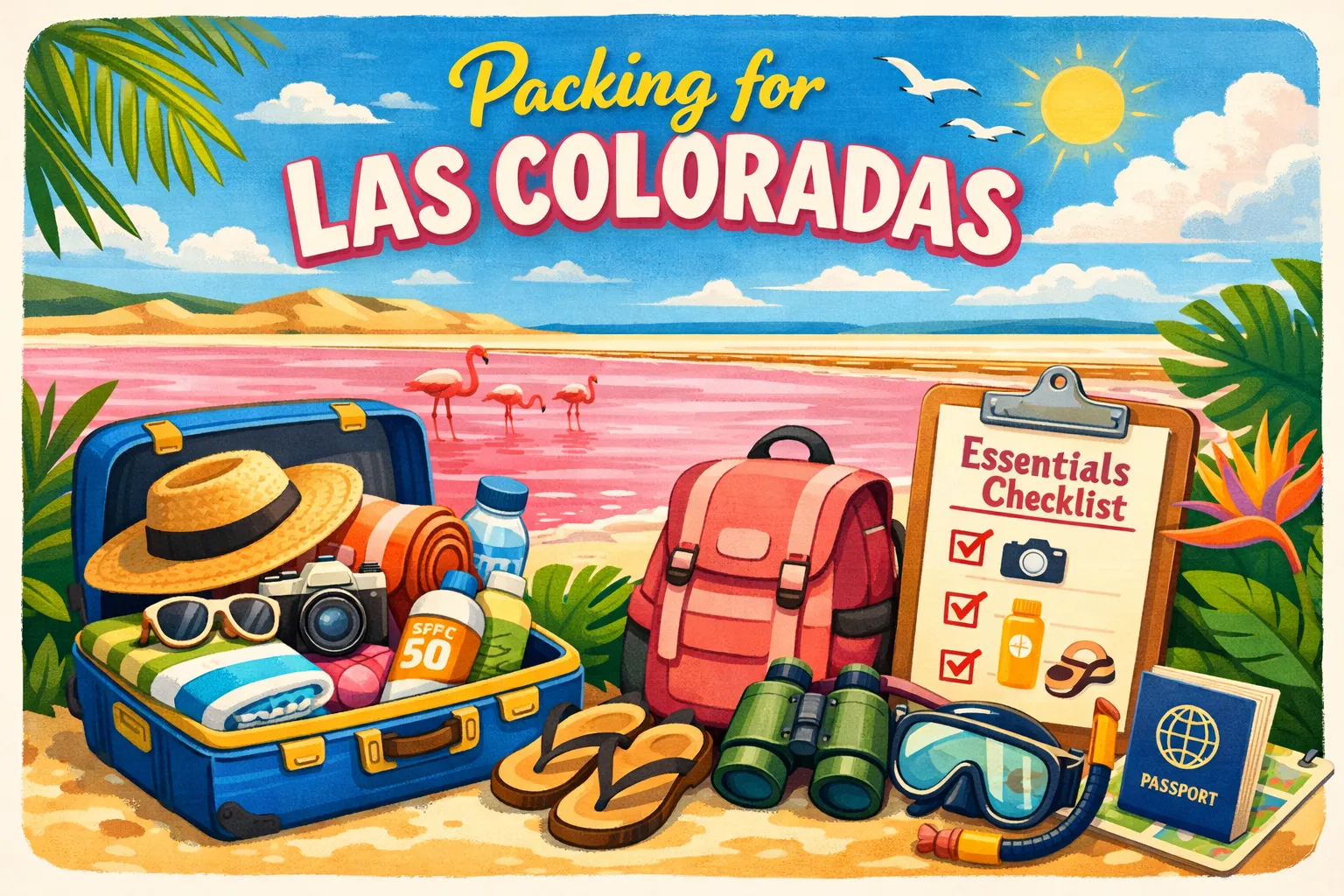
There’s a particular kind of traveler who shows up at Las Coloradas with a DSLR around their neck, a swimsuit in their bag, and a drone packed “just in case.” They’ve seen the photos: rose-pink water so saturated it looks photoshopped, flamingos wading through the shallows, a sky that mirrors the lake in perfect blush symmetry. It looks exactly like a beach day in a dream. The problem is that almost everything instinct tells you to pack for this place is wrong, and knowing what to pack for a trip to Las Coloradas before you arrive is the only thing that stands between a transcendent morning and a frustrated, sunburned scramble back to the car.
Las Coloradas is not a beach. It’s a protected commercial salt flat inside the Ría Lagartos Biosphere Reserve, operating under rules that most travel guides summarize too quickly to be useful. Get the packing right and the place opens up. Get it wrong and you’ll spend the morning managing what you forgot.
This guide gives you a complete, practical Las Coloradas packing list: the gear that actually works on salt flats, the sun protection the biosphere demands, the cash you need before you leave the city, and the phone photography setup that turns restrictions into creative constraints. No guesswork. No last-minute shopping in Tizimín.
Why Las Coloradas demands a different kind of packing list
Most travelers mentally file Las Coloradas under “beach day” and pack accordingly. That mental model produces the wrong checklist every time. The site is a commercial salt production facility operating within the Ría Lagartos Biosphere Reserve. It happens to be extraordinarily beautiful, but that beauty exists within a framework of rules designed to protect both the ecosystem and the business operating inside it.
The rules most visitors only learn on arrival
Swimming is strictly prohibited. The salt content is high enough to damage skin, and the lakes are privately owned land with security patrols enforcing access. Photography rules are equally specific: DSLRs, drones, tripods, and professional microphones are all banned. Your phone is the only camera you’re permitted to use, and guides accompany all visitors at all times. Entry fees are cash-only, with no ATMs anywhere in the village of Las Coloradas itself.
These rules aren’t bureaucratic obstacles. They’re the framework that has kept this place intact and visitable. Understanding them before you arrive means every item in your bag has a purpose. You’re not packing for a beach. You’re packing for a guided walk across a salt flat inside a protected biosphere, under extreme UV exposure, with no nearby infrastructure to bail you out if you forgot something.
How the terrain and climate shape every item in your bag
The ground at Las Coloradas transitions from salt crust to soft, muddy sand to wet flats. The UV index in coastal Yucatán regularly peaks at extreme levels, UV 11 to 12, around midday, and the reflective white salt surface amplifies that exposure significantly. There is almost no natural shade on the flats. Visits timed for the best pink color, typically the first two hours after sunrise, still mean direct morning sun on open terrain with no overhead protection. For up-to-date local conditions you can consult your preferred weather app for Las Coloradas to plan timing and clothing choices before you leave.
This combination of corrosive ground, intense UV, and remote infrastructure is what makes a Yucatán-specific packing checklist necessary. A beach list gets you burned. A hiking list gets your boots destroyed by salt. Getting this right requires thinking through each challenge specifically.
What to pack for a trip to Las Coloradas: sun protection and clothing
The reflective salt flats at Las Coloradas create a compound UV environment: sun from above and reflected exposure from below. Tank tops and shorts feel intuitive in the heat, but they’re genuinely inadequate here. Full coverage without overheating is the goal, and the right fabrics make that entirely achievable.
Layers, fabrics, and UV-blocking essentials
A lightweight, long-sleeved UPF 50+ shirt belongs at the top of your Las Coloradas packing list. UPF-rated fabrics are specifically designed to block ultraviolet radiation, and in a compound-exposure environment like this one, that protection matters more than it does on a typical beach day. Linen or moisture-wicking synthetic fabrics are well-suited to Yucatán humidity and tend to feel cooler under direct sun than bare skin. Pair the shirt with a wide-brim hat, minimum three inches of brim, and UV-blocking wraparound sunglasses. Breathable lightweight pants or convertible hiking trousers round out the coverage without adding bulk or heat.
Reef-safe and eco-friendly sunscreen for a protected biosphere
Las Coloradas sits inside the Ría Lagartos Biosphere Reserve, a UNESCO-recognized ecosystem that includes mangroves, flamingo breeding grounds, and hypersaline lagoons. Conventional sunscreens containing oxybenzone and octinoxate are harmful to this environment and inconsistent with the biosphere’s conservation mandate. Use mineral-based alternatives with non-nano zinc oxide or titanium dioxide as the active ingredients. Brands like Maui Vera (made in Mexico), Sun Bum Mineral, and Blue Lizard SPF 50+ are solid options available in the region.
Most dermatological guidance recommends applying sunscreen 15 to 30 minutes before sun exposure and reapplying every two hours. Bring a travel-size bottle for reapplication during your visit. The midday UV extremes here are real, and the combination of heat and salt flat reflection means you’ll feel the exposure faster than expected.
Footwear built for salt flats and muddy ground
Footwear is the most underestimated item on most Las Coloradas packing lists. The terrain is uneven, occasionally wet, and actively corrosive to materials. People show up in flip-flops because the photos look like a beach. They regret it almost immediately.
Why sandals fail and what to bring instead
Open sandals and flip-flops offer no grip on slippery salt crust, no protection from sharp crystallized edges, and no defense against the corrosive saltwater that saturates sections of the ground. The practical answer is a pair of old waterproof sneakers or lightweight water-resistant hiking shoes that you’re willing to sacrifice to salt staining. If you’re combining your visit with a Ría Lagartos mangrove boat tour, which many travelers do, neoprene wading booties are the ideal option for any wading sections.
Protecting your footwear and clothing from salt corrosion
Salt is unusually aggressive on footwear and clothing for a half-day trip environment. The brine saturates fabric and rubber quickly, and salt crystal abrasion accelerates wear in ways that aren’t immediately visible. Rinse your footwear thoroughly with fresh water immediately after the visit and store them in a separate bag away from other luggage. Wear older, expendable socks you don’t mind losing. White salt residue on dark clothing is nearly unavoidable regardless of how careful you are, so dress with that reality in mind.
Phone photography setup: making the most of the only camera you can bring
The ban on DSLRs, drones, and tripods is frustrating the first time you hear it. After a moment’s reflection, it becomes an interesting creative constraint. Phone cameras are genuinely capable of capturing Las Coloradas’ surreal color palette, especially in the soft light of early morning. Arriving with the right accessories means arriving prepared to use that constraint well.
Waterproof phone protection and stabilization accessories
A waterproof phone pouch is recommended. Salt spray, unexpected water contact near the lake edges, and general moisture from humid conditions all create real risk for an unprotected device. A compact pop socket or phone grip helps stabilize shots in bright conditions when you’d otherwise fumble the frame. If you’re considering a clip-on wide-angle lens, check with your tour operator in advance, park rules explicitly ban extra camera lenses, and it’s worth confirming whether phone clip-on optics fall under the same restriction before packing one.
Getting the most from your phone in high-UV, high-salt conditions
Heat and direct UV drain phone batteries significantly faster than normal conditions. A compact power bank in your day pack removes the anxiety of watching your battery drop before the best light arrives. Store your phone in a UV-protective sleeve between shots rather than leaving it face-up in direct sun. Timing matters more than gear here: the pink color is most saturated in the first two hours after sunrise or under soft overcast light, so arrive early rather than trying to compensate with equipment.
Day-trip logistics: cash, water, snacks, and the items most people forget
Las Coloradas is remote by design. The village has very limited facilities, no ATMs, no sit-down restaurants, and no reliable access to drinking water. Getting the logistics wrong on a half-day trip in Yucatán heat means a miserable experience regardless of how well-packed the rest of your bag is.
Cash requirements and entry fees
Entry fees vary by access type: basic guided entry runs around 300-350 MXN, with bicycle rentals at approximately 390 MXN and safari-cart tours at 790 MXN or higher. That range reflects variable group sizes and seasonal pricing, so bring more than you expect to spend. No ATMs exist in Las Coloradas, and the nearest reliable cash access is in Tizimín or Valladolid. Withdraw cash before you leave either city: tips for guides, snacks from informal vendors, and transportation contingencies all require pesos. Cards are not accepted at the site. Note that fees and visiting hours can change seasonally, so confirm current details with your tour operator or the Parque Turístico directly before your visit.
Hydration, snacks, and the reality of a remote destination
Pack a minimum of two to three liters of water per person for a half-day visit. Nearby Río Lagartos, about a 20 to 30 minute drive, has restaurants and is the most reliable option for food before or after your visit. Las Coloradas itself has very limited or no food vendors, so don’t count on finding anything at the site. Electrolyte tablets, energy bars, and fruit are practical additions to your pack. Beyond food and water, bring a small personal first-aid kit, insect repellent (the adjacent mangroves bring mosquitoes, especially at dawn), and toilet paper. Restroom availability outside the main park area is unreliable, and remote stops during boat tours on the Ría Lagartos have none at all.
Pack with purpose, arrive with presence
Las Coloradas is one of the strangest and most genuinely beautiful places in Mexico. The pink is real, the flamingos are real, and the feeling of standing on a salt flat that looks like another planet is real. What stands between most travelers and that experience isn’t distance or difficulty. It’s arriving underprepared and spending the visit managing what they forgot.
When you think carefully about what to pack for a trip to Las Coloradas, the essentials become clear: UPF clothing and reef-safe sunscreen, waterproof footwear you don’t mind ruining, a protected phone with a power bank, and enough cash and water to make the logistics invisible. Leave the DSLR, the drone, and the swimsuit at the hotel. They won’t help you here, and the gate staff won’t let them in anyway.
When you pack with the site’s actual rules and terrain in mind, something shifts. You stop managing and start noticing. The color of the water changes by the hour. The flamingos are closer than you expect. The salt crust under your feet sounds different from ordinary ground. This place deserves your full attention. Give yourself every reason to show up with nothing else on your mind.
Leave a Reply