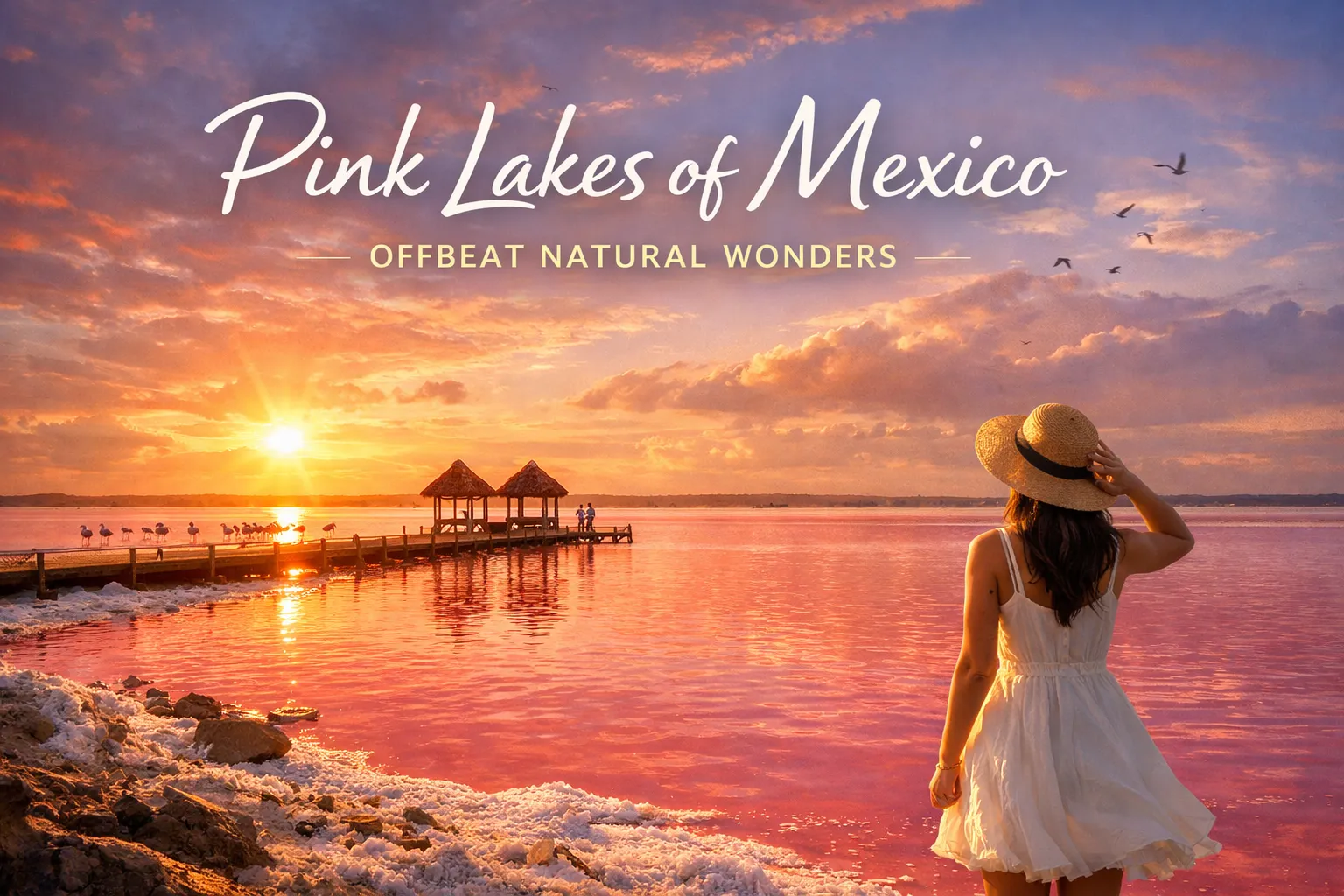
The most extraordinary places on Earth rarely announce themselves. They sit at the end of unmarked roads, tucked between fishing villages and salt flats, waiting for the traveler curious enough to look past the postcard version of a destination. Mexico’s Yucatán Peninsula is exactly that kind of place. Most people who hear about the region’s pink lakes picture a single lagoon near Las Coloradas, snap it to their mental wish list, and move on. But the peninsula holds an entire constellation of flamingo-pink waters, each shaped by its own chemistry, season, and story. Exploring pink lakes in Mexico properly means understanding all of them.
This guide is built for the traveler who wants the full picture: the science behind the color, the lakes beyond the famous one, the best windows for visiting, and the local lore that gives these places weight beyond their visual drama. Consider this your starting point for one of Mexico’s most genuinely strange and beautiful natural experiences. By the time you finish reading, you’ll know how to time your visit, navigate Las Coloradas as it exists today versus what the photos suggest, and find equally striking pink water with far fewer people in your frame.
Why these lakes turn pink: the strange science behind the color
The pink color isn’t a fixed filter or a trick of dawn light on salt crystals. It comes from living organisms called halophiles, literally “salt-lovers”, specifically bacteria like Salinibacter ruber and algae like Dunaliella salina. Both produce red carotenoid pigments as a biological survival mechanism in water that would kill almost anything else. Microbial and algal concentrations shift with conditions, which is why the palette ranges from pale rose to deep magenta and can change measurably from one visit to the next.
These lakes are terminal lakes with no outflow. Water escapes only through evaporation, which concentrates salt to levels several times saltier than seawater. That extreme salinity creates the exact conditions where halophiles thrive and their pigments intensify. Add direct overhead sunlight and the visual effect becomes almost unreal. Remove the sun, introduce cloud cover or rain, and the same lake looks like any other shallow coastal water. The color is a living phenomenon, not a fixed feature.
Seasonal and daily timing matters more than most visitors realize. The dry season from November through May generally produces stronger color than the rainy months of June through November, when cloud cover flattens and dilutes the effect, though optimal conditions vary between sites, and some sources point more specifically to December through March as the most reliable window. Within any given day, sun angle is the single biggest variable. 11 AM to 3 PM produces the most vivid hue because the light hits the water at a nearly perpendicular angle. Golden hour photography, which works beautifully almost everywhere else, often mutes these lakes significantly. Salt harvesting operations also affect water depth and concentration across the season, shifting the palette from blush to deep magenta in ways that no forecast can fully predict.
Las Coloradas: the lake that started it all
Las Coloradas is the most photographed of Mexico’s pink salt lakes, and for good reason. It sits near the Rio Lagartos biosphere reserve on Yucatán’s northern coast, where shallow evaporation ponds pressed between the Gulf of Mexico and a coastal lagoon create some of the most intensely colored water in the region. The images have circulated widely enough that the site now draws visitors from across the world. For background on the locality and its history, see Las Coloradas, Yucatán.
The reality of Las Coloradas today is more regulated than those images suggest. A visitor center established sometime around 2021, though the exact year varies by source, manages access and enforces a firm set of rules. Entry fees range from approximately 300 to 350 MXN including a mandatory, official guide. Professional cameras are banned outright; phones are permitted. Drones are prohibited. Swimming, once allowed, is now completely off-limits to protect both the salt harvesting operation and the fragile ecosystem that produces the color in the first place. Security patrols on motorcycles and ATVs enforce these rules on-site. The infrastructure exists because this is a working commercial salt facility first and a tourist destination second.
The most vivid color at Las Coloradas appears between noon and 2 PM on clear days during the dry season. Scale is one thing the photos routinely misrepresent: many visitors report the lagoons are smaller than expected. For wildlife, the nearby Rio Lagartos estuary rewards early morning or late afternoon visits with sightings of Caribbean flamingos (Phoenicopterus ruber), which feed along the wetlands in one of North America’s largest nesting colonies. A guided tour combining the pink lagoons with a boat tour through the estuary delivers a much fuller experience than the lagoons alone.
Las Coloradas opened the conversation about pink lakes in Mexico, but it didn’t end it. Visitors willing to look a little further discover equally striking water with far less infrastructure between them and the view.
Pink lakes Mexico: beyond Las Coloradas
Laguna Rosada near Telchac Puerto
About 120 to 150 kilometers west of Las Coloradas, near the small coastal town of Telchac Puerto, lies a quieter pink lake that most visitors to Yucatán never hear about. This pink lagoon in Mexico sits within a nature preserve near the Carretera Puerto Progreso, roughly an hour’s drive from Mérida. Entry tends to be informal and free, access is by car through coastal dunes, and the atmosphere feels entirely different from the managed experience at Las Coloradas. The site is less developed, with no visitor center and no queues, though conditions and access rules can shift by season and landowner, so it’s worth confirming current access before making the drive.
The color here comes from the same halophilic chemistry, and the intensity during clear midday conditions in the dry season rivals what you’ll find at the more famous site. The nearby ruins of Xcambó add archaeological depth to the visit: these are the remains of a Maya salt-trading post that once supplied inland cities through a regional economy built on coastal salt production. Pairing the lake with the ruins creates a rare combination of natural spectacle and historical context in a single half-day outing from Mérida.
The salt ponds of the northern Yucatán coast
The northern Yucatán coastline is dotted with smaller, less-visited pink salt lakes that turn various shades of pink during the dry season. These sites sit along the road between coastal fishing villages, often visible from roadside pullouts or reachable by bike from small towns. They lack the regulation and infrastructure of Las Coloradas, which is precisely their appeal for a certain kind of traveler, someone who prefers an empty frame and the sound of wind over salt grass to a managed tourist experience.
Color intensity at these smaller ponds peaks from March through May, when temperatures are highest and evaporation is most aggressive. The palette shifts more dramatically here because no single commercial operation controls water depth. A pond at deep magenta in late March can fade to pale blush three weeks later, depending on recent harvesting and rainfall. This unpredictability is part of the experience. The traveler who builds buffer into their itinerary and checks the sky before committing to a drive is the one who gets rewarded.
The orange lagoon adjacent to Las Coloradas
Within the Las Coloradas site itself, an adjacent lagoon takes on a deep orange rather than pink hue. The difference comes from variations in microbial concentration and water depth within the same hypersaline system. This orange lake is often overlooked by visitors focused entirely on the pink ponds, but it offers a striking visual contrast that photographs distinctly from the surrounding rose-toned water. Visually, it reads less like a variation and more like an entirely different palette, worth a few minutes and a separate set of shots before you move on. It’s a reminder that the chemistry producing these colors operates on a spectrum, not a single fixed outcome.
Pink lakes Mexico: best times to visit for peak color
The dry season window from November through May is the clearest framework for planning a visit to any of Mexico’s pink salt lakes. November through March delivers the most reliable clear-sky conditions and concentrated salinity. March through May pushes color intensity even further as temperatures peak and evaporation accelerates. Avoid the rainy season from June through November, when cloud cover, freshwater dilution, and gray light combine to strip these lakes of the quality that makes them worth a 3-hour drive.
Within any day during the optimal season, arriving between 11 AM and 2 PM is the single most important decision you can make. The sun angle at that window is steep enough to interact with the shallow, pigment-rich water in a way that produces the vivid color. Photographers who arrive at golden hour in hopes of dramatic light will find a muted lake and a wasted journey. Midday is generally the best time across these sites, though individual conditions and seasonal variability can occasionally produce exceptions worth noting when you’re on the ground.
Practical day-of preparation matters too. Check cloud cover forecasts the evening before rather than the morning of your visit. Morning weather patterns in the Yucatán can change quickly, and a clear overnight sky is your best predictor of clear midday conditions. Seasonal north winds, locally called “nortes”, can stir fine sediment in shallow ponds and affect color clarity. If the forecast shows strong northerly winds, consider delaying by a day. Building that flexibility into your schedule is what separates a successful visit from a long drive to see beige water.
Local lore and the wildlife that calls these lakes home
The salt lakes of northern Yucatán have been worked by human hands for centuries. Archaeological evidence from the region shows that ancient Maya communities built structured production operations along the coast, boiling brine in mud pots and transporting salt by boat to inland cities like Tikal and Calakmul, where it was a high-value trade commodity. Salt was not a background resource in Maya civilization; it was a strategic one. The coastal communities that controlled these sources held significant economic power across the peninsula’s trade networks.
Salt workers who spend their days at Las Coloradas and the surrounding ponds today carry a different relationship to the color than the visitors photographing it. The pink is simply the nature of the water at certain depths and temperatures, an indicator of conditions rather than a spectacle. The commercial logic of salt harvesting and the aesthetic fascination of tourism exist in the same space, sometimes uncomfortably. Understanding that the color you’re photographing is a byproduct of a working industry, not a protected natural reserve, changes how you move through it.
The ecological connection between the pink lakes and the flamingo colonies of Rio Lagartos is direct and fascinating. Caribbean flamingos feed primarily on brine shrimp and halophilic algae, the same organisms that produce the carotenoid pigments turning these lakes pink. The flamingos’ own color comes from those same pigments consumed through diet. The Rio Lagartos biosphere reserve supports approximately 26,000 Caribbean flamingos, with peak nesting season from March through June. Early morning boat tours through the estuary offer the closest flamingo encounters, with the birds feeding in the shallows at a distance close enough to see the precise shade of pink that connects them to the water they walk through.
Planning your pink lake journey with The Curious Atlas
The Curious Atlas builds slow, immersive itineraries for exactly this kind of destination: places that reward careful timing, local knowledge, and a willingness to go slightly off the obvious route. Rather than a single day trip to Las Coloradas, a well-constructed Yucatán pink lakes itinerary strings together the Las Coloradas visit, the Telchac Puerto alternative, a Rio Lagartos flamingo boat tour, and at least one Yucatecan coastal meal into a route that feels like a genuine journey rather than a checklist.
For the self-drive traveler, the logistics are straightforward. Las Coloradas sits approximately 3 to 3.5 hours from Cancún, 3 hours from Tulum, and under 2 hours from Valladolid. Valladolid makes the most logical base for a multi-day Yucatán itinerary that includes the pink lakes. It’s close enough that you can time your departure to arrive at Las Coloradas between 11 AM and noon without an early start, and its colonial center rewards an evening of wandering. Bring cash for entry fees (cards are not accepted), apply sunscreen before you get out of the car, and wear closed shoes for the uneven ground around the lagoons. If you want practical routing and transit options, this guide to routes from Cancún to Las Coloradas is a useful starting point.
Guided tours make particular sense if you’re without a rental car, want the Rio Lagartos boat tour bundled in, or are a serious wildlife photographer chasing flamingo timing. Guided access at Las Coloradas also unlocks more of the lake system than the self-entry option, which limits visitors to the first lagoon. The difference in color experience between the first lagoon and the deeper ponds is significant enough to justify the higher entry cost on a clear day in dry season.
Before you go, run through this short list:
- Cash in MXN for entrance fees (300 to 350 MXN depending on access type)
- No drones, no professional cameras, phones only at Las Coloradas
- Sun protection and at least one liter of water per person for midday visits
- Closed-toe shoes for uneven salt ground
- A weather forecast checked the night before, not the morning of
- Buffer time in your schedule in case of cloud cover
The lakes that reward the curious
Mexico’s pink lakes are one of those phenomena that resist casual engagement. They require the right season, the right hour, and the willingness to look beyond the single site that Instagram made famous. Las Coloradas opened the door, but the real discovery starts when you follow the northern Yucatán coast west, or time a boat tour through the Rio Lagartos estuary at the moment the morning light catches a thousand flamingos feeding in salt-thick water.
The science is genuinely strange: microscopic organisms producing vivid pigments as a survival response to conditions almost nothing else can tolerate. Ancient Maya communities understood these same coastlines as strategic resources worth controlling and trading across the peninsula. The flamingos understand the lakes as a food system. Holding all three of those perspectives at once reveals something the postcard version of pink lakes Mexico completely misses.
Mexico’s pink lakes reward the curious over the casual, always. Pack your patience alongside your sunscreen, and the Yucatán will show you more than you came looking for.
Leave a Reply