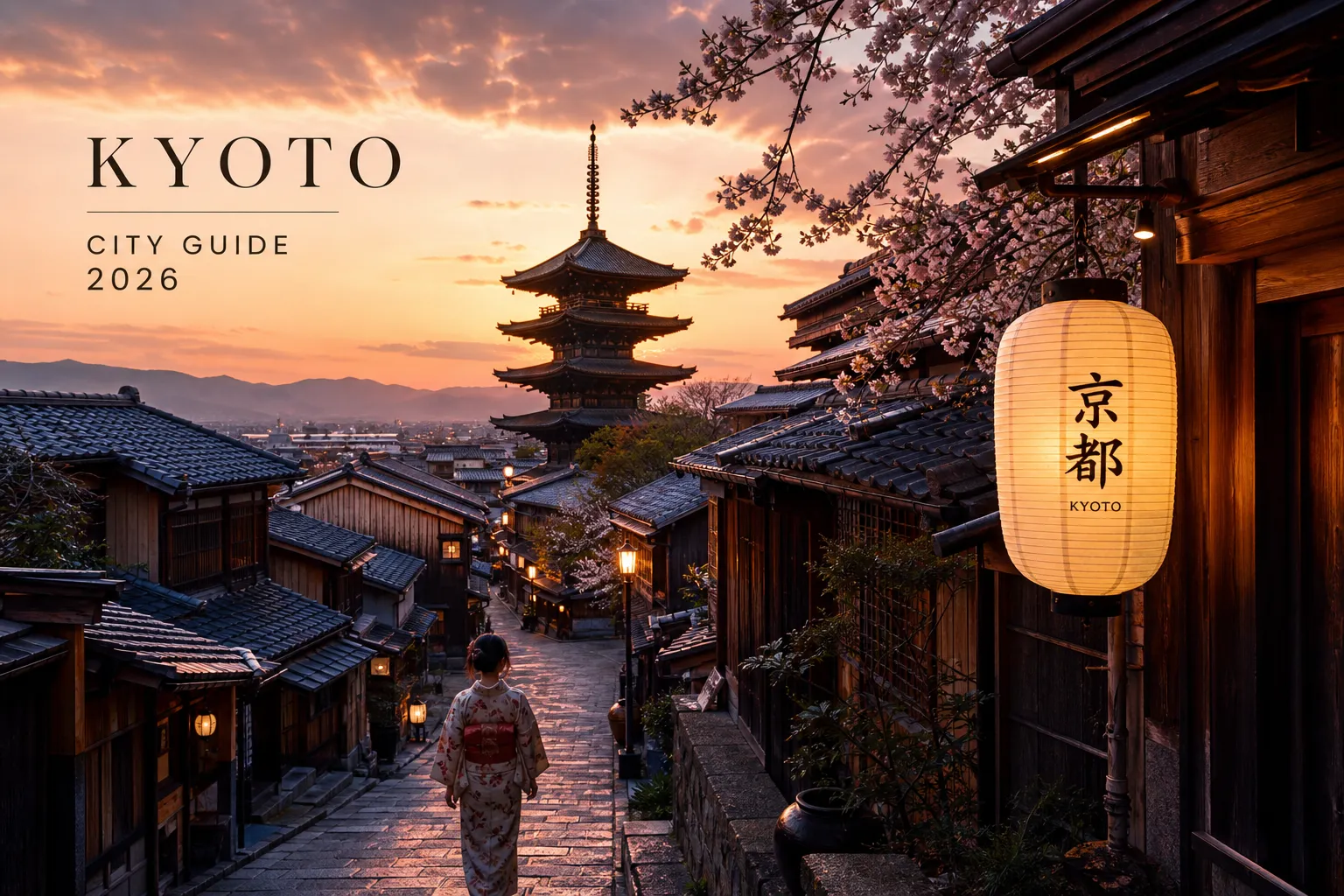
Kyoto punishes the traveler who arrives with a checklist and a tight schedule. The city’s greatest experiences don’t announce themselves; they reveal themselves slowly, to people who pause long enough to notice. That’s the uncomfortable truth behind every rushed highlight reel, and it’s why so many visitors leave feeling vaguely disappointed despite having “done” Fushimi Inari, Arashiyama, and Kinkaku-ji all before lunch.
This Kyoto city guide is built for independent travelers who want more than that. It’s opinionated, practical, and built around a single premise: you should leave Kyoto feeling like you understood it, not just photographed it. By the end, you’ll have a ready-made itinerary that matches your actual schedule, a clear geographic mental map of the city’s districts, a realistic handle on transport and costs, and the practical knowledge to move through Kyoto without friction.
Getting Around Kyoto Without Losing Your Mind
The first thing you need to know about Kyoto’s transport system is that the subway network is limited to just two lines: the Karasuma Line running north-south and the Tozai Line running east-west. That’s it. Buses carry most of the load for getting to temples, shrines, and western neighborhoods, and while Kyoto’s buses are excellent in theory, they’re unreliable in peak-season reality. Build your days around this truth and you’ll avoid the most common planning mistake.
IC Card vs. Day Pass: Which One Actually Saves You Money
The ICOCA IC card is the most versatile option for getting around Kyoto. It works on buses, subways, private rail lines like Hankyu and Keihan, and even convenience stores. Load it once and tap your way across the city without fumbling for exact change. If you’re doing a mix of transport across several days without heavy sightseeing concentration, this is your default.
The Subway and Bus 1-Day Pass at approximately 1,100 yen is worth the investment on days when you plan to ride the subway at least twice and take two or more buses. On temple-heavy days, that threshold is easy to hit. Note that the old bus-only 1-Day Pass (previously around 600 yen) was discontinued in 2023 and is no longer available. Your practical options in 2026 are the ICOCA card for flexibility or the 1,100-yen Subway and Bus 1-Day Pass on high-movement days. Know what your day looks like before you buy.
Bus vs. Train: Matching Your Transport to Your Destination
The subway shines for covering long city traversals quickly. Kyoto Station to Shijo, the gateway to Gion, takes under 10 minutes by Karasuma Line. The subway stops well short of most major sights, though, so plan to transfer. Fushimi Inari is one of the few major attractions with excellent direct train access: the JR Nara Line from Kyoto Station gets you there in roughly five minutes.
Buses reach everywhere else, including Arashiyama, Kinkaku-ji, and Gion, but factor in realistic travel times. The bus from central Kyoto to Arashiyama runs 60 to 75 minutes in normal traffic and longer during cherry blossom and fall foliage seasons. Kinkaku-ji by bus runs 45 to 55 minutes from Kyoto Station. The most effective strategy is to use the subway for the long leg and catch a bus for the final stretch to the temple gates. For practical details on routes and schedules, see the official guide to getting around Kyoto by bus: getting around Kyoto by bus. Download Navitime or Google Maps with offline Kyoto maps before you land.
Kyoto City Guide: Neighborhoods to Anchor Your Trip
Kyoto doesn’t have a compact tourist zone. Its major attractions are spread across distinct geographic clusters, and understanding which sites belong together is more valuable than any individual attraction tip. Think of the city in three broad zones: eastern, western, and central.
Eastern Kyoto: Where Old Japan Feels Closest
Southern Higashiyama is the most walkable historic cluster in the city. Kiyomizu-dera, the Ninenzaka and Sannenzaka stone lanes, Gion, Yasaka Shrine, and Maruyama Park all sit within easy walking distance of each other. This district alone justifies a full day. Arriving at Kiyomizu-dera before 8 a.m. is not optional; it’s the difference between genuine atmosphere and organized chaos.
Northern Higashiyama extends the experience into quieter territory. The Philosopher’s Path, Nanzen-ji, and Ginkaku-ji (the Silver Pavilion) offer a slower, more contemplative half-day with noticeably smaller crowds. If you only have time to anchor yourself in one district, this is the one.
Arashiyama and the Western Districts
Arashiyama is Kyoto’s most visually dramatic neighborhood. The Bamboo Grove, Tenryu-ji garden, and the Oi River area form a coherent half-day or full-day unit that rewards an early arrival and a slow pace. Kinkaku-ji sits in northwest Kyoto and pairs reasonably with an Arashiyama day if you start early, but don’t underestimate the travel time between the two areas.
The transport reality matters here: the bus from central Kyoto to Arashiyama can push past 75 minutes during peak periods. A faster alternative is to take the JR Sagano Line from Kyoto Station directly to Saga-Arashiyama Station, which cuts the trip to around 15 minutes and sidesteps bus congestion entirely. Build in buffer time rather than optimistic math.
Central Kyoto: Markets, Castles, and a Slower Pace
Central Kyoto tends to get treated as a logistical hub rather than a destination, which is a mistake. Nijo Castle sits here and consistently surprises first-time visitors who dismissed it as a secondary attraction. The interior wooden corridors with their famous “nightingale floors,” designed to creak as a security measure, are extraordinary, and the crowds are a fraction of what you’ll find at Kinkaku-ji. Nishiki Market, a narrow covered arcade known as Kyoto’s kitchen, anchors the central food scene and is best explored at a slow midday wander.
Kyoto City Guide Itineraries for 1, 3, and 7 Days
A 1-day visit and a 7-day visit are fundamentally different experiences, not just longer versions of the same thing. The traveler with one day needs to make deliberate cuts. The traveler with a week needs to resist the urge to fill every hour. Both require the same discipline: the willingness to choose depth over coverage.
The One-Day Sprint: Where to Focus When Time Is Short
Start at Fushimi Inari between 6 and 7 a.m., before the tour buses arrive. By 9 a.m., move toward Kiyomizu-dera and walk the Higashiyama lanes. Spend your midday in the Gion area. For the afternoon, choose one anchor: Arashiyama for the bamboo grove and gardens, or Kinkaku-ji for the Golden Pavilion. Not both. Cramming all four into a single day is technically survivable and comprehensively exhausting. Set honest expectations before you go.
The Three-Day Sweet Spot: East, West, and Central
Three days is where Kyoto stops being a sprint and starts being a trip. Structure it geographically: Day 1 anchors in eastern Kyoto, covering Fushimi Inari, Kiyomizu-dera, the Higashiyama lanes, and Gion over six to eight hours. Day 2 goes west: Arashiyama, Tenryu-ji, and the Bamboo Grove, with Kinkaku-ji as an optional add-on if you start early.
Day 3 takes on central and northern Kyoto, Nijo Castle, Nishiki Market, the Philosopher’s Path, and Nanzen-ji, at a noticeably slower pace, finishing with time to breathe.
Seven Days Done Right: Slow, Intentional, and Rewarding
Days one through three mirror the structure above, but with looser pacing. More time at each site. Tea breaks that don’t feel stolen. A return visit to a favorite temple at dusk rather than at midday. Days four through six add real depth: a full morning at Nanzen-ji, a quiet afternoon on the Philosopher’s Path, an evening in a Gion backstreet. Day seven is a deliberate flex day, a side trip, repeat favorites, or a focused half-day food and market exploration. Not a packed sightseeing push. The value of the seventh day is precisely that it’s unscheduled.
Hidden Cultural Spots and Local Dining Worth Seeking Out
The best Kyoto experiences sit just past the point where most visitors turn back. This applies literally at Fushimi Inari: most visitors photograph the first tunnel of torii gates and leave. Walk further up the mountain and the crowds thin dramatically, the forest deepens, and the views over the city open up in a way the lower section never offers. The same principle of going deeper rather than wider applies across every district in this Kyoto city guide.
Beyond the Main Temples: Cultural Sights the Crowds Miss
To-ji Temple in southwest Kyoto is one of the city’s most atmospheric sites and consistently less crowded than its reputation deserves. The five-story pagoda is the tallest wooden tower in Japan and genuinely striking at golden hour. In the Arashiyama area, Otagi Nenbutsu-ji stands out for its 1,200 hand-carved stone Rakan figures, each with a different expression. It’s an unusually remarkable site and almost entirely overlooked. Near the Philosopher’s Path, Honen-in offers free entry, mossy thatched gates, and near-complete tranquility even on busy Kyoto weekends.
Where Locals Actually Eat in Kyoto
Nishiki Market is the best single stop for a midday food crawl: fresh tofu, pickled vegetables, grilled skewers, and Kyoto-style street snacks in one covered walkway. For a slow, market-focused approach, see How to Explore Japan Markets Like a Slow Traveler. For evening meals, neighborhood izakayas around Shijo-dori and Kawaramachi offer genuine local atmosphere without the tourist markup. Pontocho alley is worth walking even if you don’t eat there, atmospheric in feel, honestly mixed in quality, with excellent restaurants sitting alongside tourist traps.
The practical rule most visitors miss: set lunch menus (teishoku) at sit-down restaurants typically run 900 to 1,400 yen, while many of those same kitchens charge significantly more at dinner for equivalent dishes. Eat your main meal at midday.
Timing, Budget, and Etiquette: The Practical Layer
When you go and how much you budget are decisions with real consequences in Kyoto. So is how you behave. Handle these three elements well and the difference between a smooth trip and a frustrating one becomes obvious.
When to Visit Kyoto: Seasons, Crowds, and the Honest Trade-Offs
Cherry blossom season in Kyoto peaks around late March to early April, with the 2026 forecast placing full bloom around April 1. It’s visually spectacular and heavily crowded, with accommodation booking out months ahead and prices reflecting the demand. Fall foliage in late November is equally striking, with slightly thinner crowds and cooler temperatures that make full-day walking comfortable. The practical sweet spots are May, early June before the rainy season, and October: good weather, smaller crowds, and accommodation that doesn’t require planning six months out. Summer is hot, humid, and busy. It’s manageable with early starts and air-conditioned breaks, but it’s not the ideal season for a high-movement itinerary.
A Realistic Budget for Independent Travelers
Transport runs 600 to 1,100 yen per day depending on your pass choice, more if you add private rail or JR connections. Meals at local restaurants land in the 1,000 to 1,500 yen range for lunch; a Nishiki Market food crawl can come in under 1,000 yen. Temple and shrine entry fees typically run 300 to 600 yen per site, so budget 1,000 to 2,000 yen per day in entry costs on active sightseeing days. All in, a comfortable independent trip runs roughly 7,000 to 12,000 yen per day (around $45 to $80 USD at current exchange rates), covering transport, meals, and entry fees but excluding accommodation.
Temple and Shrine Etiquette You Need to Know
Buddhist temples and Shinto shrines follow different customs, and mixing them up is the most common etiquette mistake visitors make. At temples: hands together and silent when praying, no clapping, shoes off when indicated, photography restricted inside buildings. At shrines: bow at the torii gate, purify your hands at the water basin, and follow the two-bow, two-clap, one-bow sequence at the altar. In Gion and Arashiyama: keep your voice low, stay on marked paths, and do not photograph geiko or maiko without clear consent. These are not tourist areas that happen to have residents. They are living communities that happen to have tourists.
Kyoto Rewards the Curious Traveler
Every version of this Kyoto city guide that tries to compress the city into a single day tells the same story: there is too much here for speed to capture. The visitors who leave deeply satisfied are almost never the ones who covered the most ground. They’re the ones who stayed long enough to watch the light change on a temple gate, found a soba counter that wasn’t in any guidebook, and walked uphill past the point where the crowds gave out.
You now have the practical foundation to build a trip that fits your actual pace: a neighborhood mental map, three realistic itineraries, transport clarity, a budget framework, and enough cultural knowledge to move through Kyoto respectfully. That’s the gear. What you do with the hours is yours.
Leave a Reply