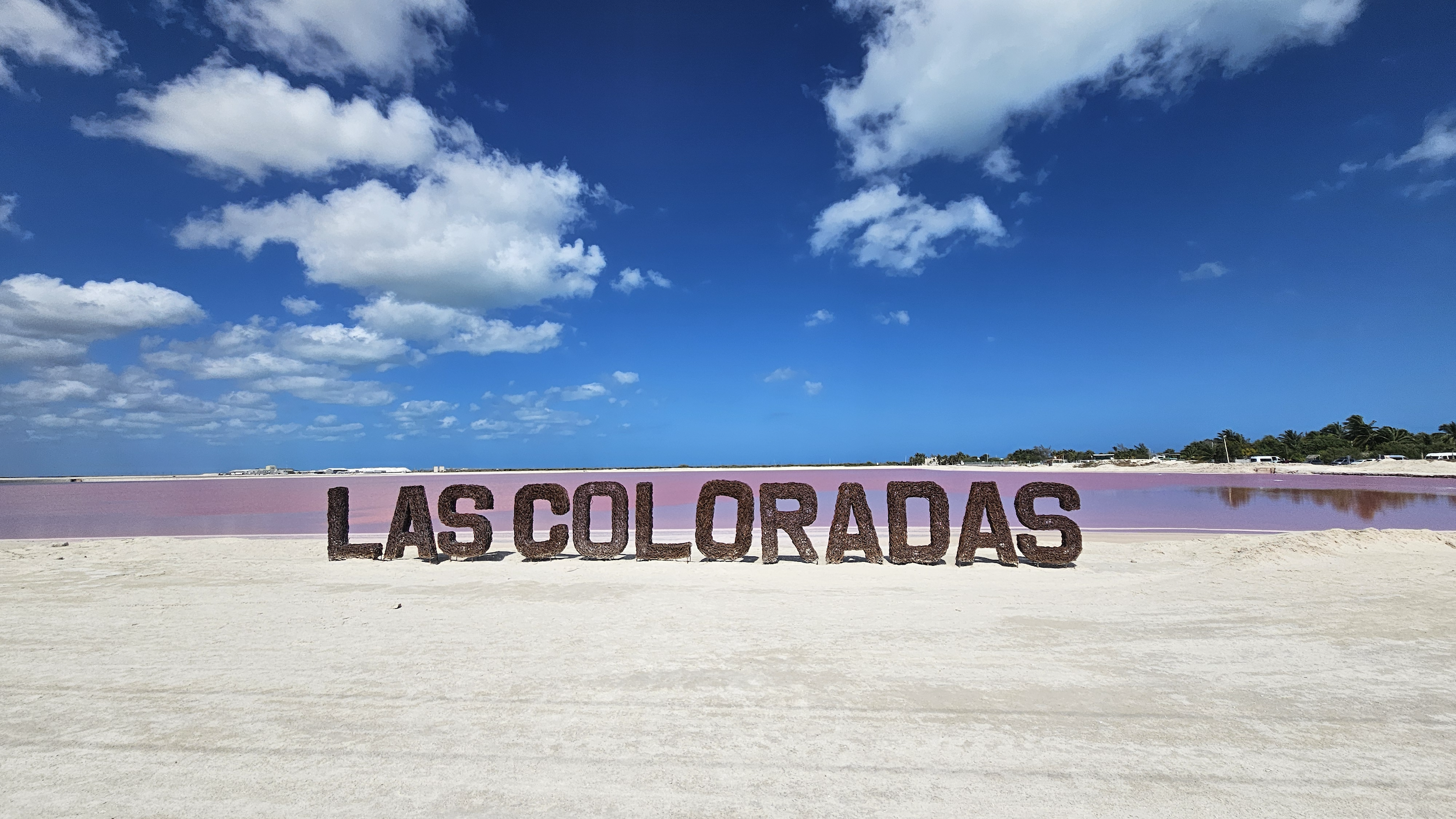
The photos circulating on travel boards look digitally altered. The water is an almost violent shade of pink, so saturated it reads more like a filter than a real place. But the pink lagoon near Las Coloradas, Mexico, specifically in the northeastern corner of Yucatán close to Río Lagartos, is entirely real, and in the right conditions, it delivers exactly what those images promise. The catch is that the right conditions require planning, not luck.
This guide draws on ground-level experience with the Yucatán region. You won’t find a highlight reel. You’ll find honest distances, current access rules, the months that produce vivid color, photography techniques that work within the site’s restrictions, and how to connect Las Coloradas, Mexico to a broader Yucatán itinerary worth making the drive for.
What the pink lagoon of Las Coloradas actually looks like in person
Most travelers arrive with a phone screenshot of magenta water so bright it looks like spilled paint. The reality is more nuanced, though no less extraordinary when conditions align. Setting honest expectations before you go is the single most useful thing this guide can do for you.
The science behind the color
The pink hue comes from a combination of halobacteria, Dunaliella salina algae, and brine shrimp (Artemia salina) that thrive in the hypersaline ponds managed for commercial salt production. These organisms produce red and pink pigments as a biological response to high salinity and intense UV exposure. Color peaks when evaporation concentrates these microorganisms, which is why a pond can look rose-pink one week and faded the next depending on rainfall, harvest stage, and sun intensity.
The ponds are not a single uniform color. Depending on the season and which pond you’re viewing, you might see soft blush pink, orange-red, or even greenish tones. That variation is natural and part of what makes the site genuinely fascinating rather than just photogenic.
What to realistically expect on arrival
This is a working salt flat, not a national park. The site is gated, fenced, and access requires a certified local guide from the Las Coloradas community. Visitors view the ponds from designated points along a path rather than roaming freely. The famous “mirror-like reflections” seen in photographs depend heavily on wind conditions and the angle of the sun. Arrive on a still, cloudless day and you’ll understand why people make the long drive. Arrive on an overcast afternoon and you’ll see a pleasant but pale set of ponds that doesn’t match the anticipation.
How to get to Las Coloradas, Mexico from your Yucatán base
The site sits near Río Lagartos in the northeastern corner of Yucatán, far enough from the major tourist hubs that the journey itself requires planning. Road conditions are generally good, but the distances are real and rural roads demand more attention than highways.
Driving times from key cities
Valladolid is the most practical base for this trip at roughly 160 km away, translating to about 1 hour 40 minutes to 2 hours by car. The route is a well-paved, largely straight road north toward Río Lagartos with clear signage once you approach the coast. Fill your gas tank before leaving Valladolid since there are no reliable stations on the final stretch.
From Cancún, the distance is approximately 200 km and the drive runs 3 to 3.5 hours. Mérida sits at a similar distance of 2 to 3 hours, while Tulum adds another layer at 3 to 4 hours depending on coastal traffic. For any base other than Valladolid, a day trip becomes genuinely long, factor that into your planning before you commit to a departure time. If you want a quick reference for the route from Cancún to Las Coloradas and the available transport options, mapping tools like this can help you estimate times and transfers.
Public transport and shuttle options
Direct buses to Las Coloradas do not exist. The ADO line serves Tizimín, from which you’d need additional local transport to reach the site, pushing the total journey from Cancún past five hours each way. For travelers relying on public transit, a guided tour is the only practical solution. It handles every logistics problem at once and typically costs less than the stress of piecing together connections in a region with limited schedules.
Tour vs. self-drive: the honest comparison
This is the decision that shapes your entire experience at the pink salt flats. Both approaches are viable, but they produce meaningfully different outcomes. Knowing which suits your style before you book, cost-conscious flexibility versus hassle-free depth, saves real frustration.
What driving yourself actually gives you
Self-driving offers flexibility on departure time and the ability to stop along the route without waiting on a group. You can extend time in Río Lagartos for lunch or roadside flamingo spotting without anyone hurrying you along. That said, you still pay the mandatory guide fee at the entrance since independent access to the ponds is not permitted under the current policy. Self-drivers from Cancún or Tulum consistently underestimate the round-trip distance and find themselves rushing the return leg, which diminishes the otherwise relaxed quality of the experience.
Why a guided tour changes the experience
A well-chosen, small-group eco-friendly tour handles every logistical variable: transport, local guide, entrance fees, and early departure timing. Quality operators in the region offer small groups, certified guides with substantial regional experience, and access to viewpoints along the pink salt ponds that visiting independently rarely reaches. The strongest argument for a guided tour is the combination trip: most quality operators pair Las Coloradas with a flamingo boat safari through the Ría Lagartos Biosphere Reserve, turning a long drive into a full, genuinely worthwhile day. Prices for full-day experiences range from roughly $102 to $276 CAD ($73 to $198 USD) depending on group size, inclusions, and add-ons like Ek Balam ruins or a stop in Valladolid. If you’re ready to book a guided option, here’s the one we tried in March 2026. It includes transportation from Cancun, Playa del Carmen or Tulum, lunch, boat ride to see the flamingos, local guides and transport.
Best time to visit Las Coloradas, Mexico for vivid pink water
Timing is the most decisive factor in whether you see striking color or a pleasant but underwhelming set of saltwater ponds. The good news is that the optimal window is broad enough to fit into most Yucatán travel plans.
Which months produce the deepest color
The strongest and most reliable color appears between December and March, when the dry season keeps salinity high and freshwater inflow minimal. March through August brings intense heat that accelerates evaporation and boosts microorganism activity, pushing the ponds toward deep pinks and orange-reds. Avoid the rainy season from June through November if vivid color is your primary goal; freshwater dilutes the lagoons significantly and the hue fades to a fraction of its peak intensity. No month guarantees a specific shade since salt harvesting stages, pond turnover, and localized weather all contribute. Check forecasts for the Río Lagartos area before committing to your travel date.
The time of day that makes the biggest difference
Arrive between 11 AM and 3 PM on a clear, sunny day. The high sun angle maximizes light penetration into the pigmented water, and this is what creates the vivid color you see in photographs. Overcast skies wash out the hue entirely, regardless of season. Sunrise and golden hour produce softer, more atmospheric light that works beautifully for landscape photography, but they do not generate the intense pink that midday sun delivers. The color here does not behave like a sunset; it is a product of direct, high-angle sunlight hitting a biologically active brine pool.
Access rules, entrance fees, and what to bring
The access model at Las Coloradas has tightened considerably since 2021, and arriving without knowing the current rules means arriving unprepared. Understanding what’s required before you show up prevents real frustration at the gate.
Independent entry is not permitted under any circumstances. The Tourist Park is gated and all visitors must be accompanied by a certified community guide. The site operates daily from 8:00 AM to 5:00 PM. Entrance fees run between 300 and 350 MXN per person, with English-speaking guides at the higher end. Cash only; no card payments are accepted, so bring more than you think you need. No swimming, no touching the water or salt, and no entering the ponds. Barbed wire fencing and on-site guards enforce these rules, not just signage. If you want to see what recent visitors report about entry and conditions, check the TripAdvisor listing for Las Coloradas Tourist Park for up-to-date visitor notes.
On equipment: drones and tripods are not permitted inside the gated area. Camera policies vary by guide, some allow only smartphones, others permit basic cameras, and this inconsistency is common enough that you should treat it as the norm rather than the exception. Confirm the current equipment policy with your guide or tour operator before arrival rather than assuming the rules from last year still apply. For most visitors, a smartphone is sufficient for compelling images of the lagoon itself. For flamingos spotted near Río Lagartos, a longer lens becomes essential since the birds are consistently at distance from any accessible viewpoint.
Las Coloradas Mexico photography tips for capturing the pink salt flats
The site is inherently photogenic, but working within the access restrictions requires adapting your approach rather than replicating what you’ve seen online.
Smartphones in portrait mode produce strong close-up shots of salt textures, water surface patterns, and the layered color gradations between ponds. A polarizing filter cuts surface glare and deepens color saturation on any lens, and it’s worth attaching before you enter the viewing area. For the composition itself, crouch low for a wide perspective that emphasizes the lagoon’s expanse and gives foreground interest. Offset the water to one third of the frame rather than centering it, the image breathes more. Including a strip of clear blue sky above the pink water creates contrast that most heavily cropped shots lack.
The most common mistake visitors make is arriving on a cloudy day or showing up in late afternoon expecting the light to “get better.” At the Laguna Rosa, the light gets worse as the sun drops. Midday is the goal, not golden hour. For flamingo photography near Río Lagartos, a telephoto lens of 200mm or longer is the minimum; birds are rarely close enough for a standard zoom to deliver usable images. Flamingos are present year-round at Río Lagartos, with peak numbers between March and June during nesting season, making a spring visit particularly rewarding on both counts.
Bringing it all together: a realistic plan for this day trip
Las Coloradas, Mexico rewards the traveler who plans carefully. The color is real, the access is structured but manageable, and the timing window for vivid pink water is specific enough to get right without limiting your trip significantly. The single clearest takeaway from this guide: base yourself in Valladolid, leave early, and pair the pink lakes with a flamingo boat safari on the Río Lagartos estuary. That combination turns a long drive into one of the most singular day trips available anywhere in Yucatán.
For most visitors, especially those traveling from Cancún or Tulum, a small-group eco-friendly guided tour eliminates every logistical friction point, includes local knowledge that genuinely adds depth to the experience, and provides access to areas of the salt flats that self-drivers simply don’t reach. Add a night in Valladolid before or after, explore a cenote on the return, and you have the shape of a slow-travel itinerary that justifies the journey.
Leave a Reply