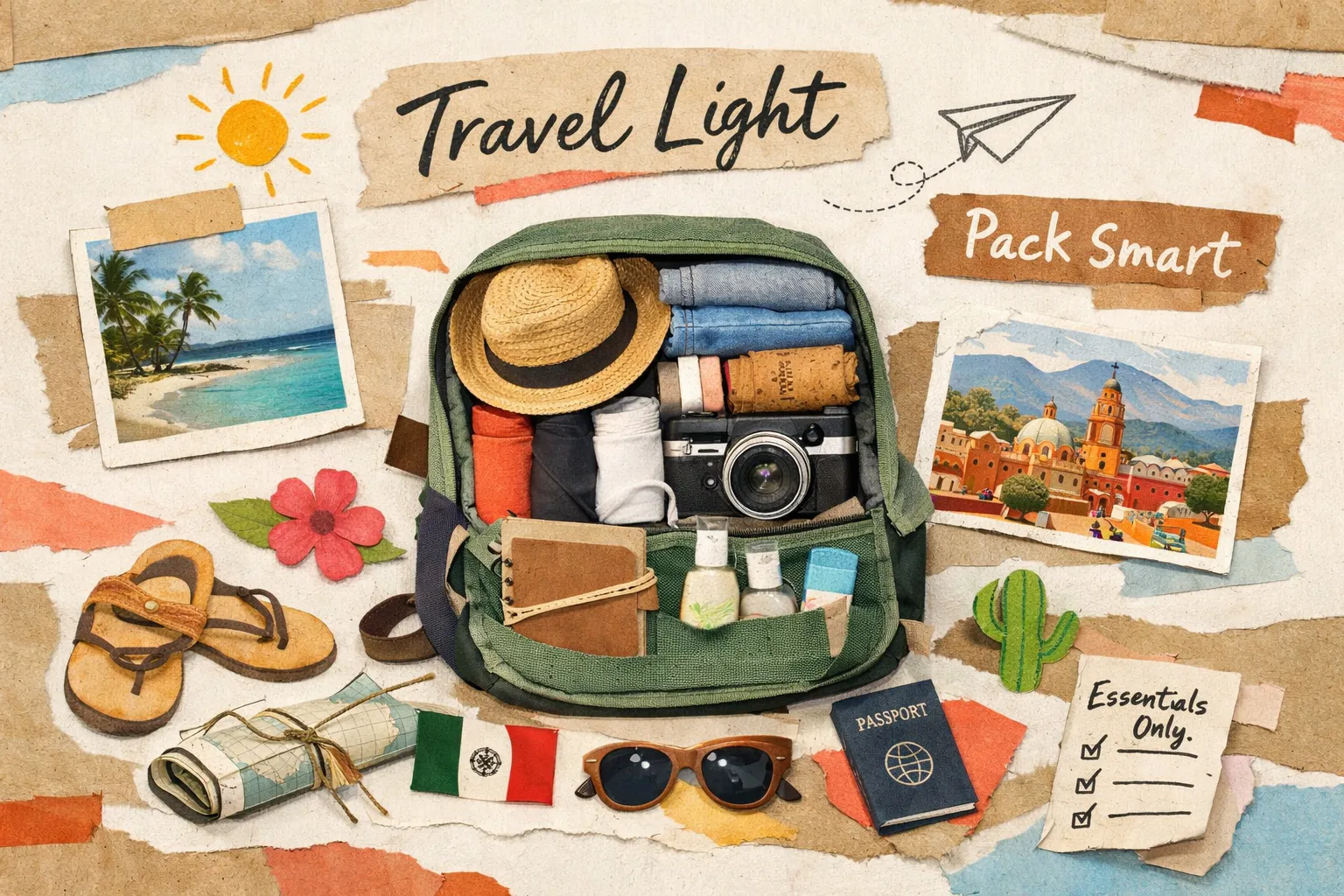
A light pack changes slow travel in Mexico because every ounce alters where you go and how long you stay. Think of pack weight as friction; small additions make detours harder and days shorter. An extra four pounds can mean skipping a cenote, passing on a side hike, or choosing a hotel with an elevator over a rooftop guesthouse. Track your base weight with a kitchen or luggage scale to see how small cuts open up new options.
Slow travel rewards versatility and comfort instead of racing from place to place. Aim for a practical light pack that lets you linger rather than chasing competitive ultralight benchmarks you won’t enjoy.
Choose multi-use items that cover several needs: a backpack that doubles as a day bag, a compact market pack, and a frameless option that handles cobblestones well. Allow modest comforts like camp shoes and a light jacket, which add ounces but save time and make daily life easier in towns and on trails.
What you need to know
- Measure base weight: weigh fixed gear only (exclude food, water, and fuel) to find where pounds hide.
- Prioritize the big three: clothing, footwear, and your sleep system usually free the most ounces.
- Match capacity to style: 20–36 L for day or short urban trips; 36–55 L for multi-day travel with regular resupply.
- Choose versatile pieces: multi-use packs, quick-dry layers, and camp shoes cover more needs with fewer items.
- Use resupply: rely on Mexico’s mercados for food, water, and consumables so you carry less between towns.
Why a light pack transforms slow travel in Mexico
Mexico’s climates help decide where to cut and where to keep ounces. Heat, humidity, and strong sun mean breathable, quick-dry, mildew-resistant clothing, reliable sun protection, and a clear water plan for the Yucatán and Pacific coasts. Frequent towns and mercados make resupply easy, so plan short refills rather than hauling days of food and fuel.
Start here: measure your base weight and total pack weight
Base weight is the weight of your fixed gear only; it excludes consumables like food, water, and fuel. It stays the same whether you go out for a day or a week and gives you a baseline to target meaningful cuts. Typical ranges are ultralight under 10 lb, lightweight 10–20 lb, and traditional above 20 lb, though your trip length will change total pack weight because of food and water.
At home, lay out every item and either weigh items individually or weigh the packed bag and subtract known consumables. Use a kitchen or luggage scale and record weights in grams and ounces so swaps compare precisely. Common mistakes include weighing water in bottles, leaving items in pockets, and forgetting to subtract compression straps.
The big three and highest-impact swaps to shave pounds
Start with the pack; framed versus frameless is the single biggest comfort and weight decision. Frameless packs work well when fixed-gear base weight stays low, roughly under 15–20 lb, while a framed pack helps once fixed-gear exceeds about 10–11 lb by transferring load to the hips. Expect a frame to add roughly 7–16 oz while improving stability and reducing shoulder fatigue.
Shelter swaps often deliver the largest gram savings, so include shelter with the pack and sleep system among the Big Three. Replacing a heavy tent with a tarp or a lighter single-wall tent can cut several hundred to over eight hundred grams. For Mexico, prioritize ventilation, durable ripstop fabrics that tolerate sand, and mesh panels for hot nights.
Sleep systems are another high-impact area. Moving from a bulky mummy bag to a quilt or a lighter 20°F option can save 350–1,250 grams depending on where you start. Swap heavy pads for lighter inflatables or thin closed-cell foam and use clothing as a pillow to avoid adding extra items.
Smaller swaps add up: lighter stoves, lean rain layers, and minimalist camp shoes can each save 50–300 grams. Combine a pack choice that fits your base weight with smart shelter and sleep swaps and you will turn a heavy kit into a true light pack for Mexican travel. The following sections cover clothing and cooking swaps to lock in those savings while keeping comfort and practicality.
Choose the right light pack for slow travel in Mexico
Pick capacity to match how you travel, not by what looks cool. For day and short urban trips aim for 20–36 L to carry a water bottle, camera, a light layer, and market finds; for multi-day slow travel with regular resupply choose 36–55 L so you can resupply without overstuffing or paying extra baggage fees. Test size at home by packing the items you usually bring into a tote to see what feels right.
Materials and suspension determine comfort more than brand. Use waterproof fabrics like Dyneema for coastal routes and rainy seasons, and nylon blends if you want affordability and decent abrasion resistance. If your loaded weight climbs above about 15 lb, choose a pack with a proper hip belt and load lifters to transfer weight off your shoulders.
Below are practical picks across budgets tied to typical empty-weight bands and capacity ranges so you can shop faster. Check The Curious Atlas gear collection for Mexico-friendly notes and direct links when you want buying details. Choose a light pack that matches your itinerary, test it loaded, and favor comfort when you expect heavy shopping or long transfers.
- Budget daypacks: Quechua MH500, Cotopaxi Elqui — approx 0.8–1.5 lb, 18–25 L
- Mid-range: Osprey Talon (22–33 L), Gregory Arrio — approx 1.5–2.5 lb, 22–33 L
- Premium lightweight daypacks: Gossamer Gear Kumo, Zpacks Nero — approx 6–16 oz, 18–35 L
- Multi-day ultralight options:Gossamer Gear Mariposa, ULA Dragonfly, Hyperlite Unbound, Zpacks Arc Haul, Durston Kakwa — approx 1.6–3.0 lb, 36–55 L
Packing strategies to maximize versatility and minimize weight
Use a three-layer approach adapted for hot, humid climates to stay comfortable without carrying extra clothing. Start with sun-protective, quick-dry base layers that wick sweat and block UV, add a light insulating mid layer for cooler inland nights, and finish with a breathable, packable rain shell. Favor garments that do double duty: a sarong that works as a towel, convertible pants that zip off into shorts, and shirts that suit both trails and cafés.
- Sarong or lightweight towel for drying and sitting
- Convertible pants with zip-off legs
- Merino or synthetic shirt usable on trails and in cafés
Organize your pack for balance and quick access: place sleep systems close to your back, keep heavier items near your torso, and store soft insulation on top for easy reach. Use small stuff sacks to group kit and a light dry bag during wet months, and compress bulky items to form structure while leaving a small air pocket around fragile gear. Plan resupply to avoid carrying days of food and fuel at once and treat water at reliable sources rather than hauling liters unless you face a known dry stretch.
The Curious Atlas light pack checklist and weight planner you can use today
Create a compact, printable checklist that fits a single sheet and a pocket. Include categories for the big three (sleep system, shelter, and pack), clothing, cook system, electronics, first aid, and documents, and add checkboxes so you can scan what’s in the bag at a glance. A short checklist speeds decisions when you’re packing for another town or a day trip.
- Big three: sleep, shelter, pack
- Clothing: layers and a change of socks
- Cook system: stove, pot, lightweight fuel
- Electronics: phone, charger, battery
- First aid and hygiene
- Documents: passport, cards, reservations
Adopt a two-step weighing routine: a thorough weigh-once session at home and a quick weigh-in before you leave lodging. At home, weigh every item with a kitchen or luggage scale and note weights next to checklist items, then use a luggage-scale lift before you head out to catch accidental add-ons. That routine keeps your totals consistent and reveals where weight tends to creep in.
- Establish your current base weight by totaling fixed-gear items.
- Choose a target base weight for this trip.
- Prioritize swaps by grams saved per dollar to get the best return on buys.
- Retest after swaps and iterate.
For example, aim for an 8–12 lb base weight for true light-pack slow travel with a minimal-frame option, or 12–18 lb if you prefer a light-framed backpack. Keep critical safety items; a few grams saved are not worth losing essential gear.
Why a light pack matters for slow travel in Mexico
Try a short trip in the Yucatán and notice how much more willing you are to roam with a lighter load.
Leave a Reply