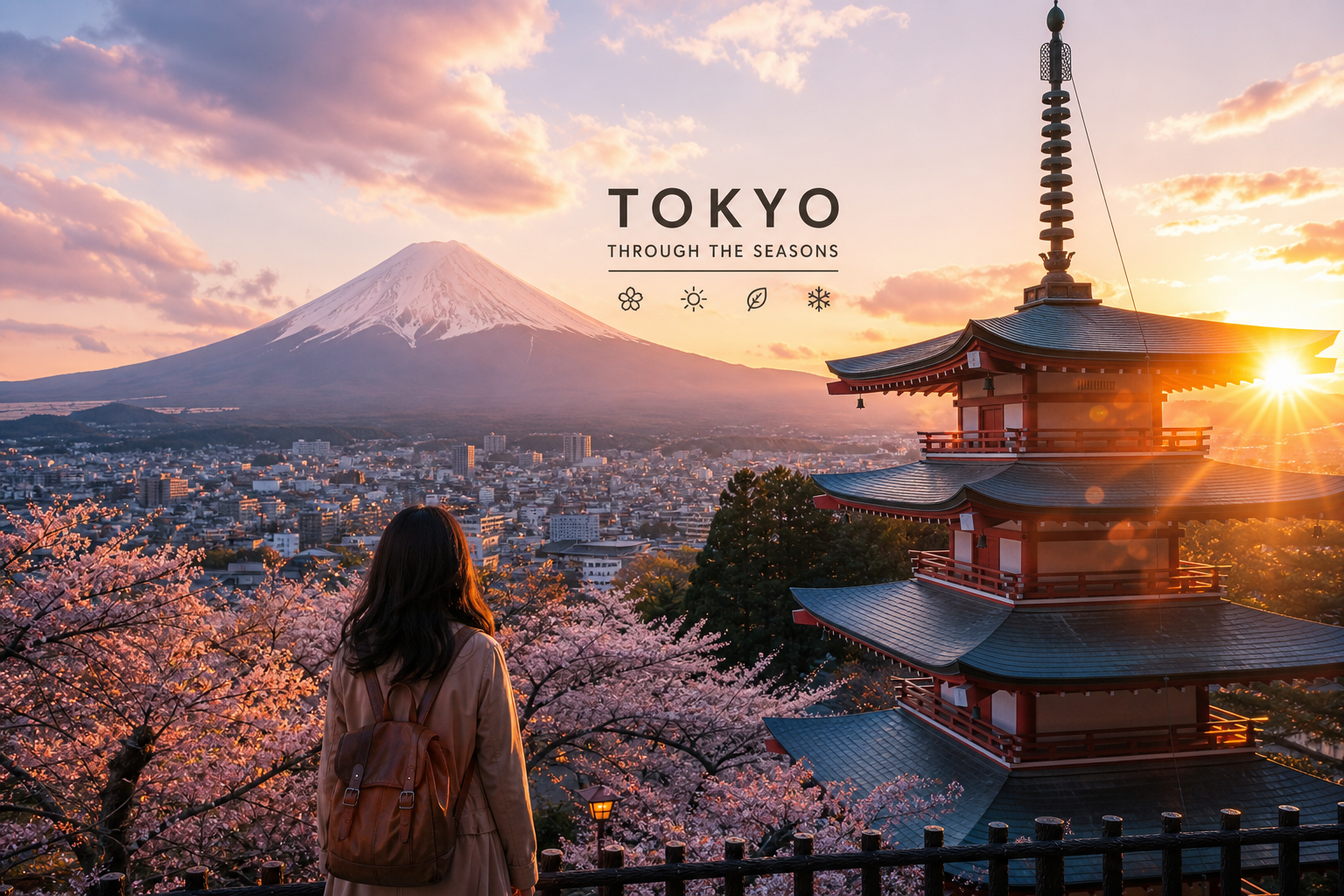
Most people approach Tokyo weather the way they check stock prices: obsessively refreshing a 14-day forecast the week before they fly, hoping for a green number. It’s an understandable instinct, but it’s the wrong question. A forecast can tell you whether to pack an umbrella for next Thursday. It can’t tell you whether you’ll spend your mornings sweating through temple corridors or wandering autumn streets in a light jacket with nowhere urgent to be.
The smarter move is to read the rhythm of a place before you book the flight. Tokyo has four sharply distinct seasons, each with its own personality, crowd density, cultural calendar, and sensory reality. Understanding which season fits the trip you actually want to have is one of the most useful things you can do as a traveler.
This guide walks through all four. It’s not a live forecast tool. It’s a seasonal planning resource built around Tokyo’s climate norms so you can choose your window with intention rather than luck. For current conditions, the Japan Meteorological Agency (JMA) and AccuWeather both offer reliable Tokyo weather now and up-to-date 14-day outlooks once your trip is booked.
Japan weather, Tokyo style: how the seasons shape the trip you’ll have
Tokyo’s weather shifts more dramatically across the year than most travelers expect. The humidity, foliage, crowd density, and cultural calendar all change sharply month to month. Spring brings iconic cherry blossoms and shoulder-to-shoulder crowds in the parks. Summer delivers thick, physical heat and the rainy season’s persistent cloud cover. Autumn turns the city gold and gives it back its walkability. Winter clears the air, thins the crowds, and rewards the unhurried traveler. There is no single “best” season. There is only the season that best fits your pace.
Tokyo’s geography explains why those shifts are so pronounced. The city sits at mid-latitude on Japan’s Pacific coast, fully exposed to monsoon patterns that push moisture inland from the ocean. Summer humidity is thick enough to feel like a physical presence, average relative humidity in August runs close to 79%, and dew points routinely make temperatures feel several degrees warmer than the thermometer suggests. Autumn air is the opposite: dry, sharp, and cool in a way that makes long walks feel genuinely effortless, with humidity dropping to around 69% by November. These aren’t merely aesthetic differences. They shape every decision from what shoes to wear to how many hours a day you spend outdoors.
A 14-day forecast is useless when you’re planning three months out. What matters at that stage is Tokyo’s monthly climate norms: the average temperature range, rainfall probability, and humidity level for any given month. If you want a quick reference for the average weather in Tokyo year-round, that kind of long-term dataset is far more useful than a short-term forecast. The difference between February, the driest month at around 6.5mm of rain, and May, which averages around 206mm, is not a minor planning variable. It changes everything about how you move through the city.
Japan weather in Tokyo, spring: cherry blossoms, mild air, and the slow traveler’s sweet spot
Peak sakura in Tokyo typically falls between late March and early April, though it can shift by one to two weeks depending on winter temperatures. According to Japan Meteorological Corporation data, the long-term average full-bloom date sits around March 28 to 31, and the window for full bloom lasts only about a week. Crowds at major parks like Shinjuku Gyoen and Ueno during that peak week are substantial, comparable to major festivals and large-scale public events. The slow traveler’s move is to arrive in late March when blossoms are just opening, or to aim for late April when the hanami crowds dissolve and the city quietly returns to itself.
By late April, temperatures settle into a comfortable 15 to 20°C range with manageable humidity around 67%. May gets warmer and considerably wetter, averaging around 206mm of rainfall, but the city is lush and green in a way that rewards exploration. This is the season for slow mornings in neighborhood shotengai, afternoon temple-hopping, and long dinners in covered alleyways without sweating through your shirt.
Layering is everything in March and April. Mornings in early March can dip to 6°C; by noon the same day, it’s 16°C. A light waterproof jacket handles April showers with ease. By May, drop the heavier layers but treat a compact umbrella as a permanent carry item, not an afterthought.
Summer and rainy season: what tsuyu and typhoons actually look like on the ground
Tsuyu, the plum rain front, settles over Tokyo roughly June 7 through July 19, according to JMA long-term averages, though start and end dates can vary by a few weeks each year. It doesn’t mean all-day downpours. It means frequent intermittent showers, persistent cloud cover, and humidity that rarely drops below 77%. The classic tsuyu pattern is drizzly mornings, brief sun breaks mid-afternoon, and rain returning by evening. Any outdoor plans need a genuine indoor backup option, learn more about tsuyu if you want the full seasonal context and timing.
August is Tokyo’s hottest month, averaging 29.6°C and regularly hitting 34 to 35°C with a heat index that makes those numbers feel worse than they read. Humidity stays above 78%. For travelers who prefer wandering streets and sitting in open garden cafés, midday in August is genuinely oppressive rather than merely warm. The city doesn’t shut down, but the rhythm shifts: early mornings, air-conditioned museum hours, and late evenings. Travelers who love Tokyo’s indoor culture, its ramen shops, jazz bars, and labyrinthine department store basement food halls, can actually thrive here once they accept the city’s summer terms.
Typhoon season runs roughly August through October, peaking in September, based on JMA historical data. Tokyo rarely takes a direct hit, but nearby passages bring one to two days of heavy rain and strong wind. Flights and shinkansen occasionally suspend service during serious storms; build at least one buffer day into any September itinerary and check JMA forecasts within 72 hours of a storm for real-time accuracy rather than relying on extended outlooks.
Autumn in Tokyo: golden foliage and the city’s most forgiving weather window
September’s typhoon risk fades by October, and what replaces it is the cleanest, most walkable season Tokyo offers. Temperatures drop to a comfortable 18 to 22°C range, humidity falls to around 74%, and the city’s skies turn a sharper blue than any other month. Neighborhoods like Yanaka, Shimokitazawa, and Nezu reveal themselves slowly on foot in a way that summer heat never permits. October is not a season for checking off sights. It’s a season for letting a city show you its texture.
Peak autumn foliage, known as koyo, arrives in late November. The ginkgo boulevards in Shinjuku and Meiji Jingu Gaien turn a deep, saturated gold that stands among Japan’s finest seasonal displays. Crowds exist at famous foliage spots but are a fraction of the spring sakura chaos. Temperatures by late November range from 8 to 17°C, cool enough to warrant a proper jacket, warm enough to spend entire afternoons outside. This is the month for slow walks, hot soba lunches at counter seats, and the particular pleasure of a city cooling down gracefully rather than fighting it.
Winter in Tokyo: crisp days, quiet streets, and an underrated window for wanderers
Tokyo’s winter is cold but rarely brutal, and it holds a surprise for travelers who write it off: January has the lowest humidity of the entire year at 54.8%, with rainfall as low as 26mm. December averages around 8.4°C and January around 6.6°C, with snow in the city center infrequent enough to feel like an event when it happens. The air is dry, bright, and clear in a way that makes Mount Fuji views from the city sharper in winter than in any other season. Crowds at major shrines and temples thin out after New Year’s, leaving space to actually experience these places rather than photograph them through other people’s heads.
February is Tokyo’s driest month by a wide margin, with only 6.5mm average rainfall. It’s cold, but it rewards travelers who move slowly: unhurried mornings at Hamarikyu Gardens, long afternoons in the old downtown district of Asakusa, no jostling for counter space at neighborhood ramen shops. This is the window that experienced Japan travelers increasingly seek out precisely because everyone else is holding out for cherry blossoms. The city belongs, in a quiet way, to whoever shows up for it in February.
A proper mid-weight winter coat handles December through February without issue. Tokyo is a walking city, and cold feet ruin a slow day faster than anything. Based on the climate normals in the table below, overnight lows sit between roughly 1.9°C and 4°C across the winter months, so extreme cold-weather gear isn’t necessary, just functional layers and comfortable shoes built for pavement.
Month-by-month climate snapshot: reading the numbers for your plans
The table below presents Tokyo’s monthly climate normals across temperature, rainfall, and humidity, drawn from Japan Meteorological Agency data. Three patterns stand out as the most useful planning inputs. May and September are the two rainiest months, at 206mm and 203.5mm respectively, making both shoulder seasons more complicated than their mild reputations suggest. February is the driest month by a significant margin. August is both the hottest and most humid, with averages that make the midsummer experience qualitatively different from every other time of year.
| Month | Avg temp (°C) | Max temp (°C) | Min temp (°C) | Rainfall (mm) | Humidity (%) |
|---|---|---|---|---|---|
| January | 6.6 | 11.6 | 2.6 | 26.0 | 54.8 |
| February | 6.5 | 12.0 | 1.9 | 6.5 | 55.3 |
| March | 10.7 | 16.0 | 6.2 | 153.0 | 62.0 |
| April | 15.6 | 20.7 | 11.2 | 154.5 | 66.8 |
| May | 19.2 | 23.6 | 15.5 | 206.0 | 70.3 |
| June | 24.7 | 29.3 | 21.2 | 100.0 | 77.9 |
| July | 28.4 | 33.2 | 25.0 | 74.5 | 80.5 |
| August | 29.6 | 34.4 | 26.2 | 68.5 | 78.8 |
| September | 26.5 | 30.9 | 23.0 | 203.5 | 81.6 |
| October | 18.5 | 22.1 | 15.7 | 106.5 | 74.6 |
| November | 12.8 | 17.4 | 8.9 | 17.0 | 68.8 |
| December | 8.4 | 12.9 | 4.2 | 36.5 | 59.3 |
Use climate normals for the decision of when to go. Use live forecasts for the decision of what to do once you’re there. For current Tokyo weather conditions or a 10- to 14-day outlook after your trip is booked, both the Japan Meteorological Agency and AccuWeather provide reliable, up-to-date Tokyo forecasts. For an alternate short-range forecast source you can check The Weather Network’s 14-day forecast.
Pick your season, then let Tokyo do the rest
Tokyo rewards the traveler who reads its rhythms rather than fights them. Autumn and spring are the slow traveler’s natural allies: mild temperatures, manageable humidity, and a city that seems to pace itself for walking. Summer and winter each carry their own distinct rewards for those who arrive with calibrated expectations rather than resistance. August belongs to indoor culture and early risers. February belongs to those who prefer their cities quiet.
The approach here is consistent whether we’re mapping out the streets of Shinjuku in November fog or timing a visit around any city’s defining season: understand the climate rhythm of a place first, then plan around it rather than hoping the weather cooperates. Tokyo has four distinct personalities across the year. None of them is wrong. One of them is right for the trip you want to have.
This japan weather tokyo guide exists for one purpose: to help you pick that season deliberately. Pack for the climate you’ll actually encounter. Then let Tokyo unfold at its own pace.
Leave a Reply