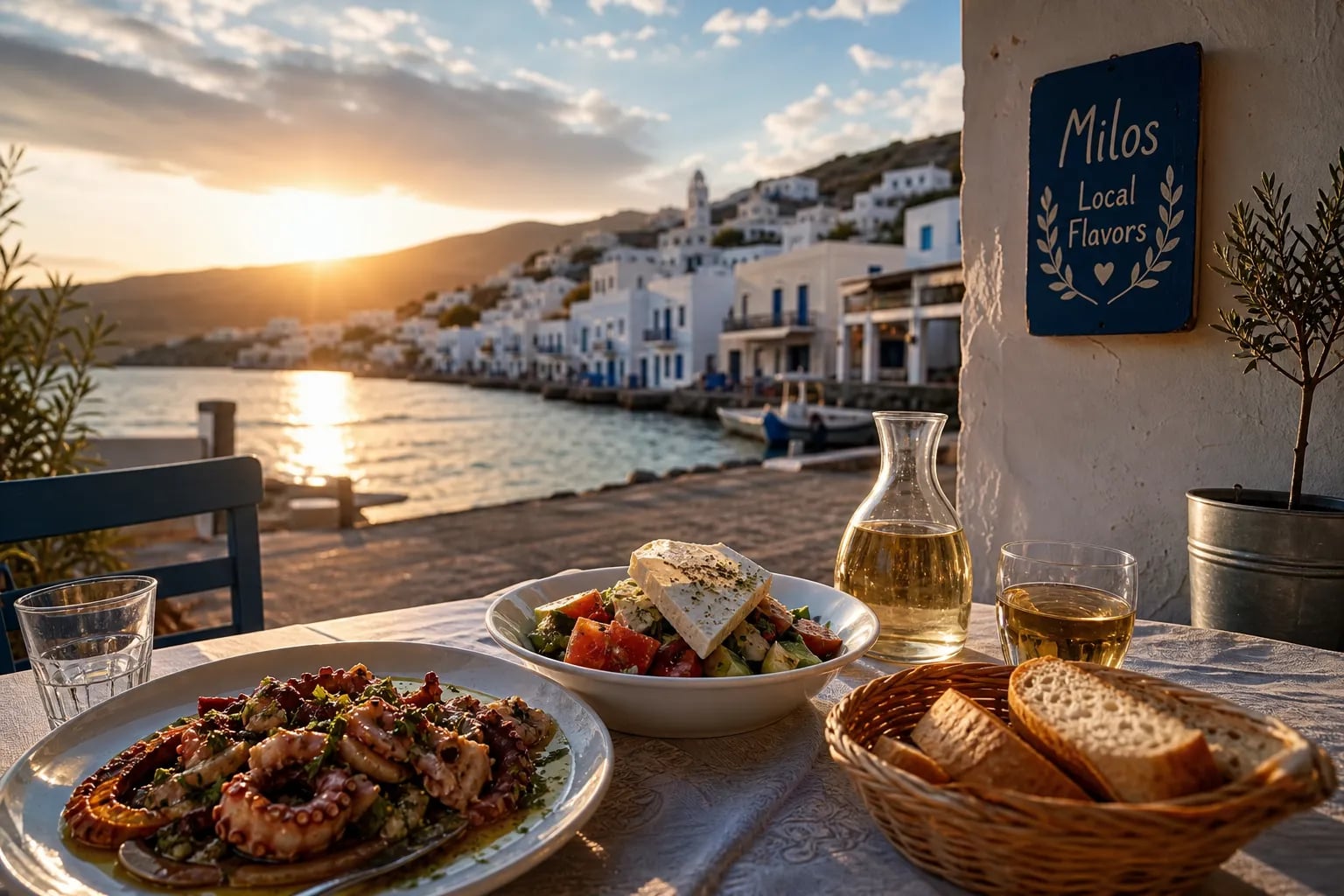
At seven in the morning in Mandrakia, a fisherman is unloading octopus from a low wooden boat, dropping each one onto the dock with a wet slap that echoes off the painted syrmata boathouses. Two hours later in Plaka, the smell of frying cheese drifts from a doorway on a narrow staircase: hot oil, sharp myzithra, a ghost of wild mint. These are the first real notes of Milos island food, and most visitors miss them entirely. They’re eating toast at their hotel by then, or scrolling a menu in Adamas that looks identical to every other menu they’ve seen in Greece.
Milos has a culinary identity unlike most other Aegean islands, built on hyper-local cheese, intensely flavored tomatoes, and dishes that don’t translate well onto laminated tourist menus. Here at The Curious Atlas, we follow the same instinct that led us off-menu in the Yucatan: past the obvious choices and toward the kitchens where real flavors actually live. That same curiosity serves you extraordinarily well on Milos. The island rewards the eater who asks one extra question, walks one street further, or arrives thirty minutes before everyone else. This guide is the map.
What Milos island food is actually built on
Most travelers arrive on Milos expecting generic Greek taverna food, and many restaurants near the port are happy to provide exactly that. The island’s real food identity runs deeper, anchored in three foundational ingredients that appear across almost every traditional dish: local cheeses, beltes tomato paste, and wild capers. Understanding these three things reframes everything you’ll order.
Milos produces two distinctive local cheeses: manoura, a firm goat’s milk cheese that intensifies as it ages, and myzithra, a soft, mild whey cheese made from what’s left after manoura production. Both are produced locally and widely used in nearby kitchens, which means most of what reaches your plate was made on the island. Beltes, sometimes called bournela, is the island’s concentrated tomato paste: local tomatoes, sun-dried until their flavor becomes almost aggressively deep, then spread on bread, stirred into stews, or used to enrich pasta sauces. Wild capers round out the pantry, appearing in everything from salads to fish dishes. These three ingredients are central to Milos’s culinary identity and give many island dishes their distinctive flavor.
The catch is that authentic versions of this cuisine are harder to find than they should be. Many restaurants in Adamas, the main port town, default to crowd-pleasing Greek standards because tourist traffic rewards familiarity. The dishes that define this island, pitarakia, skordolazana, and koufeto, often don’t appear on English-only or tourist-focused menus. Finding them requires knowing what to ask for and where to look. The sections below give you both.
Milos island food: the dishes you need to order at least once
Pitarakia are the starting point. These small half-moon pies are made from a thin handmade dough, filled with myzithra or manoura cheese and fresh mint, then fried in olive oil until the outside is golden and the inside is molten and sharp. They’re Milos’s most emblematic snack, the thing locals eat standing up, and the single best litmus test for whether a kitchen is cooking traditional food or performing it. Track these down first.
Ladenia is easier to find: a flatbread topped with tomatoes, onion, and olive oil, sometimes capers or olives depending on the kitchen. Think of it as the island’s answer to pizza, simple and satisfying. Skordolazana is considerably harder to find but worth the search: handmade pasta served with aliada, a sauce built from garlic and flour paste, finished with beltes. It’s intensely flavored and almost never appears outside traditional kitchens or private homes. When you see it on a specials board, order it immediately. Kleftiko on Milos differs from what you’ll find elsewhere in Greece: here it’s typically slow-cooked wild goat rather than lamb, baked with beltes, potatoes, and herbs until the meat falls apart and the tomato paste caramelizes into something close to a glaze.
Two more dishes worth ordering whenever they appear on a daily board: savoro fish, fried and then preserved in a vinegar-rosemary sauce that gives it an almost pickled brightness, and ntomatokeftedes, tomato fritters made from the island’s small, intensely sweet local tomatoes. For dessert, look for koufeto, white pumpkin or almonds simmered in honey, and karpouzopita, a watermelon pie made with phyllo, honey, and sesame that appears only in summer. Neither of these sweets shows up as a standard restaurant dessert; your best chance is a local bakery or a panigiri festival.
Eating by area: a town-by-town guide to Milos island food
Adamas
Adamas is the island’s most practical dining base. It has the widest range of restaurants, from harbor-front tavernas to casual gyro spots, and it’s where you’ll find O! Hamos!, consistently recommended as one of the best places for traditional home-style Greek cooking on the island. Walk-in only, no reservations; arrive before 7:30 PM during summer or plan to wait. Nostos Seafood Experience offers harbor views and a broad seafood menu for a midrange meal. The gyro spot near the port is the right call when you want to eat well for under €8. Adamas is busy and functional, the food can be excellent, but the atmosphere rewards pragmatism over ambiance.
Plaka and Trypiti
Plaka and Trypiti are where you go for a proper destination dinner. Plaka’s hilltop concentration of restaurants is compact but strong: Avli-Milos serves traditional Greek dishes with a more considered modern touch, and it’s one of the better places to find local flavors in a setting that matches them. In Trypiti, just below Plaka, Ergina is well regarded for mezedes and small plates with sunset views across the island. Utopia Café-Bar earns its iconic status on the strength of its sunset terrace, go for cocktails, not food, then walk ten minutes into Plaka or down to Trypiti for dinner. You get the view without sacrificing the meal.
Pollonia
Pollonia has a short waterfront strip with a small but consistently reliable cluster of seafood restaurants. Enalion is the most frequently recommended by locals and regular visitors: good seafood pasta, fresh fish, and a relaxed water-facing vibe that feels more polished than the port without being precious about it. Discovering Milos island food in Pollonia suits travelers who want proximity to the water and a quieter pace than Adamas provides.
Sunset dinners and fresh seafood: where to splurge on Milos
For a special meal, the fishing villages deliver something no other setting on the island can match. Astakas in Klima sits literally on the water, wedged between colorful syrmata boathouses, and serves grilled fish at sunset in one of the most visually striking restaurant settings in the Aegean. The food is simple and good; the atmosphere is the real reason to be there. Book ahead in July and August.
Medusa in Mandrakia is the other essential seafood stop. It’s consistently praised for extremely fresh octopus and seafood, served in an equally small fishing-village setting. Walk-in only, no reservations accepted. During peak season, arriving by 7:00 PM is the practical minimum; arrive later and you’re either waiting or eating elsewhere. The fried zucchini chips are worth ordering alongside whatever came off the boat that morning.
How to eat authentically on Milos without getting stuck on the tourist menu
Learning to read a restaurant before you sit down saves a lot of mediocre meals. Commonly cited signs of tourist-focused places include laminated photo menus, English-only signage, and someone standing outside actively inviting you in. The better signals point the other way: a handwritten specials board with pitarakia or beltes listed, a room where Greek families clearly outnumber tourists, a location that requires a short drive from the main port. A practical test for Milos island food lovers: ask your server if the kitchen makes pitarakia or skordolazana. If they look uncertain or have to check with someone, you have your answer about the kitchen.
On budget and timing: street food and gyros run €3, €8. A full midrange taverna dinner lands at €20, €40 per person, depending on how much seafood is involved. Waterfront special-occasion meals at places like Astakas run €50 or more per person. These are honest price ranges, not worst-case estimates.
The island’s busy season runs June through September, with July and August being the most intense months, popular restaurants feel that pressure hard. Walk-in-only spots like O! Hamos! and Medusa require early arrival, typically by 7:00, 7:30 PM, or patience with a wait. Many other well-regarded restaurants require reservations booked days or weeks in advance during August. June and September are the sweet spot: most restaurants are fully open, the crowds are manageable, and walk-ins are realistic even at better spots. September in particular suits solo travelers or couples who want the full Milos island food experience without the August pressure. The dishes taste the same; the wait does not.
The curious eater wins on Milos
Milos island food doesn’t announce itself. The dishes that define this place don’t surface on obvious menus, pitarakia fried in a side-street kitchen, slow-cooked kleftiko rich with beltes, tomato fritters that taste like nothing you’ve had anywhere else in Greece. They require asking what’s local, wandering a few streets past the harbor, and arriving early enough to actually get a table.
That’s not a design flaw in the experience. It’s the point. The same curiosity that pulls you off the resort circuit in the Yucatan, toward the market stalls and the off-menu specials and the kitchens run by people who actually care about the food, works exactly the same way on a small Aegean island. So eat slowly, ask your server what they make themselves, and order the tomato fritters whenever you see them. You won’t regret it.
Leave a Reply