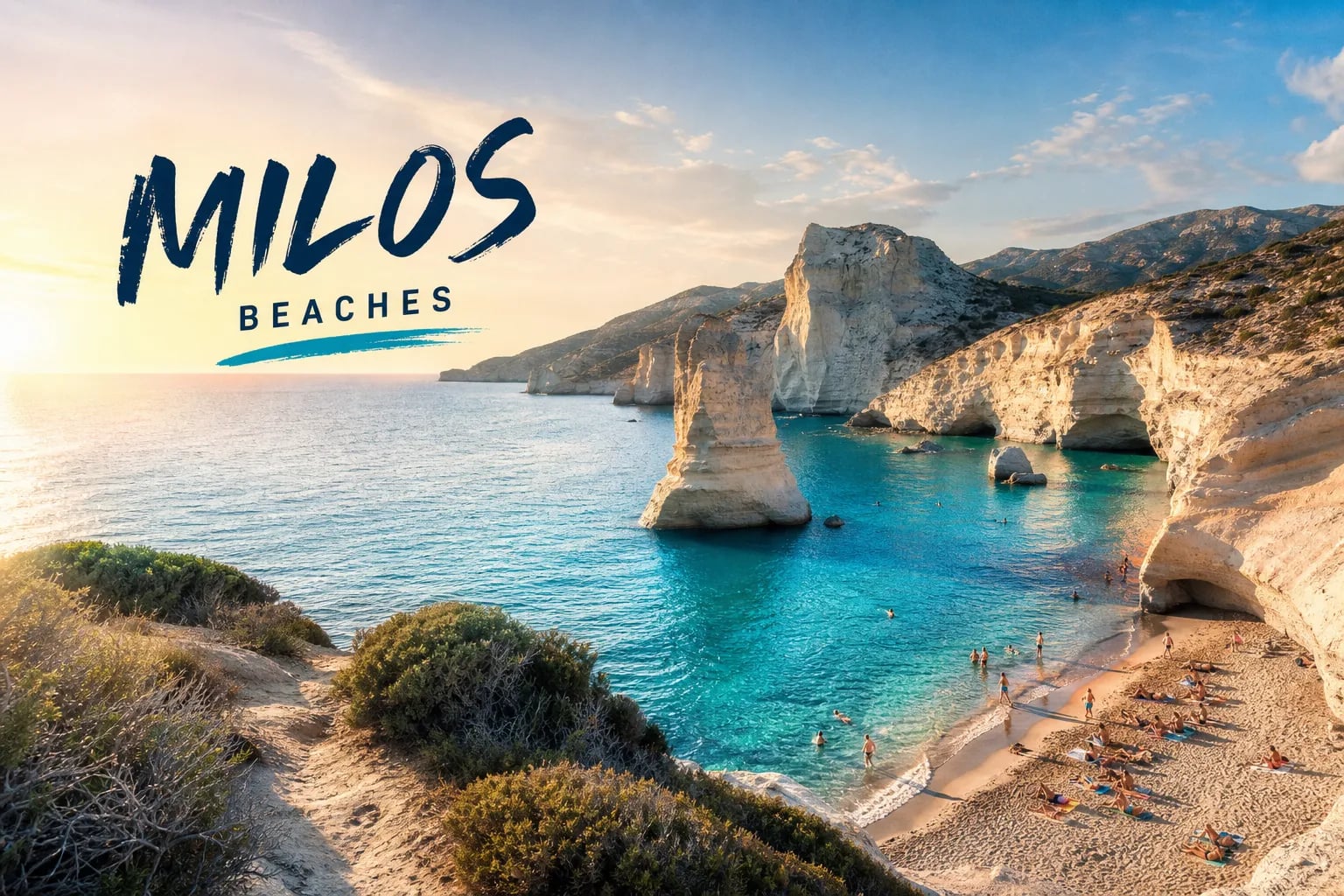
Most travelers arrive on Milos expecting a typical Greek island and leave having seen something they can’t quite explain to people back home. The coastline here isn’t pretty in the usual sense. It’s strange, volcanic, and visually disorienting in the best possible way, white pumice cliffs that look like moonscapes, sand that stays warm near the shoreline from geothermal activity below, and sea caves at spots like Kleftiko and Sykia with water so clear it looks artificial. The Milos island beaches covered in this guide range from chalk-white lunar rock to geothermal shores to boat-only coves, including Kleftiko and Gerakas, that have no practical land access whatsoever.
At The Curious Atlas, the guiding philosophy is that the best natural discoveries reward travelers who come prepared rather than just along for the ride. A pink lake in the Yucatan and a white-rock cove in the Aegean have one thing in common: they’re most meaningful when you understand what you’re looking at. This Milos beach guide organizes all 12 beaches by how you get there and what kind of experience each one delivers, so you can plan a trip that fits your pace, your energy level, and what you actually came to see.
Why Milos island beaches stop you in your tracks
The volcanic geology that shapes everything
Milos is a volcanic island, and its geology is the reason every beach looks completely different from the last. Milos and Santorini are both part of the Aegean’s volcanic arc, but their eruptions and geological histories are distinct; Milos’s volcanic activity produced its white pumice cliffs, colored mineral formations, and local geothermal features. The scenery shifts dramatically from one cove to the next, sometimes within a single short drive, something you won’t experience on most other Greek islands.
What to expect across the island
Some beaches on Milos are fully organized with sunbeds, a taverna, and paved parking. Others are raw, cliff-edged, and completely empty. The southern coast tends to be more accessible and popular; the western coast hides the most dramatic and hardest-to-reach spots. Knowing this framework before you arrive separates a genuinely rewarding Milos trip from a frustrating one spent backtracking on dirt roads.
Top Milos island beaches you can reach by car or bus
Sarakiniko: the lunar landscape everyone photographs
Sarakiniko is the most photographed spot on Milos, and it earns the attention. White volcanic rock formations cascade toward the sea in shapes that look more like a film set than a coastline. There’s parking nearby and a five-to-ten minute walk to the rock shelf, but it fills up fast, so plan to arrive before 10 a.m. if crowds aren’t your thing. This is not primarily a sandy beach, and swimming conditions vary significantly with wind and swell, so check the forecast the night before.
Firiplaka: the beach for a classic swim day
If Sarakiniko is the geology lesson, Firiplaka is the reward. Soft golden sand, clear turquoise water, and a dramatic cliff backdrop in reds, pinks, and yellows make it the best all-around beach on the island for most swimmers looking for a full day in the water. It’s reachable via a dirt road with parking close by, and there’s an organized sunbed section and a beach bar on-site. The caveat: no showers or toilets, so plan accordingly.
Paleochori, Provatas, Pollonia, and Papikinou
Paleochori is worth visiting for two reasons: the multicolored volcanic cliffs are stunning, and the geothermal activity means the sand near the shoreline is noticeably warm to the touch. It’s organized with sunbeds and tavernas (note that shower and toilet availability can vary by season), making it a solid choice for a longer afternoon. Provatas is the most family-friendly option on the island, with fully paved access, calm shallow water, and easy logistics that remove most of the friction from a beach day with young children.
Pollonia is flat, calm, and walkable from the village of the same name, making it the quietest and most low-key of the accessible beaches. Papikinou sits closest to Adamas, the main port town, and is the most convenient option if you arrive late or want an easy first-day beach without committing to a drive. Neither will blow your mind visually, but both deliver reliable swimming in calm water.
Milos island beaches that reward the extra effort
Some of the best beaches on Milos require a slightly harder approach: a steep road, a short hike, or a rope-assisted descent. The payoff is usually fewer people and a more dramatic setting than anything the road-accessible beaches can match. On Milos specifically, “harder approach” often means navigating a narrow dirt track in a small rental car or committing to a descent where there’s no paved path waiting at the bottom.
Tsigrado: the ladder beach
Park at the top, then descend through a narrow rock cleft via a fixed rope and ladder to reach a narrow cove with crystal-clear water and towering cliffs on three sides. The descent is short but genuinely tricky: worn rungs, a steep angle, and no guaranteed assistance if something goes wrong. Tsigrado is good for snorkeling once you’re down, but it’s not suitable for families with young children, anyone with knee or shoulder issues, or flip-flop wearers. Grip shoes are non-negotiable.
Firopotamos: sheltered cove down a steep road
Firopotamos is one of Milos’s nicest sandy spots, framed by greenery and set in a calm, sheltered bay. The road down can feel daunting in a rental car, but it’s manageable if you take it slowly. Parking is limited, so arriving early is essential. The sheltered position makes it the strongest pick for easy snorkeling without needing to book a boat tour.
Papafragas and Gerontas
Both are reached by short trails with uneven surfaces rather than paved roads, and both deliver dramatic cliff scenery with far fewer visitors than the road-access beaches. Papafragas is a narrow sea inlet that you look down into from above before scrambling down to swim. Gerontas is also accessible by sea, which becomes relevant when planning a boat tour itinerary along the island’s southern coastline.
Boat-only Milos island beaches (Kleftiko and beyond)
Kleftiko: the headline destination
Kleftiko is not a traditional beach. It’s a cluster of dramatic sea caves, rock arches, and limestone formations with some of the clearest water in the Aegean, and it’s accessible only by boat. Most visitors reach it on a south-coast tour departing from Adamas or Agia Kiriaki, where it serves as the anchor stop. Expect exceptional snorkeling around the underwater cave formations, calm anchoring spots, and zero facilities: no beach bar, no toilets, no shade.
A four-hour south-coast tour runs approximately €43 to €60 per person (prices vary by operator and season; book directly to confirm current rates) and covers Kleftiko plus one or two additional swim stops. That’s the right pick if you want to check the main attraction efficiently. A seven-hour sailing option adds Sykia Cave and more western coves. A full-day cruise (roughly €120 to €180) includes lunch, drinks, and snorkeling gear and covers the most ground. Book at least a day in advance during peak season, these tours sell out, especially in July and August.
Gerakas and the western coves
Gerakas is quieter and less visited than Kleftiko, with similar dramatic coastal scenery and none of the tour-group energy. Some full-day cruises also stop near Sykia Cave, a sea cave you enter by small boat that sits among the most visually striking coastal formations on the island. The western coast of Milos is its most remote and spectacular stretch, which is precisely why a full-day tour is worth the extra cost over a half-day trip if the budget allows.
Matching beaches to your travel style
Best for swimming and snorkeling
Firiplaka and Paleochori offer the best swimming conditions overall. For snorkeling without a boat, Firopotamos is the clear winner: calm, sheltered, and easy to navigate with a mask. Kleftiko is the best snorkeling on the island by a significant margin, but the boat is non-negotiable. Strong north winds can make the north-facing beaches choppy regardless of season, so checking conditions the night before is a practical habit worth building into your routine.
Best for photography and dramatic scenery
Sarakiniko at sunrise, before the tour groups arrive, is the obvious answer. Tsigrado offers cliffside drama that few other Milos beaches can match. Kleftiko produces sea-cave compositions that are genuinely hard to replicate anywhere else in Greece. All three look completely different by midday once the light flattens and the crowds arrive, so an early start pays dividends at each one.
Best for families with young children
Provatas and Pollonia are the top picks. Both have flat access, calm shallow water, and the kind of logistics that make a beach day with kids straightforward rather than stressful. Paleochori also works well because it’s organized with sunbeds and a taverna, giving parents somewhere to sit and eat without needing to pack everything themselves.
How to plan your days around Milos island beaches
Renting a car versus using the bus
Renting a small car is the single best decision an independent traveler can make on Milos. The public bus connects Adamas to several beaches, including Sarakiniko, Firiplaka, and Paleochori, with reliable summer schedules (check current timetables before you go, as frequency drops outside peak season). But it doesn’t cover dirt-road locations, and frequency is limited enough that a missed bus can cost you hours. A rental car opens up Tsigrado, Firopotamos, Papafragas, and the quieter north-coast coves that the bus simply doesn’t serve.
Timing your visit
July and August are the most crowded months, no question. Late May, June, and September offer a significantly better balance: good weather, warm water, calmer seas, and far fewer visitors at the spots that matter most. September in particular keeps the Aegean warm while giving back the quieter mornings that make a beach like Sarakiniko worth the early alarm.
What Milos gives back to travelers who plan well
Milos is one of those rare destinations where the geology does the heavy lifting. Every beach is visually distinct from the last, and the island rewards travelers who look past the first photograph they’ve already seen on social media. The best Milos island beaches aren’t necessarily the most famous ones, they’re the ones that match how you actually like to travel.
Use the categories in this guide as your personal filter. Build in easy-access beaches for rest days, save the ladder descents for the mornings when you’re feeling sharp, and schedule one full boat-tour day for Kleftiko regardless of how the rest of your itinerary shapes up. Plan those three layers and Milos will give you more than you expected.
That’s the philosophy behind The Curious Atlas: practical knowledge over generic advice, and genuine curiosity over checkbox tourism. Plan your days around Milos island beaches and you’ll get geological drama, calm swims, and boat-only coves in one trip. Milos is worth the preparation.
Leave a Reply