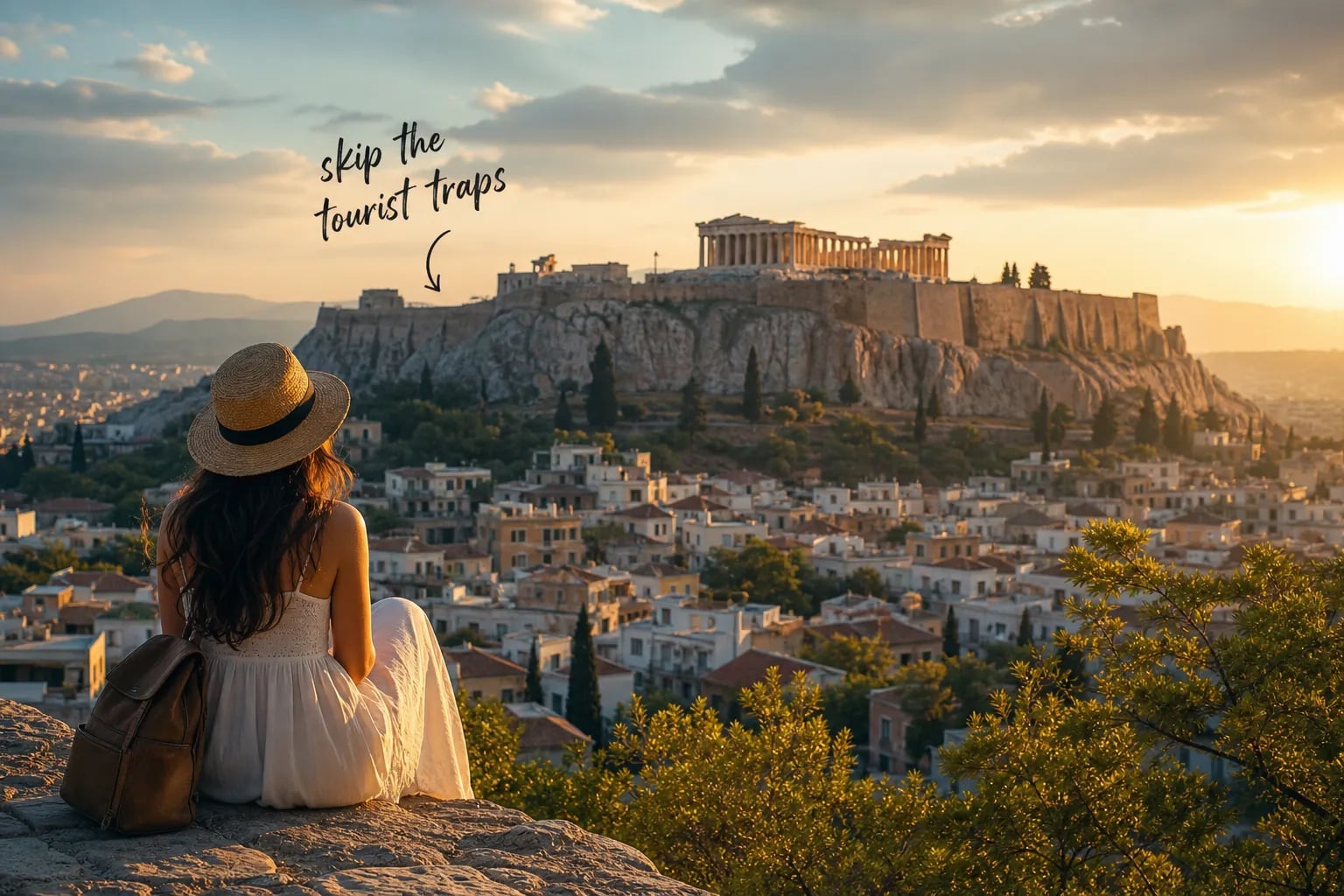
Most visitors to Athens spend three days seeing the same five things and leave convinced they know the city. They don’t. They know the monuments, the tourist-facing frontage of Monastiraki, the tavernas with laminated picture menus and the souvenir shops selling painted amphoras. To truly experience Athens like a local, you need a completely different set of decisions, starting with which neighborhood you walk into first.
The same curiosity-first philosophy that shapes every guide on The Curious Atlas, from the backstreets of Playa del Carmen to the cenote trails of the Yucatan Peninsula, applies here too. The real city is always one layer beneath the famous one. In Athens, that layer is extraordinarily rich: neighborhood kafeneions where the same regulars have sat for forty years, underground tavernas without a printed menu, Cycladic-looking alleys that feel nothing like the city surrounding them.
By the end of this local Athens guide, you’ll have a concrete 1, 3 day plan built around the neighborhoods, food rituals, and hidden corners that most visitors walk straight past. No tour bus required.
Athens Neighborhoods Guide: Where the City Actually Lives
Before you go anywhere, understand that Athens is not one city. It’s a collection of districts with distinct personalities, and which one you base yourself in shapes everything else. Knowing the character of each neighborhood before you arrive means every walk, every meal, and every spontaneous stop will make more sense.
Psyrri and Monastiraki: where the city’s energy concentrates
Psyrri is central, slightly gritty, and genuinely alive. Meze bars spill onto the street by 9 PM and working-class Athenian energy mixes with a creative crowd at the wine spots and late-night tavernas. This is the best starting point for a first-time visitor who wants to land in the middle of real Athens from day one.
Monastiraki is busier and more mixed. The main square skews tourist, but the back alleys behind it tell a different story. Market vendors sell produce and spices with no English signage. Souvlaki stalls operate with no performance for visitors. The street-level commerce here hasn’t changed in decades. Walk past the front, keep walking, and Monastiraki rewards you.
Koukaki and Pangrati: the residential Athens most visitors miss
Koukaki sits just south of the Acropolis and is one of the most walkable neighborhoods in the city. You’ll find neighborhood restaurants, local cafés, and wine bars that don’t bother with tourist menus. This is where you stay if you want to eat well every night without effort. Koukaki is consistently recommended for local, high-quality dining, ask around and it comes up within the first answer.
Pangrati is further east and even more “everyday Athenian.” Ask any Athenian where residents actually eat and Pangrati comes up within the first two answers. Both neighborhoods reward slow walking and spontaneous stops over any structured itinerary, the kind of authentic Athens experience that doesn’t appear on any map.
Exarchia: low prices, street art, and zero pretense
Student-heavy, politically charged, and visually busy with murals and graffiti, Exarchia is the Athens that doesn’t try to impress you. Cheap, genuine food, alternative bars, and a Saturday farmers market on Kallidromiou Street make it one of the most underrated morning stops in the city. If you want to understand the full range of what Athens actually is, spend at least a few hours here.
Athens Like a Local: Where and What to Eat
Food is not just sustenance in Athens. It’s social architecture. The way residents eat, when they eat, and where they eat tells you more about the city than any museum. Understanding a few core rituals before your first meal changes everything.
Kafeneion culture: why the coffee stop matters
A kafeneion is not a café in the Western sense. It’s a neighborhood institution, the place where locals sit for an hour over one Greek coffee, read a newspaper, and argue about football. The bill doesn’t come until you ask for it, and in a traditional kafeneion the pace is deliberately unhurried. Order a Greek coffee or a frappe and simply sit. That’s the entire activity, and it’s one of the best entry points into local life this city offers. The kafeneion is where you begin to understand Athens’ rhythm before anything else.
The tavernas worth knowing by name
Diporto is an underground taverna near the central market, reportedly operating since 1887, traditionally cash-only and with no printed menu, details that tell you everything about its priorities. You eat what they have, you pay what they say, and you leave with a clearer sense of what Athens tasted like before the internet. Karavitis, in Pangrati, is a neighborhood classic that appears on every local recommendation list for a reason: honest food, low prices, and no fuss whatsoever.
Oikonomou in Petralona is a long-established neighborhood institution that has never bothered with tourist-facing marketing. Ta Karamanlidika tou Fani is a deli-taverna hybrid in central Athens that blurs the line between market and restaurant. Order charcuterie, cheese, and wine at a standing counter and stay as long as the food allows.
Monastiraki’s back alleys and the Varvakios central market
The Varvakios central market on Athinas Street is a sensory experience as much as a food destination. Fish halls give way to meat stalls, cheese counters, and produce vendors that locals have relied on for generations. This is a genuine Athens food guide stop, not a tourist attraction, but an active working market. A weekday morning is generally the best time to visit; arriving earlier rather than later helps you see the market in full swing before the crowds build. Wander the surrounding alleys too, where loukoumades carts and vendors selling produce operate with no English signage anywhere. This is what the city actually eats.
Hidden Gems and Athens Insider Tips Most Visitors Never Find
Athens has layer after layer of history and character beyond the Acropolis, and most of it sits in plain sight. The barrier isn’t access. It’s the willingness to walk one more block than the tour group does.
Anafiotika, Filopappou Hill, and Kerameikos
Anafiotika sits inside Plaka but feels like a Cycladic island, whitewashed walls, cats on doorsteps, no souvenir shops in sight. Go early morning to have it almost to yourself. It’s one of the few places in central Athens where you can stop walking and feel actual quiet.
Filopappou Hill offers one of the best Acropolis views in the city, is almost always uncrowded, and connects to a pine-tree walk that takes about 20 minutes and feels a world away from the tourist center. Kerameikos is an ancient cemetery site that gets a fraction of the Acropolis crowd and rewards slow visits with genuine historical atmosphere and a small, excellent museum. Current admission runs around €8 in summer and €4 in winter, and the site closes periodically for conservation work, so verify before you go.
The First Cemetery, Bey Hammam, and open-air cinema evenings
The First Cemetery of Athens is often described as an open-air neoclassical sculpture park. It’s genuinely beautiful, filled with 19th-century marble work, and almost no tourists know it exists. The Bey Hammam is a 16th-century Ottoman bathhouse tucked behind a lane in Plaka that most visitors walk straight past without looking up. Access conditions for both can vary, so check locally before you visit, but neither requires a complicated detour to find.
Cine Thisio and similar outdoor screens are a classic Athenian summer ritual. Watching a film under the stars with the Acropolis lit up in the background costs around €7.50 to €10 depending on the evening, and it’s the kind of experience that can’t be replicated on a tour itinerary. Screenings typically begin around 9 PM in peak summer. Go once and you’ll understand why Athenians don’t want to be anywhere else in July.
The Sunday flea market and Saturday morning at Kallidromiou
Monastiraki’s Sunday flea market transforms the neighborhood into something between an antique bazaar and a city-wide garage sale. Vendors set up around Avissinias Square from around 7 AM; locals who are serious about finding something arrive before 9. By noon, the best pieces are gone. Kallidromiou market in Exarchia runs on Saturdays, with honey, herbs, olives, and produce sold by small producers. It’s a 45-minute stop that tells you more about daily Athens than any monument.
Getting Around Athens Without Overpaying
Athens is not an expensive city to navigate. The public transport network is well-organized, central distances are short, and the two biggest mistakes visitors make are taking taxis for 10-minute walks and buying single tickets when a day pass would cost less.
The metro and walking: your two best tools
The Athens metro is fast and reliable for the longer journeys, airport to center, center to Piraeus, and neighborhood-to-neighborhood when the distance is too far to walk. In the historic center, including Plaka, Monastiraki, Psyrri, and Syntagma, walking is almost always faster than waiting for any vehicle. The streets are short, the sightlines are interesting, and the person on foot notices things no one in a taxi ever will.
What transit actually costs in 2026
A single city ticket costs €1.20, valid for 90 minutes across the metro, bus, trolleybus, and tram. The 24-hour pass runs €4.10 and covers unlimited local travel. For multi-day trips, the 5-day pass costs around €8.20 to €9.00. The airport metro is a separate fare at €9; the X95 express bus is the budget alternative at €5.50, running 24/7 between the airport and Syntagma. Always validate your ticket at the start of every trip. Inspectors do check, and there are no exceptions.
The Unwritten Rules of Athens That Matter
Every city has a set of social conventions that don’t appear in any official guide. Athens is no different. Understanding these before you arrive means you stop being a confused visitor about 24 hours earlier than you otherwise would.
Athens eats late: how to work with the rhythm, not against it
Dinner in Athens typically starts around 9 PM, and many restaurants are noticeably quiet earlier in the evening, show up at 7 and you may find yourself eating while the staff are still setting tables around you. The late dining culture isn’t an inconvenience. It’s the city’s social architecture. Plan your afternoon so that you’re genuinely hungry after 9, and you’ll eat exactly like a local without any additional effort. Lunch runs roughly from 2, 4 PM, then a gap, then the evening restarts after 8.
Tipping, reservations, and a few habits worth dropping
Tipping is appreciated but not obligatory. Round up the bill or leave small change at cafés; around 5% is thoughtful for a sit-down dinner. For popular tavernas on weekends, call ahead, restaurants fill up from 9:30 PM onward, not during the tourist dinner window. Avoid the open-palm “moutza” gesture entirely. In older buildings, use the bin rather than flushing toilet paper. Cross streets carefully: Athenian drivers treat crosswalks as suggestions more often than not.
Athens Like a Local: A 1, 3 Day Itinerary
Here’s how the pieces fit together. Think of this less as a schedule and more as a friend sketching a plan on a napkin, the framework is there, but the best moments will be unplanned.
Day 1: arrive in a neighborhood, not a monument
Drop your bags in Koukaki or Psyrri, then walk through the backstreets, not toward the Acropolis yet. Find a kafeneion, order a Greek coffee, and sit until you’ve absorbed the pace. Then walk to the Varvakios central market for a late-morning browse. Eat a proper lunch at a counter on Athinas Street. In the evening, sit down to dinner at a Psyrri taverna no earlier than 9 PM. Order meze, share everything, and do not rush the table.
Day 2: markets, hidden corners, and a slower afternoon
If it’s Saturday, start at Kallidromiou market in Exarchia. If it’s Sunday, go to the Monastiraki flea market and arrive before 9 AM. Take the alleys, not the main roads. In the late morning, walk to Anafiotika before the heat builds, then continue to Kerameikos for a quiet hour with the site. Head to Filopappou Hill for a late-afternoon view of the Acropolis with almost no crowds. In the evening, open-air cinema if the season allows, otherwise wine and small plates in Pangrati.
Day 3 (optional): depart at your own pace
Revisit one neighborhood that earned a second look. Eat one more meal somewhere with no English menu. Take the metro or walk to your departure point, and validate your ticket. The unhurried, curiosity-first rhythm described in this guide is exactly what shapes every destination covered on The Curious Atlas, whether that’s a Saturday in Athens or a slow week along the Yucatan Peninsula.
The city beneath the city
Experiencing Athens the way locals do isn’t a special skill or a closely guarded secret. It’s a decision to slow down, move a few blocks away from the main sights, and pay attention to what’s actually happening around you. The kafeneion on the corner. The market stall with no English sign. The alley that looks like it goes nowhere but doesn’t.
The 1, 3 day framework in this guide doesn’t require more time than a standard Athens trip. It requires different priorities. Put Koukaki before the Acropolis. Put the central market before the souvenir strip. Put the late dinner before the early museum queue. Every one of those decisions brings you closer to the city that residents actually live in, and that’s what exploring Athens like a local really means.
The Curious Atlas covers more of Athens and dozens of other cities with the same curiosity-first approach to slow travel. Start here, then keep going.
Leave a Reply