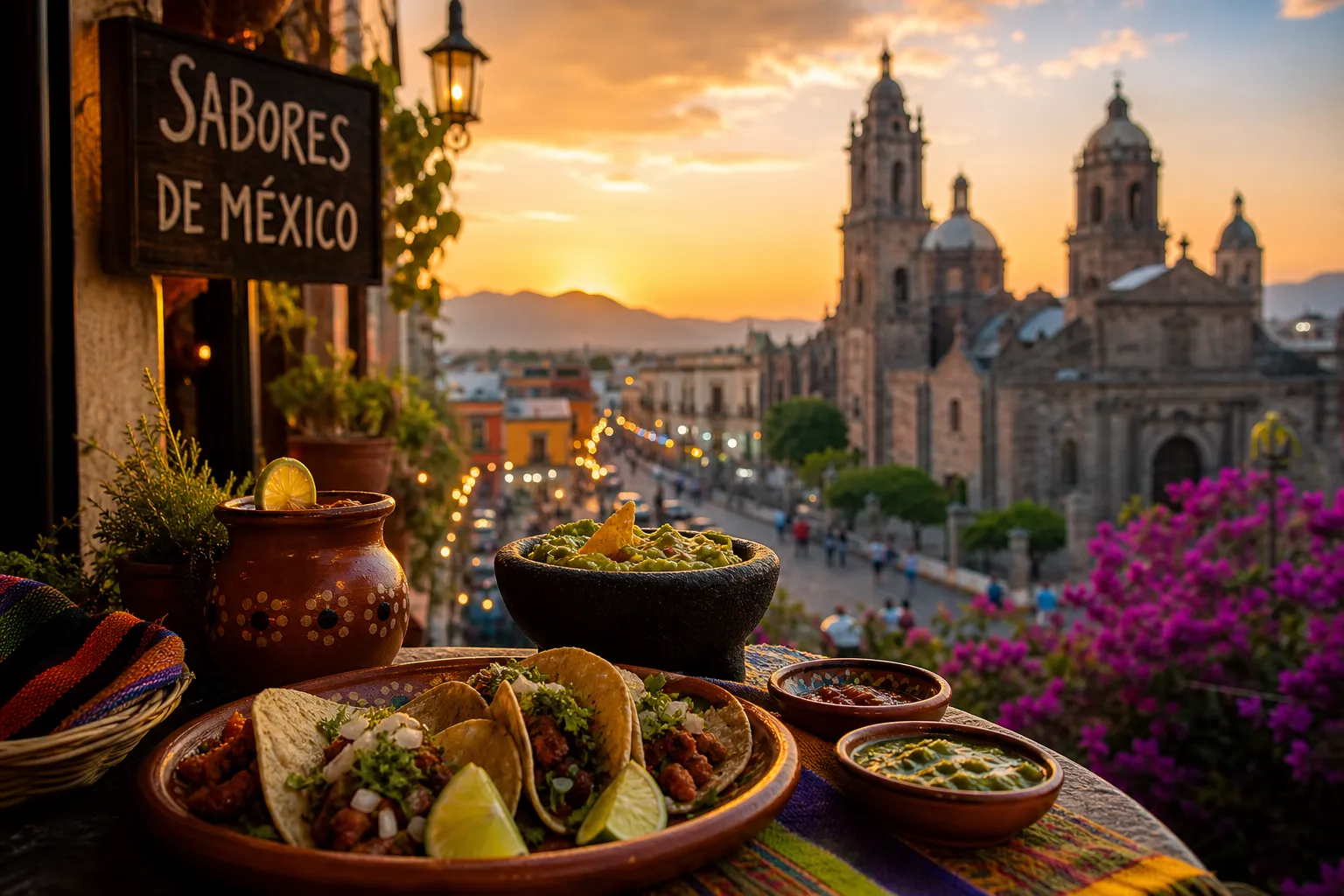
The most honest version of any place doesn’t live in its ruins or its beaches. It lives in what people cook for each other on an ordinary Tuesday, in the market stalls that open before sunrise, in the smoke rising from a pit that’s been burning all night. Food is the fastest shortcut to a place’s interior life, and nowhere in Mexico makes that clearer than the Yucatan Peninsula. This 7-day Mexico food tour itinerary traces that interior life from Mérida’s ancient market culture to Tulum’s coastal seafood scene, one market stall at a time.
Most food travel itineraries for Mexico default to Mexico City and Oaxaca, two undeniably great food cities. But the Yucatan operates on its own logic entirely, with a culinary tradition so distinct it barely resembles the rest of Mexican cooking. This seven-day route through Mérida, Playa del Carmen, and Tulum is designed to trace that tradition from its roots to its coastline. Here at The Curious Atlas, this is exactly the kind of slow, curious food travel we live for.
Why the Yucatan is in a League of Its Own for Food Travel
A cuisine shaped by isolation and ingenuity
For centuries, the Yucatan Peninsula was effectively cut off from the rest of Mexico by dense jungle and geography. That isolation produced something remarkable: a cuisine with its own completely distinct DNA. Achiote-based marinades, slow pit cooking called pib, sour orange where the rest of Mexico uses lime, and Mayan ingredients and preparation methods that are uncommon elsewhere in Mexico. It’s a culinary tradition that predates the Spanish by centuries and absorbed colonial influence on its own terms, one with deep pre-Hispanic roots and distinctive techniques that evolved locally in ways no other Mexican region fully replicated.
Three cities, three food personalities
Mérida, Playa del Carmen, and Tulum each tell a different chapter of the same story. Mérida is the market-driven, working-class food capital of the peninsula, where the cooking is ancient and the breakfast starts before the sun is fully up. Playa del Carmen sits at a crossroads where Yucatan tradition collides with Mexican regional street food and Caribbean flavor, producing something more eclectic and surprisingly good. Tulum is the coastal slow-dining scene, built around fresh seafood, jungle ingredients, and a pace of eating that rewards patience.
Why this route works as a seven-day food journey
The pacing logic is straightforward: two days per city, one transition day built into the natural flow of the route. The whole thing can be done without a car using the ADO bus system, which runs frequently and comfortably between all three destinations. The Curious Atlas’s culinary guides for the Yucatan are worth reading before you land, so you arrive with context rather than confusion. And if this Mexico food tour itinerary leaves you wanting more, the Oaxaca food tour itinerary and Mexico City market scenes offer equally deep dives into different regional traditions.
7-Day Mexico Food Tour Itinerary Overview
Before diving into each day, here’s the shape of the full route: two days eating through Mérida’s markets and cochinita pibil culture, two days navigating Playa del Carmen’s street taco scene and lunch counters, two days in Tulum focused on fresh ceviche and coastal mariscos, and a final logistics day that covers how to move between cities and what the whole trip actually costs. This Mexico food tour route is designed to be adapted rather than followed rigidly, the best meals on this itinerary will be the ones you stumble into.
Days 1, 2: Mérida and the World of Cochinita Pibil
Where to eat cochinita pibil, and why it tastes different here
Cochinita pibil is slow-roasted pork marinated overnight in achiote paste and sour orange, wrapped in banana leaves, and cooked in an underground pit until it falls apart completely. What you get served on a warm tortilla with pickled red onion at a Mérida market on a Sunday morning bears almost no resemblance to what gets labeled cochinita pibil in restaurants outside the Yucatan. The traditional use of sour orange and pit cooking gives the real version a depth, more acidic, more complex, and more fragrant, that versions adapted for a wider audience rarely match, as any local food guide to the peninsula will confirm.
The best starting points are Mercado Lucas de Gálvez and the Sunday morning vendors at Mercado de Santa Ana and Mercado Domingo near Plaza Grande. Mercado de Santiago is another strong option, with La Lupita inside the market consistently delivering the genuine article at breakfast prices. For a sit-down version with full market theater around you, La Chaya Maya and Manjar Blanco are both well-regarded by locals and serious food travelers alike.
A morning at Mercado Lucas de Gálvez
Arriving at Mérida’s central market before 9am means getting the best of everything before the heat makes standing over a food stall uncomfortable. The market rewards early arrivals with breakfast tamales, papadzules (egg-stuffed tortillas covered in pumpkin seed sauce), fresh juices, and the lunch counter culture that defines how Mérida actually eats. Panuchos typically run around 15 MXN each, while sopa de lima commonly lands in the 40 to 80 MXN range depending on the stall, either way, a full breakfast here costs a fraction of what you’d spend at a sit-down restaurant and sets the tone for the entire trip.
Day 2: slow afternoons, panuchos, and the evening food scene
Mérida’s food scene rewards wandering more than planning. The afternoon rhythm involves salbutes and panuchos from street carts, an ice-cold coconut water, and the occasional detour toward something grilling down a street you weren’t planning to walk down. The evening brings the city’s colonial-courtyard restaurants to life, where you can sit down to a proper Yucatecan dinner surrounded by architecture that makes the meal feel like an event. The best discoveries in Mérida are almost always the ones that weren’t on any list.
Days 3, 4: Playa del Carmen’s Street Taco Scene and Market Finds
Where the real tacos are (hint: not on 5th Avenue)
Fifth Avenue in Playa del Carmen has its moments, but the street food that actually matters is one or two blocks inland, where local taquerías serve tacos al pastor and grilled meats to construction workers and families from dawn onward. The 30th Avenue corridor is the local alternative: the Mega grocery store parking lot area hosts some of the best birria tacos in town, and Super Aki nearby has carts worth stopping at. Carnitas Teresita on 1 Sur and Avenida 20 is a genuine local favorite, well outside the tourist corridor.
The colonia neighborhoods and the street markets that run on select weekdays offer the more honest eating experience. Plaza 28 de Julio comes alive with street food stalls on Friday, Saturday, and Sunday, with the kind of casual, low-cost local snacking that you won’t find anywhere near the beach-facing restaurants.
The lunch counter culture and what it teaches you
The local market lunch counter is one of Mexico’s great unsung institutions: a plastic table, a hand-written menu on a chalkboard, and a two-course comida corrida for less than five US dollars. This is where Yucatan home cooking meets Mexican street food traditions in the same room. Dishes like poc chuc (grilled pork with sour orange), tacos de canasta, and black bean soups appear alongside each other on menus that change daily depending on what’s available.
Eating seafood by the water without the tourist markup
Good ceviche and fresh mariscos exist near the beach in Playa del Carmen, but they’re found at taco stands and market stalls rather than at beachfront restaurants with English-language menus. The price gap between a streetside ceviche cup and the same thing served at a table with an ocean view is significant, and the quality difference usually favors the street stall. Knowing where to look is everything, and the answer is almost always: closer to the street, farther from the sand.
Days 5, 6: Tulum’s Coastal Food Culture and the Art of Fresh Ceviche
What makes Tulum’s ceviche different
The local ceviche style in Tulum is built around fresh fish or shrimp “cooked” in lime juice with habanero, cucumber, and jícama, often served in a cup or a tostada shell at a streetside stand rather than at a sit-down restaurant. The best versions are concentrated in the Tulum pueblo (town center) rather than the hotel zone, where prices are generally lower and the product fresher, according to local reviews and regulars who know both sides of town well. El Camello Jr. is consistently named as a local favorite for ceviche, with generous portions and a neighborhood feel the hotel zone can’t replicate.
Mariscos, fish tacos, and the morning seafood ritual
Eating seafood in Tulum follows a clear rhythm: the freshest fish arrives in the morning, and the best spots are reliably the least obvious ones. Fish tacos from a street cart, fresh coconut water, and the mariscos stalls that open early and sell out by noon define the Tulum morning for anyone paying attention. The hotel zone sleeps late; the pueblo wakes up hungry. Showing up before 9am at the right stands means eating the best the town has to offer before the crowds find the same spots at noon.
A slow afternoon: eating around a cenote visit
Day 6 pairs naturally with a cenote visit, and the midday heat becomes a useful excuse to eat slowly rather than rush. A late lunch of poc chuc or grilled fish, a fresh agua fresca, and a long sit in the shade after swimming is exactly the kind of day the slow travel philosophy is built for.
Day 7 and the Logistics That Hold This Itinerary Together
Getting between Mérida, Playa del Carmen, and Tulum
The ADO bus system is the most practical and affordable option for this entire Mexico food tour route. Mérida to Playa del Carmen runs roughly 4 to 4.5 hours, with fares in the range of 500 to 900 MXN depending on class, and departures are frequent throughout the day. Playa del Carmen to Tulum takes about one hour, with very regular service that operates almost like a shuttle. Buses are air-conditioned, reliable, and the default choice for independent travelers throughout the Yucatan. Booking ADO tickets a day in advance during high season avoids the stress of sold-out departures.
What this trip actually costs
Budget travelers eating mostly at markets, street stalls, and lunch counters commonly report daily food costs in the low tens of USD, often somewhere in the $15 to $25 USD range, though actual costs vary by city and how strictly you stick to local spots. Adding one or two sit-down restaurant meals per day can bring that closer to $35 to $50 USD. For comparison, guided culinary tours in Mexico City typically run $60 to $130 USD per person for a half-day experience; Yucatan-specific operators vary, so check current pricing directly with local tour providers before booking.
Guided food tour vs. going solo: how to decide
This is a genuine question, not a binary choice. A guided tour makes the most sense for Day 1 in Mérida, where the central market’s scale and the neighborhood food culture can feel disorienting without context. Self-guiding works better in Tulum, where the best food is found by wandering the pueblo and following instinct.
Build Your Mexico Food Tour Itinerary Starting in Mérida
Food is the fastest way to understand a place on its own terms. Mérida gives you depth: a cuisine with deep Mayan roots, a market culture that takes breakfast seriously, and a pace that rewards lingering. Playa del Carmen gives you the crossroads energy of a city where Mexican regional cooking collides and remixes itself daily. Tulum gives you the coast, the slowness, and the reminder that the best meal of the trip is usually the one you find by accident.
This 7-day Mexico food tour itinerary through the Yucatan is designed to be adapted, not followed rigidly. Skip the lunch counter one afternoon if something else smells better. Stay an extra hour at the market if the tamale vendor strikes up a conversation. Trust your instincts when something looks right, because the Yucatan has a way of rewarding that kind of attention. And if the peninsula leaves you hungry for more, a Mexico City food tour itinerary or an Oaxaca food tour itinerary make natural extensions of the same culinary curiosity.
Start in Mérida and build the rest of the trip from there. Everything else will follow the smell of something cooking.
Leave a Reply