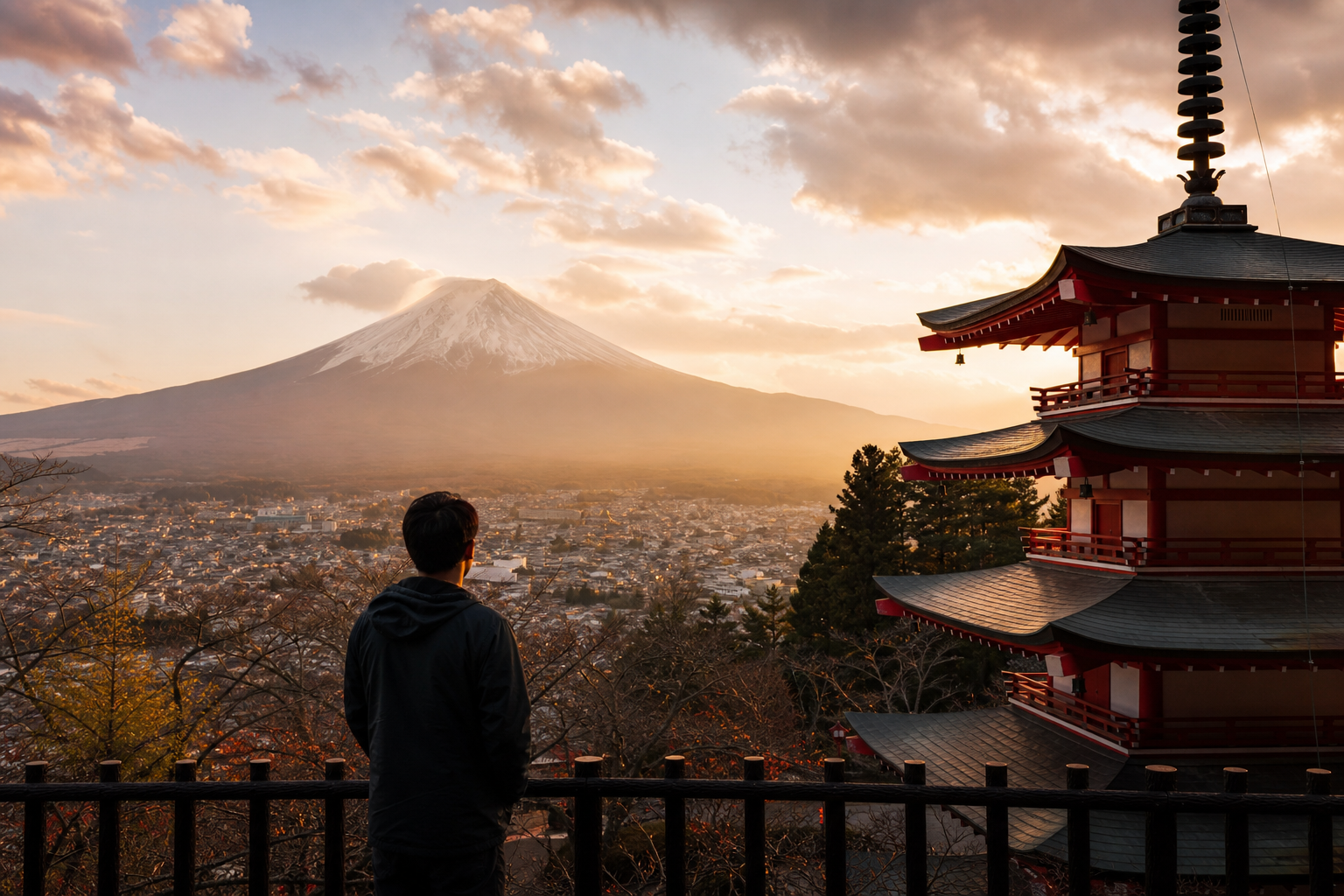
Picture a shinkansen platform in Tokyo, minutes before departure. Two travelers stand at the door: one clutches a 28-inch suitcase, tries to angle it through the narrow aisle, and immediately blocks every row behind her. The other boards carrying nothing but a small daypack, finds a seat in seconds, and pulls out a book. Her suitcase is already on a van heading to Kyoto, exactly where she’ll be tomorrow morning. That’s luggage forwarding in Japan, and it changes everything about how a trip feels.
That second traveler isn’t lucky. She just understood something most first-time visitors miss entirely: Japan has spent decades building infrastructure specifically designed to reward people who travel without their bags. Takuhaibin, Japan’s nationwide parcel and baggage forwarding network, is the system that makes it possible. Once you’ve used it, dragging a rolling suitcase through a Japanese train station will feel like something that happened to someone else.
Mastering a destination’s local logistics is what separates someone enduring a trip from someone actually inhabiting it. This guide gives you everything you need to use luggage forwarding in Japan confidently: costs, timing, prohibited items, hotel coordination, and exactly where to go.
What takuhaibin is and why Japan built it
Japan’s logistics culture rests on a simple premise: things should arrive on time and undamaged, without the recipient needing to think too hard about the process. Takuhaibin is the consumer expression of that idea. It isn’t a tourist gimmick or a premium add-on. It’s the backbone of how Japanese people have traveled domestically for decades.
The service that reinvented domestic travel
Yamato Transport launched its TA-Q-BIN system in the 1970s as a door-to-door parcel delivery service, born partly from the inefficiencies exposed by Japan’s oil crisis. What began as a freight solution quickly became something no one anticipated: the default way Japanese travelers move their bags between cities. Today, Yamato, operating under the Kuroneko Yamato brand, recognizable by the black cat logo, is the dominant carrier, with Sagawa Express as the main alternative. Both networks cover all of Japan, 365 days a year, including rural areas that take a day or two longer to reach.
The reliability figures are worth stating plainly. Insured parcels are covered up to ¥300,000, on-time performance rivals any postal network in the world, and the 30kg weight limit per bag handles even the most enthusiastic packers. Japanese travelers use this service as a default for any multi-city itinerary, not as a workaround, but as standard practice.
How luggage forwarding in Japan works, start to finish
The process is tourist-friendly once you understand the flow. Before handing over your main bag, pack a small daypack with one to two days of essentials: a change of clothes, toiletries, your documents, chargers, and any electronics. Your main luggage travels separately and arrives at your next hotel by evening. You’ll be on a train with your hands free.
Where you can drop off your luggage
There are four practical drop-off points, and they’re not equal in convenience. Hotels and ryokans are overwhelmingly the easiest option for first-timers: front desk staff handle the paperwork, fill out the form, and coordinate pickup. Convenience stores like 7-Eleven and FamilyMart accept drop-offs (look for the Kuroneko TA-Q-BIN signs), though they don’t offer delivery directly to your door. Airport counters at Narita and Haneda arrivals halls work well if you’re forwarding bags on day one, both airports maintain dedicated baggage delivery counters. For hotel-to-hotel forwarding arranged before you even land, platforms like Klook and Yamato’s own website allow you to pre-book and schedule delivery windows in advance.
Filling out the form and completing the handoff
The forwarding form collects a specific set of details. Have these ready before you approach the counter:
- Your name (as the recipient)
- The destination hotel’s full name, address, and phone number
- Your check-in date at the next stop, this is critical so the receiving hotel knows whose bag to expect and when
- Your requested delivery date and any preferred time slot
Staff measure and weigh the bag, calculate the fee, take payment in cash or by card, and hand you a receipt with a tracking number. The standard cutoff for next-day delivery is noon at most hotels, though many convenience stores accept drop-offs until 8 PM.
Luggage forwarding in Japan, costs and delivery times
Luggage forwarding in Japan is significantly cheaper than most travelers expect. For a standard checked-size suitcase on a Tokyo-to-Kyoto route, you’re looking at roughly ¥2,000 to ¥2,850, less than a bowl of ramen and a beer.
Typical rates by route and bag size
Pricing is calculated by total bag dimensions (length plus width plus height) and distance. Using the Tokyo-to-Osaka route as a benchmark: a small bag at 60cm total runs around ¥1,600; a medium suitcase at 140cm lands between ¥2,500 and ¥2,850; a large suitcase at 160cm costs approximately ¥3,170. Longer routes, Tokyo to Hokkaido or Tokyo to Okinawa, can reach ¥4,000 to ¥7,000 per bag. The hard limits across the network are 30kg per bag and 200cm total dimensions. Cash and card are both accepted at most locations, with a small surcharge for cashless payment at certain drop-off points.
Same-day vs. next-day: what’s realistic
Next-day delivery is the standard, drop your bag in the morning and it arrives at your next hotel by evening. Same-day forwarding exists for same-region routes but requires confirmation by phone with Yamato before you count on it. For airport deliveries specifically, build in a minimum of 48 to 72 hours. Trying to forward a bag from a hotel to Narita on the morning of your departure flight is not a plan. It’s a gamble.
Coordinating with hotels, ryokans, and airports
The forwarding process is smooth on its own. The friction comes from treating it as an afterthought rather than a planned step in your itinerary. Hotels across Japan handle baggage forwarding as routine business, but they need specific information from you, and timing matters.
What hotels and ryokans need from you
When you ask a hotel to forward your luggage, have the following ready: your name, the receiving hotel’s full name and address, that hotel’s phone number, and your check-in date at the next destination. That check-in date is the detail most travelers forget, and it’s what the receiving property uses to identify whose bag is sitting in their storage room. Most hotels will move your arrived bag directly to your room before you check in. The noon cutoff for next-day delivery is the one deadline worth writing on your hand. You can also schedule delivery up to seven days out if your itinerary requires it.
Airport forwarding: timing and terminal rules
Both Narita and Haneda have Baggage Delivery counters in their arrivals halls, and forwarding directly from the airport to your first hotel is one of the smartest moves you can make on arrival day. You’ll need to specify your terminal and flight number. Going the other direction, shipping from a city hotel to the airport works particularly well when you’re flying out and don’t want to haul heavy bags on the train. Drop your suitcase at the hotel two days before your flight, travel light to the airport, and collect it at the departure counter on the day you leave.
What you can’t ship and how to prep your bag
Most travelers forward clothes and toiletries without hesitation, and that instinct is correct. The problems arise when people assume that “luggage forwarding” means anything goes.
Items that will get your bag refused
The most important rule: keep all electronics in your daypack, not your forwarded bag. Lithium batteries, in phones, laptops, and power banks, are prohibited. Flammable cosmetics, aerosol cans, nail polish, and perfume are also refused. Cash, passports, and valuables exceeding ¥300,000 in total are not covered by insurance and are prohibited by policy. Perishable food, alcohol, and meat products are restricted. The practical shorthand is clean: forward clothes, shoes, and toiletries. Everything electronic, high-value, or travel-critical stays with you.
Labeling and packing tips to avoid delays
In most cases, your hotel handles the shipping label entirely. What you need is your destination hotel’s name and full address, either written down or pulled up on your phone, so staff can fill in the form accurately. If you’re dropping off at a convenience store, staff will walk you through each field. Your bag needs to be sealed and structurally sound for transit. If your suitcase shows signs of wear or lacks a handle cover, Yamato sells reinforced shipping bags at convenience stores for around ¥500, and using one is worth the small cost.
Providers and how to book your first forwarding
There are a handful of ways to arrange luggage forwarding in Japan, and the right one depends on where you are and how much planning you’ve done before arrival.
Yamato TA-Q-BIN: the default choice for good reason
Yamato Transport is the clear market leader and the natural starting point. Its TA-Q-BIN network, also written as takkyubin, covers every corner of Japan, runs 365 days a year, and offers English-language support online and through the Kuroneko Members app. Major airports and train stations have “Hands-Free Travel” certified counters built specifically for international tourists. Sagawa Express is a legitimate alternative and many hotels work with both carriers, but Yamato’s English resources, network density, and tourist-specific infrastructure make it the recommended starting point for anyone using the service for the first time. For details about Yamato’s booking options and round-trip/both-ways services see their service pages on the Kuroneko site: Kuroneko Yamato services.
Booking through convenience stores, hotels, and apps
Each channel suits a different situation. The hotel front desk is the most seamless: drop your bags the evening before departure for a completely stress-free morning. Convenience stores work well when you’re staying somewhere without a traditional front desk, an Airbnb or a hostel, for instance. For pre-booking hotel luggage forwarding in Japan before you arrive, both Yamato’s website and Klook let you arrange everything in advance, including delivery windows aligned with your check-in times.
The real value of traveling light through Japan
Return to that shinkansen platform for a moment. The traveler with the daypack isn’t just more comfortable. She’s moving through Japan the way Japan was designed to be moved through: fluidly, curiously, without the friction of managing objects that outweigh the experience of being somewhere.
Every destination has systems built for people who take the time to learn them. Takuhaibin is Japan’s gift to the traveler who does. It’s a small logistical decision, forwarding a bag, filling out a form, that quietly transforms the texture of an entire trip.
Book your first luggage forwarding Japan service before you arrive. Arrange it at your first hotel on your first morning. Then walk out into whatever city you’re in with nothing on your back but the day itself. The rest of the country opens up from there.
Leave a Reply