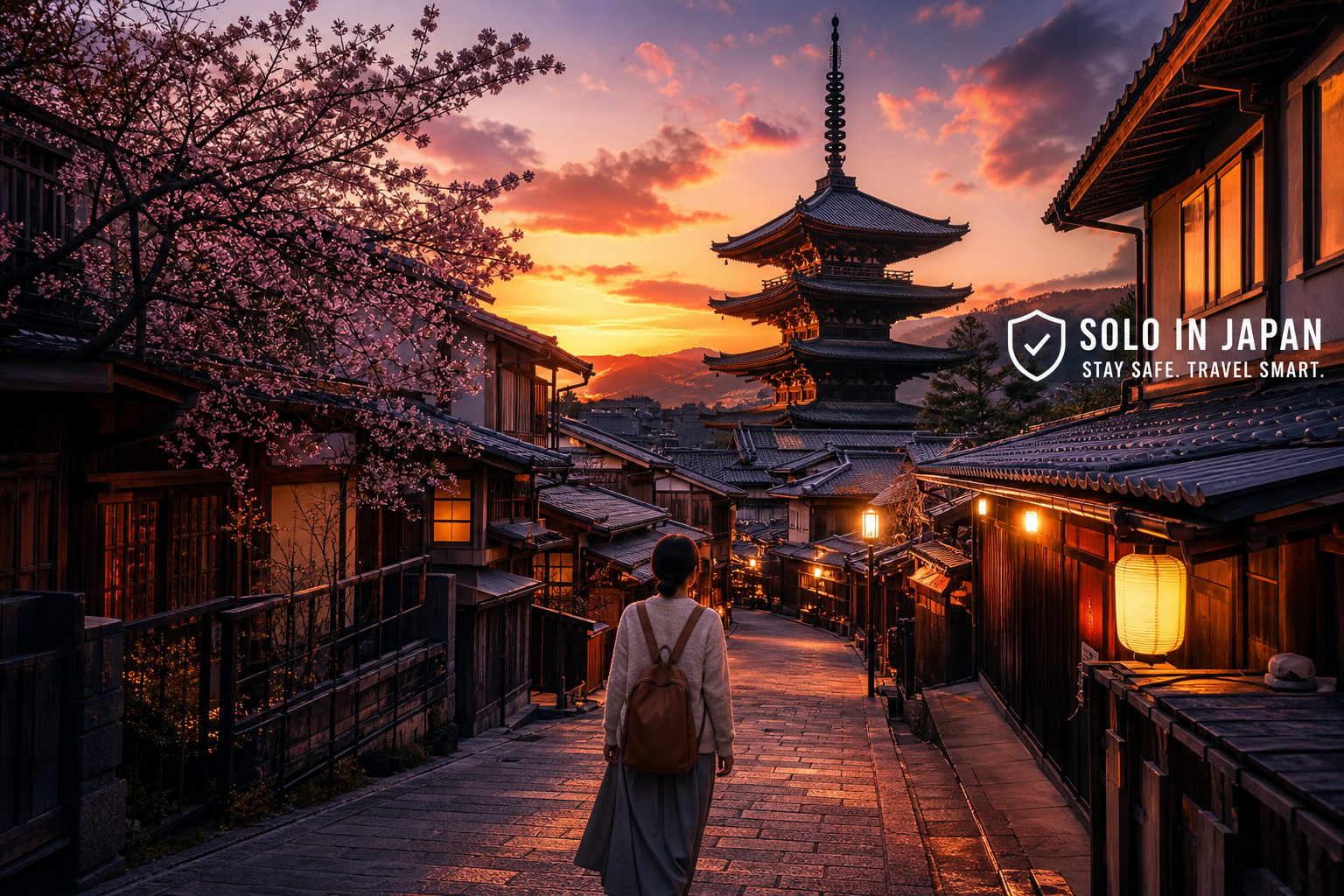
Japan has one of the lowest violent crime rates on the planet. Its homicide rate sits at roughly 0.2 per 100,000 people, compared to 5.3 in the United States. Robbery is similarly rare. And yet, first-time solo travelers come home with stories: a confusing midnight detour through an unfamiliar neighborhood, an inflated bill at a Roppongi bar, a quietly uncomfortable rush-hour train ride that nobody else seemed to notice. The paradox isn’t that Japan is dangerous. The paradox is that assuming perfect safety is the actual vulnerability.
At The Curious Atlas, slow travel isn’t about moving cautiously through a place. It’s about moving through it with full awareness. Japan is extraordinary for independent travelers, and these solo travel safety tips for first-time visitors to Japan were written not to alarm you but to hand you the mental frameworks a well-prepared traveler carries before stepping off the plane. Preparation is what lets you enjoy the extraordinary parts fully, without the detours that come from being caught off guard.
This guide covers the essentials: emergency contacts, transport safety, solo female precautions, scam awareness, cultural etiquette, and the apps that make everything significantly easier. Work through it once before you leave, and you’ll arrive ready.
What Japan’s safety reputation actually means for solo travelers
Japan’s safety statistics are genuinely impressive. Robbery rates are around 1.2 per 100,000 people, compared to 81.4 in the United States and 43.8 in France. Serious assault sits at roughly 15 per 100,000, versus 278 in the United States. These numbers reflect a real cultural and structural reality, not a tourism marketing campaign. Japan is, by most meaningful measures, among the safest countries in the world for independent travel.
But safety statistics describe averages, not individual experiences. Solo travelers face a specific set of situational risks that aggregate data doesn’t capture. Japan’s 2025 police statistics recorded over 513,000 theft offenses and more than 77,000 fraud cases, a 25% increase from the prior year. Fraud losses reached approximately 402.9 billion yen. The trend line isn’t dramatic, but it is real, and nightlife-related tourist scams remain the most documented urban threat for visitors.
The risks that actually affect tourists
The realistic threat profile for solo travelers in Japan centers on three documented patterns. Petty theft is most common in crowded transit stations and festival environments. Overcharging, drink spiking, and coercive billing appear most frequently in nightlife districts like Roppongi and Kabukicho in Tokyo. And harassment or unwanted physical contact on rush-hour trains is the most reported concern for women traveling alone. These aren’t rare horror stories, naming them clearly is more useful than pretending they don’t exist.
The practical takeaway is calibrated vigilance, not fear. Japan rewards travelers who pay attention to their surroundings. The traveler who arrives assuming zero risk is the one who ends up following a friendly stranger into the wrong bar at midnight. Awareness is not anxiety. It is simply how a thoughtful traveler moves through any unfamiliar environment.
Solo travel safety tips for first-time visitors to Japan: pre-departure checklist
Most safety failures in Japan happen because travelers didn’t set up specific information before leaving home. Do this work when you’re calm and unhurried, not at 11pm in Tokyo when you actually need it. For focused solo resources and checklists, consult the Solo Travel Archives, The Curious Atlas.
Japan travel emergency numbers and embassy contacts to save right now
Japan’s core emergency numbers are 110 for police, 119 for ambulance and fire, and 118 for coast guard. Two less-known consultation lines are also worth saving: #9110 for non-emergency police advice and #7119 for medical consultation. All emergency calls are free from any phone, including pay phones, and Tokyo’s 119 operators have English-speaking staff available. Save these numbers in your phone under clear labels before you board your flight. For a concise guide to Japan emergency numbers and when to use them, check this resource.
If your passport is lost or stolen, the sequence is specific. Report it to local Japanese police first and request a written police report. Then contact your country’s embassy or consulate using their duty line, which handles after-hours emergencies. Many embassies require personal appearance for passport replacement, so save the exact address of your country’s nearest embassy alongside the duty number. If you need to leave Japan urgently, ask specifically whether an emergency travel document can be issued.
What your travel insurance actually needs to cover
Ambulance transport in Japan may be free, but hospital treatment is not. Your policy needs to confirm three things before you purchase: medical treatment and hospitalization coverage, emergency evacuation, and 24/7 access to your insurer’s assistance line. Carry a physical card with your insurer’s contact number separately from your phone. Phones get lost. Paper cards stay in your jacket pocket.
The apps that make solo travel in Japan far less stressful
The most reliable setup for a first-time solo trip combines Google Maps for local walking and transit, JapanTravel by Navitime for complex intercity rail routes, and Google Translate plus Papago as a backup translation tool. Add NERV for earthquake and emergency alerts, and DiDi or GO Taxi for late-night transport when trains aren’t running. Download offline map data for your cities before arrival.
Getting around Japan’s transport network without stress
Japan’s rail network is one of the most efficient in the world, and also one of the most complex for first arrivals. Understanding how it works, and where the friction points are, is practical safety preparation, not just logistics.
Women-only train cars: what they are and when to use them
Tokyo, Osaka, Yokohama, and other major cities operate designated women-only train cars on many commuter and subway lines during specified hours. Most run during weekday morning rush hour from the first train until around 9:30am, with some lines extending the service into evening rush hours. Platforms and carriage doors are marked with clear “Women Only” signs, often in pink lettering, so the car is visible before you board. Rush hours run from roughly 7:30 to 9:30am and 5:30 to 8pm, and crowding during these windows is when harassment incidents are most commonly reported. Using the women-only car during these periods is a simple, effective precaution that costs you nothing. For a practical explainer on the rules and hours for women-only train cars in Japan, consult this guide.
Late-night transport: what works and what doesn’t
Train service in most Japanese cities stops between roughly midnight and 5am. Hailing taxis on the street is uncommon in Japan, and it introduces variables a solo traveler doesn’t need. DiDi and GO Taxi are the reliable alternatives: app-based, tracked, and consistent. The clearest approach is to plan to arrive at your accommodation before the last train or book transport in advance for late nights. Relying on strangers for rides is not a backup plan worth entertaining.
Solo female travel in Japan: precautions that actually matter
Japan is genuinely one of the safer countries in the world for women traveling alone. The day-to-day reality of solo female movement through Tokyo, Kyoto, or Osaka is low-friction in daylight hours and navigable at night with basic preparation. Two specific situations, though, carry elevated risk and deserve direct attention.
Choosing accommodation and neighborhoods with intention
The clearest safety principle for accommodation is to stay within a 5 to 10-minute walk of a major transit station in a central, well-lit neighborhood. In Tokyo, areas like Asakusa, Ueno, Ikebukuro East Exit, and Shibuya are consistently recommended by solo travel forums and guidebooks for their lighting, police presence, and transit convenience. In Kyoto, neighborhoods near Kyoto Station or Kawaramachi offer the same logic. In Osaka, staying near Umeda or Namba keeps you close to transit without requiring long cross-city trips at night. For accommodation type, private-room business hotels offer the most consistent combination of privacy, security, and value for solo travelers. Arrive before dark on your first night in any new city.
Nightlife districts, scam patterns, and drink safety
Kabukicho and Roppongi in Tokyo are the two areas where tourist-targeting scams are most consistently reported. The typical pattern starts with a friendly approach outside a bar, a guided recommendation into a nearby venue, and a final bill that bears no relationship to anything quoted at the door. Hidden charge fees, nomination fees, and service fees are the mechanics. In some cases, drinks are spiked and the situation escalates into pressure to withdraw cash from an ATM. The practical rules aren’t complicated: don’t follow unsolicited bar invitations, never leave a drink unattended, and keep alcohol consumption limited when you’re alone in an unfamiliar area at night. None of these rules require paranoia, just the same awareness you’d apply in any major city’s entertainment district.
Language, cultural norms, and daily safety habits
The softer layer of solo travel safety in Japan is equally important: how to communicate when language fails, and how to move through a country whose cultural norms actively reward the kind of traveler who pays attention.
How to communicate in an emergency without Japanese
Three phrases are worth memorizing or keeping on your phone’s notes app. “Kyuu-kyuu desu” signals that you need an ambulance. “Kaji desu” means fire. “Tasukete” means help. Translation apps work well for written communication with police or medical staff if the situation is less urgent. Carry a small card with your hotel’s name written in Japanese characters: taxi drivers and emergency responders can use it to confirm your location when verbal communication breaks down.
The cultural norms that also function as security habits
Japan’s social norms around public behavior, speaking quietly on transit, no phone calls on trains, removing shoes in traditional spaces, avoiding loud group behavior in residential areas, map closely onto good personal security instinct. Following these norms signals a respectful, aware traveler. It also reduces the social visibility that can make a solo traveler a target in any environment. The overlap between cultural respect and practical safety is not accidental.
Build a simple daily check-in routine: share your itinerary with someone at home before each day, check in with them at the end of it, and keep a screenshot of your accommodation address on your phone. These habits take two minutes and provide a meaningful safety net without turning your trip into a logistics exercise.
Japan is ready for you, and now you’re ready for Japan
Japan rewards travelers who arrive with preparation and curiosity rather than naivety or excessive anxiety. The emergency numbers are saved. The apps are downloaded. The neighborhoods are chosen thoughtfully. The scam patterns are named and therefore avoidable. With these solo travel safety tips for first-time visitors to Japan in hand, genuine readiness takes far less effort than most people expect.
The best preparation, though, isn’t reading one more article. It’s booking the trip, stepping onto that first train platform, and trusting the work you’ve already done.
Leave a Reply